History
The Legend on Four Wheels: A Brief History of the Land Rover Defender
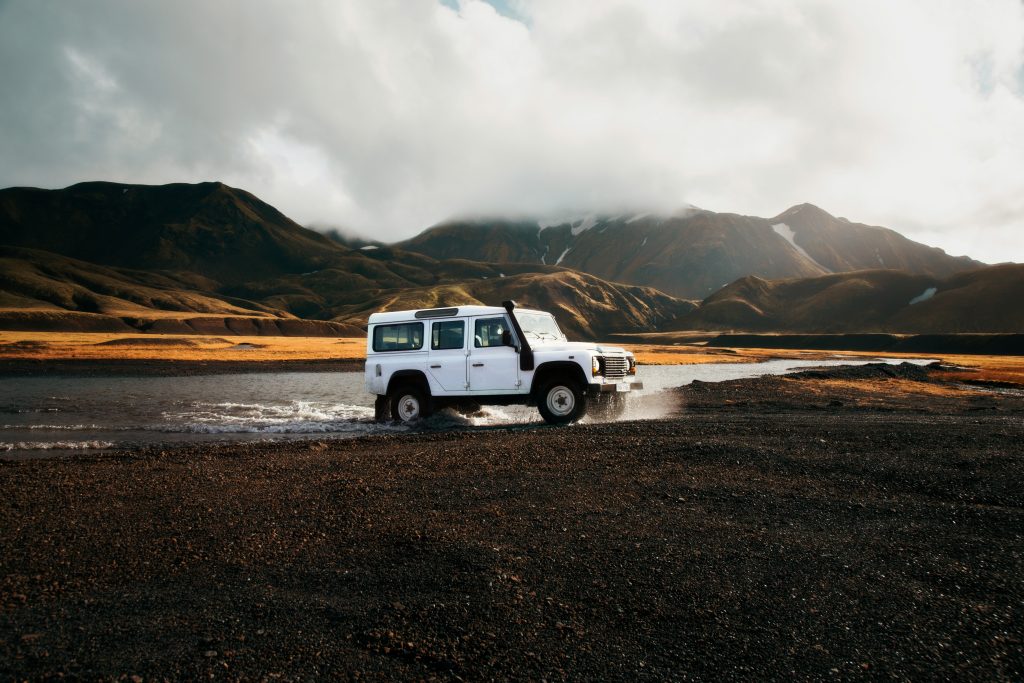
The history of the land rover defender is the history of adventure itself. There are cars people like. Cars people love. And then there’s the Land Rover Defender — a vehicle people would genuinely leave their spouse for. It’s not fast. It’s not comfortable. The heating system was designed, one assumes, by someone who had never actually been cold. And yet, somehow, this rattling, leaking, magnificently stubborn box on wheels became the most beloved 4×4 on the planet. This is its story. And if you want to know why they’re now so expensive, understanding this history is essential.
From Maurice Wilks’s sketch on a Welsh beach to a 626 horsepower luxury SUV, the Defender has traveled an extraordinary distance. What makes the story remarkable is not the evolution but the consistency. Every Defender ever built, from 1948 to today, shares the same basic promise: this vehicle will take you anywhere, and it will get you back. The methods have changed. The aluminium body has given way to a monocoque. The leaf springs have become air suspension. The 1.6-liter petrol engine has become a twin-turbo V8. But the idea remains the same. And that is why the Defender endures.
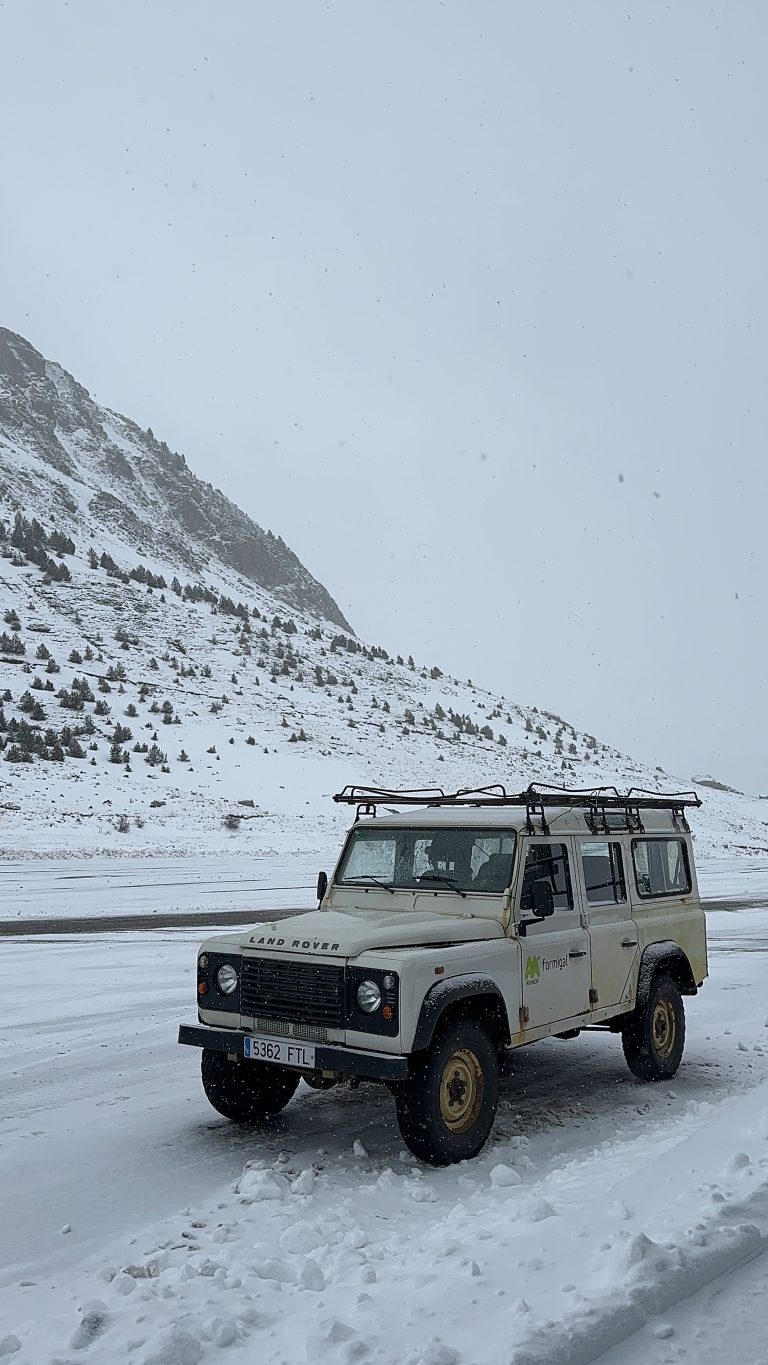
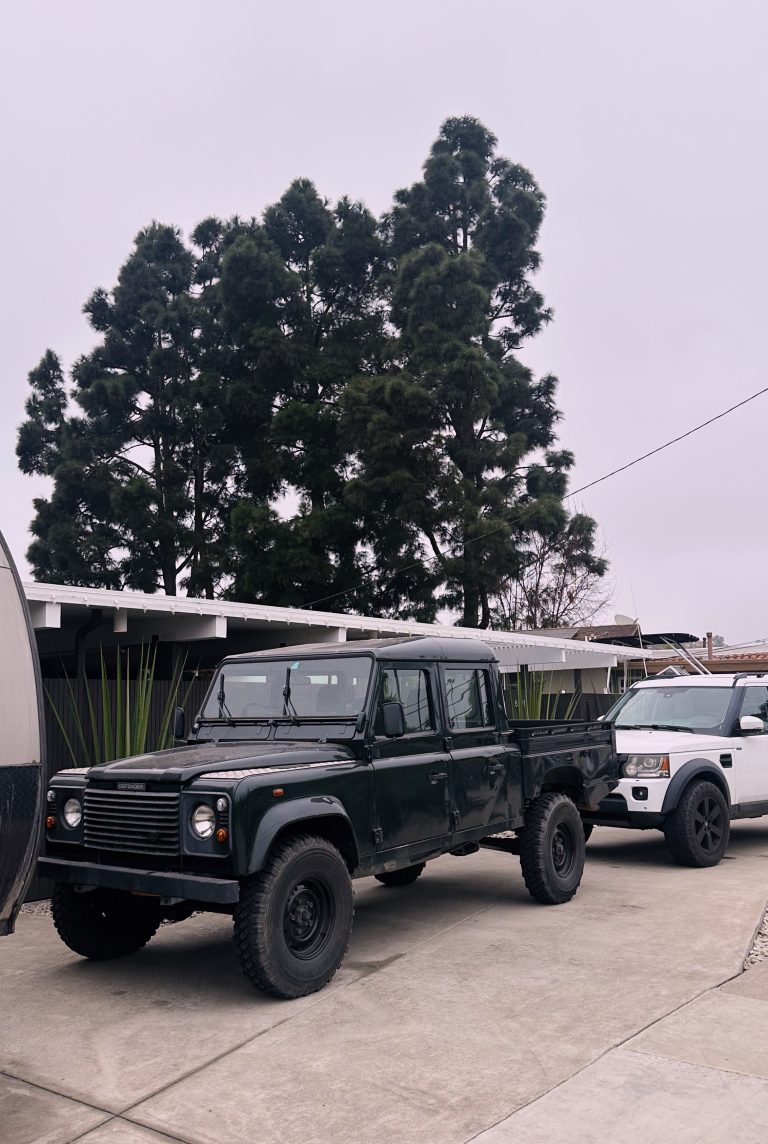
1948 — A sketch in the sand
Picture this: it’s 1947, and Maurice Wilks — chief designer at Rover — is on holiday in Anglesey, Wales. He’s staring at his American Willys Jeep, the kind every British farmer had nicked from the war effort, and thinking: “We can do better.” So he grabbed a stick and sketched the outline of a new vehicle in the sand on Red Wharf Bay beach. That’s right. The most iconic 4×4 ever made began as a doodle at the seaside. Together with his brother Spencer, they set out to build something tougher, more versatile, and — crucially — not American.
The first Land Rover — the Series I — rocked up at the Amsterdam Motor Show on 30 April 1948 and immediately confused everyone. The body panels were made of aluminium — not because Rover was being clever, but because post-war Britain had run out of steel. It came in one colour: military surplus green, because of course it did. The steering wheel was in the middle of the early prototypes, which made about as much sense as you’d expect, so they eventually moved it to the right. And just like that, a legend was born.
The Series Years: History of the Land Rover Defender Begins
Through the 1950s and 60s, the Land Rover evolved steadily. The Series II arrived in 1958 with a wider body and more refined looks, followed by the Series IIA with improved engines. By the time the Series III launched in 1971 — identifiable by its plastic grille and all-synchromesh gearbox — the Land Rover had become the backbone of exploration, military operations, and rural life across the globe.
What followed was three decades of glorious, agricultural brilliance. The Series I, II, and III went everywhere — and I mean everywhere. The Australian outback. The Scottish Highlands. Antarctic expeditions where the penguins looked more comfortable than the driver. The secret was simplicity: if it broke, you could fix it with a hammer, some wire, and a creative interpretation of the workshop manual. The UN bought them. The Red Cross bought them. Half the world’s armies bought them. If you needed to get somewhere impossible, you took a Land Rover. End of discussion.
1983 — The Defender is born (sort of)
In 1983, Land Rover did something radical: they fitted coil springs. I know — try to contain your excitement. The new 90 and 110 models replaced the Series III, bringing permanent four-wheel drive and what the brochure optimistically called “improved on-road manners.” It was still about as refined as a sledgehammer, but now it was a sledgehammer with slightly better suspension. The name “Defender” didn’t actually appear until 1990, when Land Rover launched the Discovery and needed to distinguish the one that was comfortable from the one that absolutely wasn’t.
From that point on, the Defender became less of a car and more of a personality type. Own a 90? You’re fun, impulsive, probably single. A 110? Sensible adventurer, two kids, a Labrador. A 130? You either run a farm or you’re compensating for something. The Td5 diesel from 1998 brought what Land Rover called “refinement,” which in Defender terms meant the dashboard no longer actively tried to electrocute you. The later Ford-based diesels kept it street-legal as emissions regulations tightened, though “street-legal” was doing a lot of heavy lifting. Understanding the history of the land rover defender means understanding this transformation from agricultural tool to cultural icon.

The 1990s and 2000s — Peak Defender
The Series I ran from 1948 to 1958, initially powered by a modest 1.6-liter petrol engine producing just 50 horsepower. It was underpowered even by 1940s standards, but what mattered was reliability and the ability to crawl through mud at walking pace. Land Rover sold over 200,000 Series I models, and the vehicle’s reputation for going-anywhere toughness was firmly established by the early 1950s.
The Series II (1958-1971) and Series III (1971-1985) refined the formula without fundamentally changing it. Each generation brought incremental improvements: more powerful engines, better brakes, synchromesh gearboxes, and creature comforts like heaters and windshield washers. By the time the Series III ended production, Land Rover had built over 1.5 million utility vehicles, and they were in service in more than 150 countries.
The 1990s were the golden years for the Defender. By this point, it had established itself as the default choice for anyone who needed a vehicle that could handle the worst conditions on earth. The United Nations, the Red Cross, and dozens of military forces around the world all relied on Defenders. In countries like Australia, Africa, and Southeast Asia, the Defender was not a lifestyle vehicle. It was the only vehicle that could do the job.
Land Rover introduced the 300 Tdi diesel engine in 1994, which became one of the most beloved powerplants in Defender history. It was simple, torquey, and incredibly easy to work on in the field. Mechanics in remote areas could rebuild a 300 Tdi with basic tools, which is exactly why aid organizations loved it. The later Td5 engine (introduced in 1998) added electronic fuel injection, which improved refinement but divided opinion among purists who preferred the simplicity of the Tdi.
During this era, the Defender also became a fashion icon. It appeared in films, advertisements, and on the streets of London and New York, driven by people who would never take it off-road. The contrast was part of the appeal: a vehicle built for African safaris and military operations, parked outside a Knightsbridge restaurant. That duality between rugged capability and aspirational cool became central to the Defender’s identity and remains so today.
By the 2000s, tightening emissions regulations began to threaten the Defender’s future. Land Rover squeezed the aging design through each new round of legislation, adding catalytic converters, ABS brakes, and eventually air conditioning as standard equipment. But the fundamental vehicle was still based on the original 1948 concept: a ladder frame chassis with aluminium body panels bolted to it. It was becoming harder to keep this 1940s design legal in a 21st-century regulatory environment.
2016 — The End of Land Rover Defender History As We Knew It
On 29 January 2016, the last old-school Defender rolled off the production line at Land Rover’s Solihull factory. After 68 years and over two million units built, it was the end of a continuous lineage that stretched back to that sketch on the beach. The final vehicle — a Defender 90 Heritage Soft Top in Grasmere Green — was driven off the line to a standing ovation from the workers who had built it.
Prices of well-maintained examples immediately went through the roof and haven’t come down since. A decent 90 now costs more than a new BMW. A Heritage Edition will buy you a small flat in some parts of the country. The irony of a vehicle designed to be cheap and disposable becoming a six-figure collector’s item would not be lost on Maurice Wilks.
The last old-style Defender rolled off the line in Solihull on January 29, 2016. It was chassis number 2,016,933, and the occasion was marked with genuine emotion from the workers who had built these vehicles for decades. Over 67 years, more than two million Defenders and their predecessors had been assembled on that line. The final vehicle was a Heritage Edition in Grasmere Green, a deliberate nod to the first Series I color. Land Rover’s chief design officer at the time reportedly said that ending Defender production was the hardest decision the company had ever made, but emissions regulations left no alternative. You cannot put a vehicle designed in 1948 through a 2016 crash test and expect good results.
2020 — A New Chapter in the History of the Land Rover Defender
After years of spy shots and arguments on internet forums, the all-new Defender arrived in 2020 — and the automotive world promptly lost its mind. Gone was the separate chassis. Gone were the doors you could remove with a screwdriver. Gone was anything remotely agricultural. In its place: a monocoque body, air suspension, a wading depth of 900mm, and a touchscreen bigger than most people’s televisions. The old Defender didn’t even have a cup holder. This one has Wi-Fi.
Purists were furious, naturally. “It’s not a real Defender!” they cried, from the heated seats of their Range Rover Sports. But here’s the thing — the new one is genuinely, absurdly capable off-road. It can go places the old one couldn’t, faster and safer, and you arrive without needing spinal surgery. The V8 version does 0-60 in 5 seconds, which is completely unnecessary and therefore completely brilliant. Whether it’s a “real” Defender is a question that will fuel pub arguments until the heat death of the universe. But it’s introduced a whole new generation to the badge, and that’s no bad thing.
The new Defender divided opinion immediately. Purists argued it was a Range Rover in a Defender costume. Fans of modern engineering pointed out that it was better than the old one in every measurable way: faster, more capable off-road, safer, more comfortable, and more reliable. Both sides had a point, and the argument continues today.
What cannot be argued is the commercial success. The new Defender became Land Rover’s best-selling model within two years of launch, something the old Defender never achieved. It outsold the Discovery, the Freelander, and for certain periods even the Range Rover Sport. The introduction of the V8 model in 2021 and the OCTA in 2024 pushed the Defender into supercar territory, with 0-60 times under 4 seconds.
The History of the Land Rover Defender Continues Today
Walk through any European city today and you’ll spot them everywhere. A mud-caked 110 with a roof tent and questionable MOT history parked next to a gleaming new V8 in Fuji White that’s never seen a puddle deeper than a car park. A Series III held together by rust, optimism, and cable ties, earning admiring glances from twenty-somethings who weren’t born when it was built. That’s the magic of the Defender — it transcended its origins as a farmer’s tool and became something approaching a religion. It’s freedom. It’s adventure. It’s the belief that the best journeys are the ones where the road runs out and the fun begins. The history of the land rover defender is far from over — every sighting proves that.
That’s what Defender Sightings is all about. Every dented workhorse and every pristine show pony has a story worth telling. We’re here to collect them, map them, and share them with the only community that truly understands why a vehicle with the aerodynamics of a garden shed can make a grown adult weep with joy.
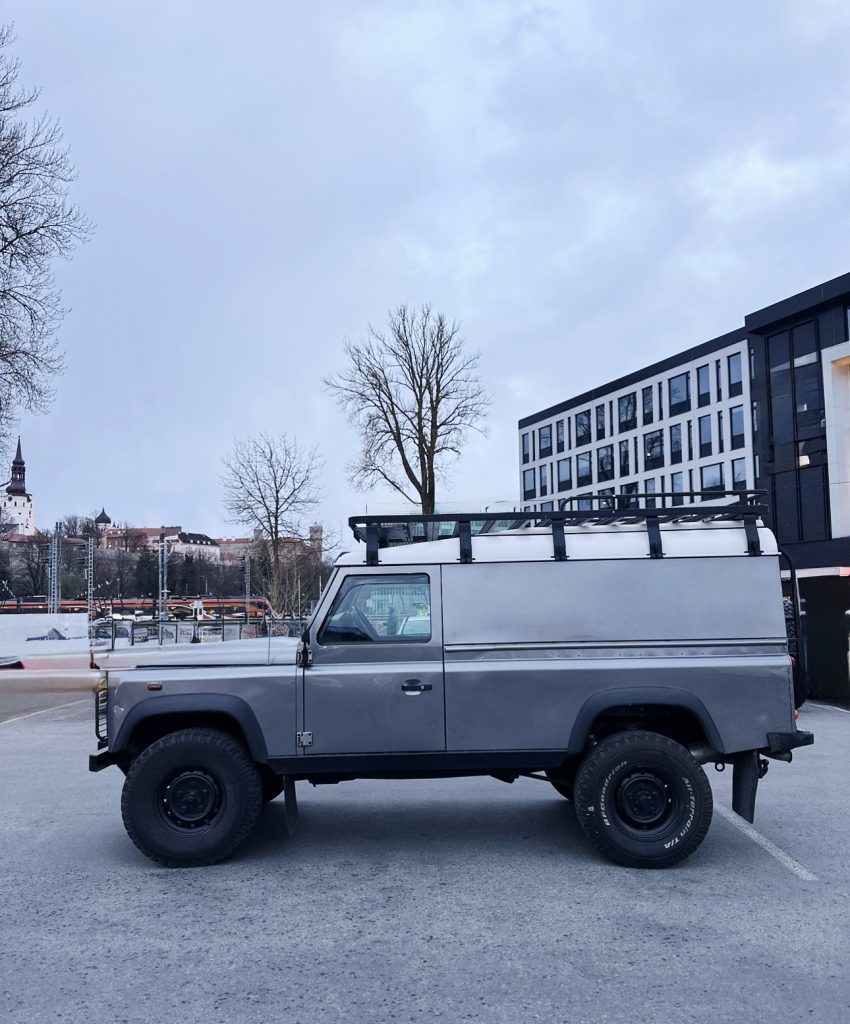
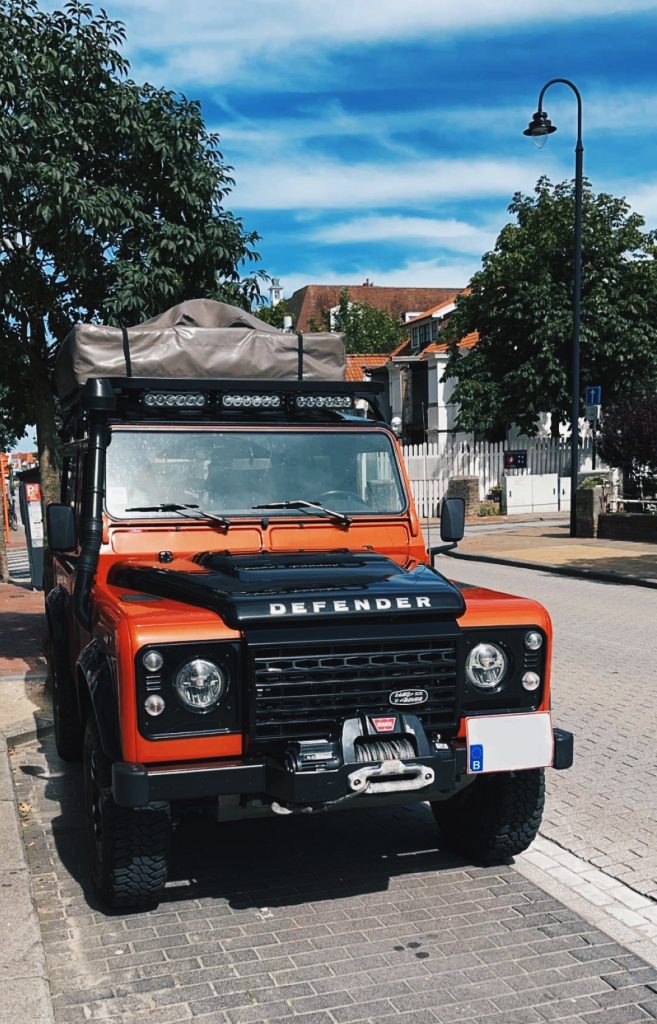
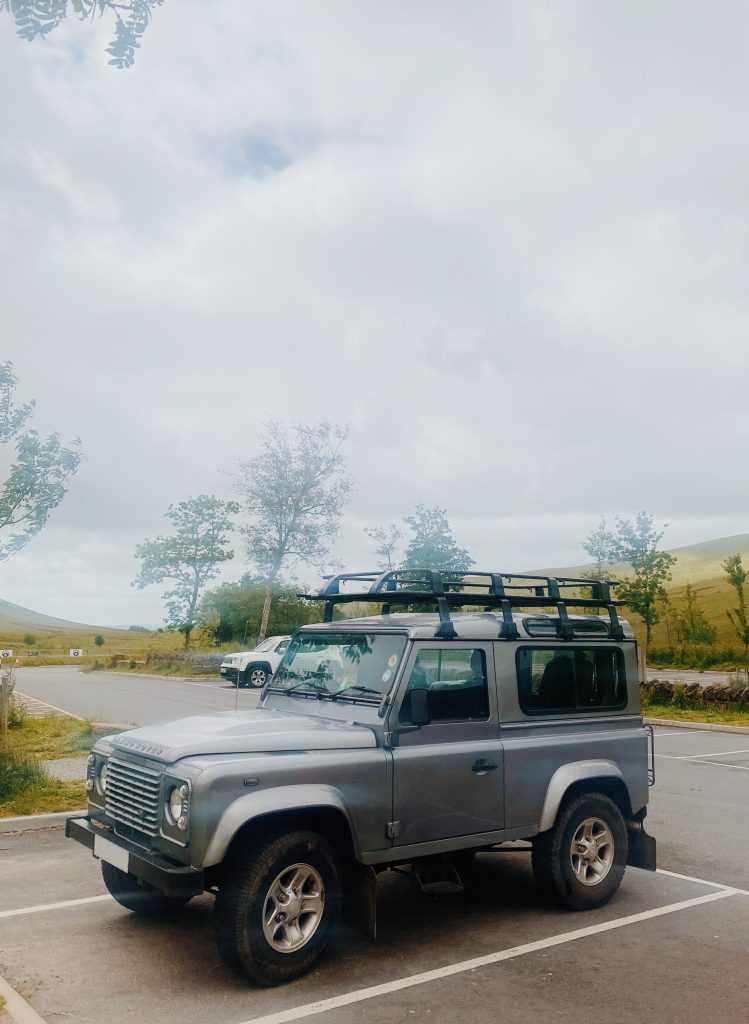

Spotted a Defender? Submit your sighting and help us map the legend.