History
The Land Rover Defender and the British Countryside
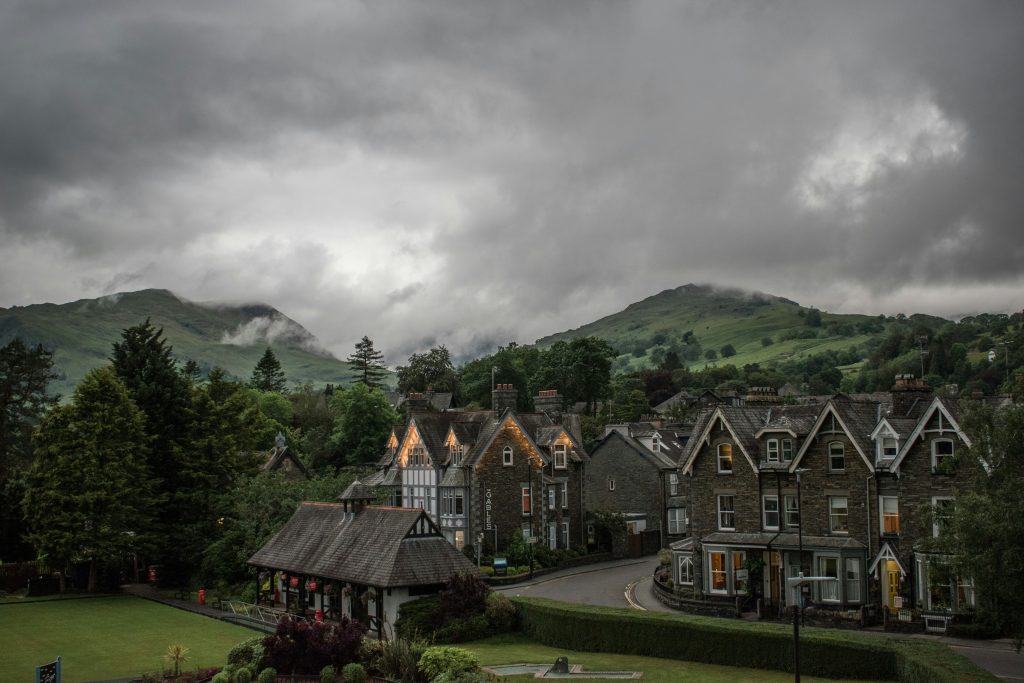
The land rover defender countryside love affair is, without question, the greatest romance in automotive history. Forget Ferrari and the Amalfi Coast. Forget Mustangs and Route 66. A Defender in a muddy Welsh field on a Tuesday morning in February — that is true love.
There are certain things that just belong together. Fish and chips. Rain and bank holidays. And a Land Rover Defender in the British countryside. You don’t question it. You don’t analyse it. It simply is. The way gravity is. The way a Labrador will always find the muddiest puddle. A Defender parked on a farm track in the Cotswolds isn’t a vehicle. It’s part of the scenery, like a dry stone wall or an angry-looking sheep.
Born in Sand, Built for Mud
The whole thing started in 1947, on a beach in Anglesey, because of course it did. Maurice Wilks, Rover’s chief engineer, was using a clapped-out American Willys Jeep on his farm. His brother Spencer asked what he’d replace it with. Maurice looked at the sand, drew a shape with a stick, and essentially said: “I’ll build one myself.” That is the most British thing I’ve ever heard. The Americans had given us a Jeep. We said thank you, and then decided we could do it better.
The Series I arrived in 1948, and it was glorious in its ugliness. Built from leftover aircraft aluminium because steel was rationed, painted in the only colour available — a sort of depressing pale green that had been used in cockpits — and designed to plough fields and tow things. It had a power take-off for driving farm machinery. It was, in every possible way, a tractor that could also drive on roads. And farmers absolutely loved it.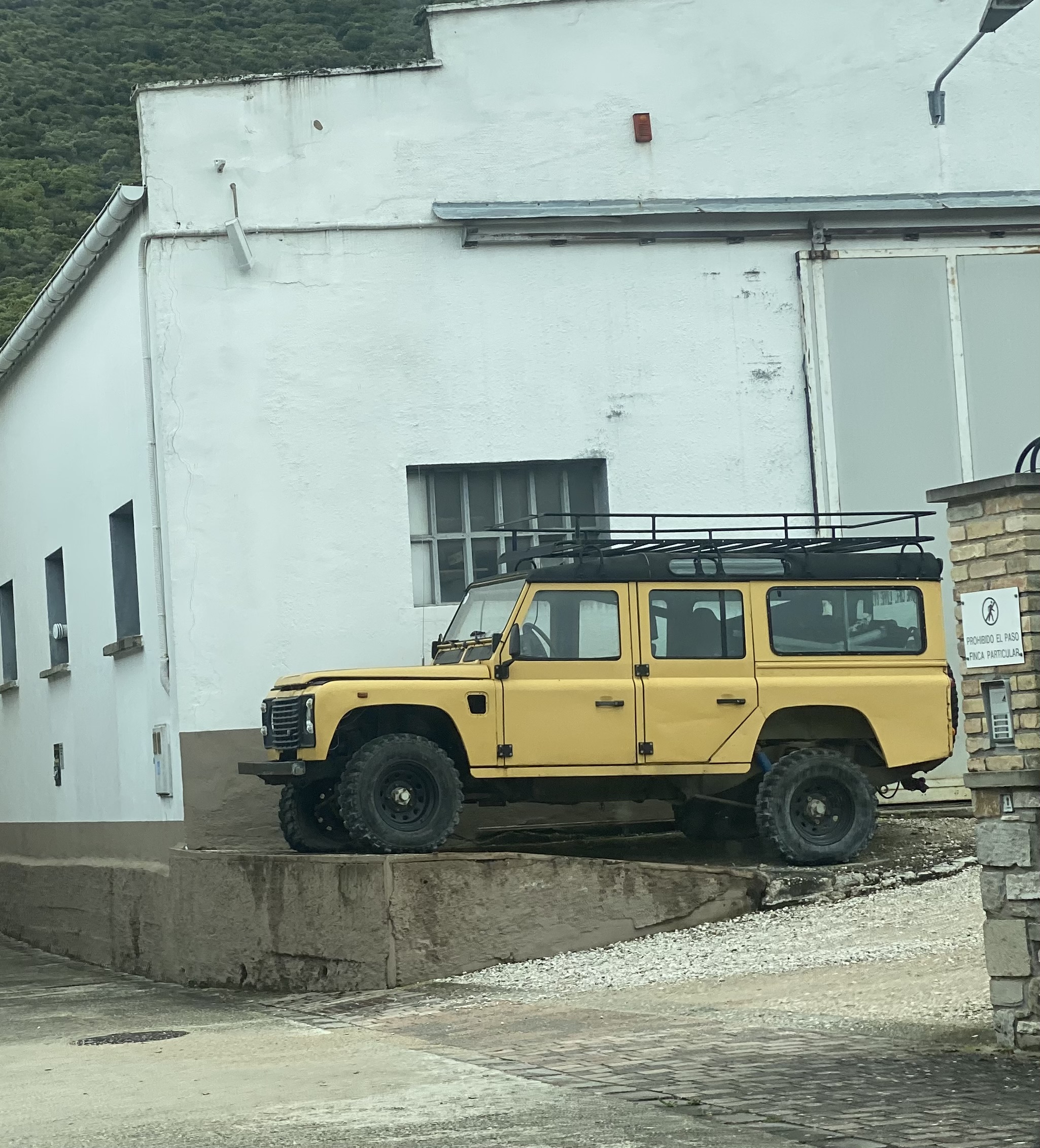
That agricultural stubbornness is exactly why the land rover defender countryside bond has survived for nearly eighty years. It wasn’t designed to be cool. It was designed to work. And in the countryside, that matters far more than heated seats and a touchscreen.
What most people forget about that origin story is just how agricultural the original vision was. Maurice Wilks was not designing a military vehicle or an adventure machine. He wanted a tractor replacement. Something that could plough fields, power farm equipment through a power takeoff, and still be driven to market on Saturday morning. The original Land Rover had a centre steering wheel because Wilks was not sure whether it would be used on roads or only on farms. That utilitarian DNA runs through every Defender ever made, including the ones you see parked outside private schools in Chelsea today.
The Hardest Working Thing in Rural Britain
If you’ve never been in a Defender at three in the morning during lambing season, in horizontal rain, with a sheep that doesn’t want to cooperate sitting in the back — you haven’t lived. Or rather, you’ve lived quite comfortably, and good for you. But you’ve missed the point.
Because that’s what a Defender does. It goes to places where nothing else will go, at times when any sane person would stay in bed. It tows horseboxes down tracks that would defeat a tank. It climbs to the top field when the lane has become a river. It starts on cold mornings when your German saloon car is having an existential crisis about the temperature.
Generations of countryside children learned to drive in one — sitting on dad’s lap, steering across a field, aged about seven, which was of course enormously dangerous and absolutely brilliant. Mountain rescue teams, coastguards, gamekeepers, National Trust wardens — they all use Defenders. Not because they’re fashionable, but because when you break down on a mountain in January, fashion is the least of your problems. The land rover defender countryside role has always been about getting the job done, not looking pretty doing it.
The agricultural Defender is a dying breed, but it has not disappeared entirely. Drive through the Scottish Borders or mid-Wales, and you will still see Series IIs and IIIs in daily use. Not as weekend toys or restored show cars, but as working vehicles with hay in the back, mud on every panel, and engines that have turned over a million times. These are Defenders that have never been washed on purpose, have been fixed with baling wire and determination, and will probably outlast the farms they serve. They represent the original purpose of the vehicle in a way that no amount of heritage marketing can replicate.
Farmers will tell you that the modern Defender is too complicated, too expensive, and too precious for real farm work. They have a point. You would not send a $60,000 Defender into a field full of sheep with a teenager behind the wheel. But the old ones? They were born for exactly that. And the scratches, dents, and patches of mismatched paint just added character.
Paint Colours That Actually Make Sense
Here’s a detail I absolutely love. While other car manufacturers name their colours things like “Quantum Titanium Pearl Metallic” — which tells you nothing except that someone in marketing had too much coffee — Land Rover named theirs after actual places. Keswick Green. Coniston Green. Limestone. Epsom Green. These are real places where real Defenders do real work.
The 2026 model has Woolstone Green, named after a village in Oxfordshire. Drive through the Cotswolds in one and the thing practically vanishes into the hedgerows. It’s camouflage, basically. The land rover defender countryside palette has always been about blending in, because the countryside is not the place for showing off. That’s what Chelsea is for.
It’s Not a Car. It’s a Family Member.
Ask anyone in rural Britain about their Defender and watch what happens. Their eyes go misty. Their voice goes soft. They don’t talk about torque figures or payload capacity. They say things like “Gran had one. We drove it to the beach every summer.” Or “Dad’s had his since 1987 and it still starts every morning.” Or “We piled six kids in the back and nobody wore a seatbelt and it was magnificent.”
The Defender is at the agricultural show, caked in mud, parked next to a trailer full of irritated sheep. It’s at the village fête with the boot open, selling jam. It’s outside the church on Saturday, waiting to carry the bride down a lane. The Queen drove one around Balmoral well into her nineties, which is either deeply reassuring or absolutely terrifying depending on your perspective. Sir David Attenborough has used them on expeditions for decades, which means the Defender has been to more interesting places than you and I will ever visit.
So when the last original Defender rolled off the Solihull production line on 29 January 2016, the countryside didn’t just lose a vehicle. It lost a member of the family. The land rover defender countryside legacy had been building for nearly seventy years, and suddenly it was over. People genuinely cried. About a car. And if you think that’s ridiculous, you’ve clearly never owned one.
Land Rover knew what they were doing with the new Defender’s design. The squared-off silhouette, the exposed bolt heads on the body panels, the side-mounted gear carrier option: all of it is a deliberate callback to the original, filtered through modern manufacturing. And in the countryside, the new Defender does look at home, particularly in the darker colours. A Gondwana Stone 110 on steel wheels with mud on the wheel arches could almost be mistaken for its predecessor from a distance. Almost. The 22-inch alloys and the 11.4-inch touchscreen give it away up close, but the intent is clear.
The real test of the new Defender’s countryside credentials will come in thirty years, when we see how many of them are still working. The classic Defender passed that test long ago. If you want to understand why people are so emotional about a vehicle, visit the history of the Defender and see the full seven-decade story. Then drive through the Cotswolds on a Sunday morning and count how many you see. That number is the only review that matters.
The Sound and Smell of the Countryside Defender
There is a sensory experience to a classic Defender that no modern vehicle can reproduce. The diesel clatter of a 200 Tdi at idle, the metallic click of the door latches, the smell of hot oil mixed with wet grass and damp dog. Wind noise at anything above 50 mph because the doors never quite sealed properly. The vibration through the thin steering wheel that told you exactly what the road surface was doing. These were not flaws. They were the vehicle communicating with you, and after a while, you stopped noticing them entirely. They became part of the experience, like the smell of woodsmoke or the sound of rain on a tin roof.
The new Defender smells like leather and electronics. It sounds like a well-insulated luxury SUV, because that is exactly what it is. It is a better vehicle in every objective sense. But objective measurement misses the point of why people loved the old one. It was not about lap times, fuel economy, or creature comforts. It was about feeling connected to the landscape, to the weather, and to the road in a way that modern engineering has deliberately eliminated.
The New One: Brilliant, But Different
The new Defender arrived in 2020 and it divided the countryside more sharply than Brexit. The original was simple. You could fix it with a spanner, some baling wire, and a vocabulary that would make a sailor blush. The new one has air suspension, a curved touchscreen the size of a small television, and costs more than fifty thousand pounds. Fifty. Thousand. Pounds. For something you’re going to drive through mud.
But — and this is important — it is genuinely, properly, brilliantly capable. The Terrain Response system handles mud and ruts and fords like they’re not even there. The Hard Top commercial variant is built for farmers. And for those who think the new one is an abomination, a thriving restoration scene keeps classic Defenders alive — patched, welded, held together with optimism and rust, and running beautifully for another fifty years.
Walk through any rural village today and you’ll see both: a battered Series III with hay in the back parked next to a gleaming new Defender 110. The land rover defender countryside tradition continues, just in two very different forms. And somehow, that works.
Spotting Them in the Wild
This is exactly why we built Defender Sightings. Because spotting a Defender in its natural habitat — a Cornish fishing village, a Scottish glen, a muddy Yorkshire track, a narrow lane in the Lake District — is one of life’s small, perfect pleasures. It’s like birdwatching, but better, because the thing you’re looking at can tow a horsebox.
If you’ve spotted one — anywhere in the world — we want to see it. Check out our Sightings Map and add yours. And if you want to know what makes this vehicle so absurdly special, have a look at our 50 incredible facts about the Land Rover Defender.
The land rover defender countryside story isn’t ending. It’s just entering a new chapter. And the British countryside without a Defender? That would be like Christmas without an argument about the television. Unthinkable.
The best countryside Defenders are the ones you almost miss. A faded green 110 half-hidden behind a hedgerow. A 90 pickup covered in so much mud that you cannot tell what colour it is, parked beside a stone barn. A classic with a snorkel fitted, sitting in a farmyard between a tractor and a horse trailer. These are the Defenders doing what they were always meant to do, and spotting them is one of the quiet pleasures of driving through rural Britain. If you see one, resist the urge to stop and photograph it. The farmer will think you are mad. Or from London. Same thing, to most of them.