Facts
Why Are Land Rover Defenders So Expensive? The Uncomfortable Truth
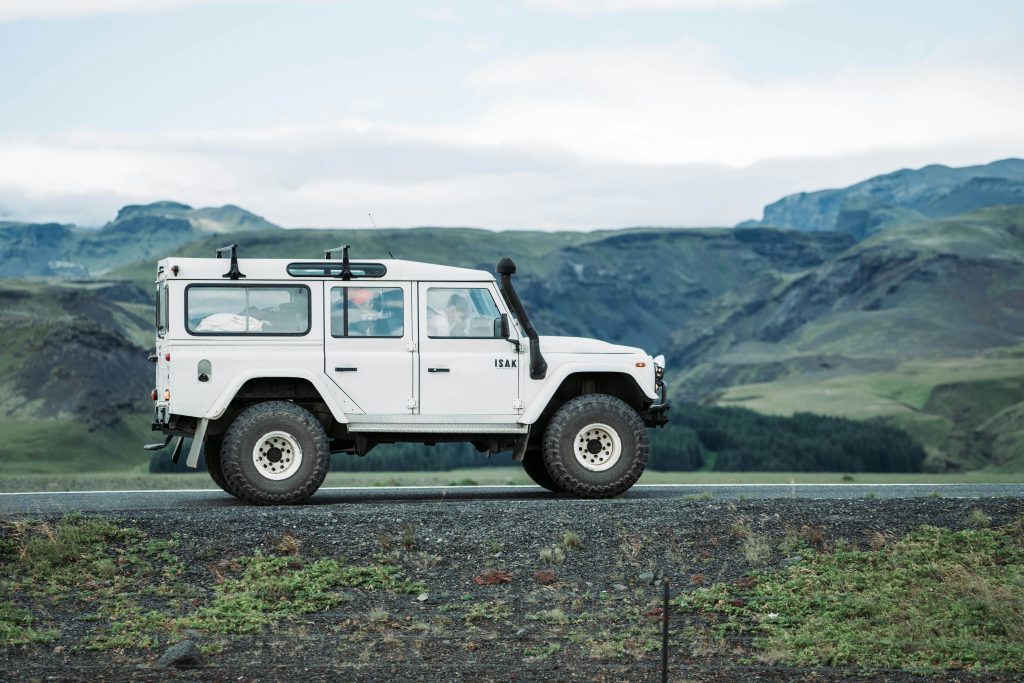
They’re Slow, They Leak, They Rust — So Why Do They Cost More Than a House?
Why are land rover defenders so expensive? Let me set the scene for you. It’s a Saturday morning. You’ve had your coffee. You’re feeling brave. You open AutoTrader, type in “Land Rover Defender,” and then you have a small cardiac event. Because somehow, a vehicle that was designed in the 1940s to herd sheep now costs more than a three-bedroom semi in Wolverhampton.
A clean Defender 90 from the mid-2000s? That’ll be forty grand, please. A Heritage Edition from 2015? Seventy. A properly restored Series III with a nice colour? You might as well remortgage the house and tell your wife it’s an investment. Which, weirdly, it actually is.
Defender Price Guide: What They Actually Cost in 2025
To understand why are land rover defenders so expensive, it helps to see the actual numbers. Here’s what you can expect to pay for different models and conditions in today’s market. These prices reflect UK market data, though US and European prices follow similar trends.
| Model / Year | Condition | Price Range (GBP) | Price Range (USD) |
|---|---|---|---|
Prices as of early 2025. Classic Defender values have appreciated 15–25% annually over the past five years, significantly outperforming inflation. US prices include the 25-year import rule premium for pre-2000 models.
Why Are Land Rover Defenders So Expensive? Simple Economics
Here’s the thing about why land rover defenders are so expensive. Land Rover made the last old-shape Defender in January 2016. They literally stopped making them. And when you stop making something that half the world wants, the price goes up. That’s not economics — that’s common sense.
Dwindling Supply, Growing Demand
Think about it. Every single year, there are fewer good ones left. They rust. They get crashed into walls by farmers who’ve had too many pints at the local. They get shipped off to Africa where they’ll work until the chassis literally falls apart. The supply is shrinking. The demand isn’t. And that, in the simplest possible terms, is why you’re looking at remortgaging.
It’s not like a Golf GTI where Volkswagen churns out another fifty thousand every year. Every Defender that dies is gone forever. And people are starting to realise this.

They’re Not Cars — They’re Characters
Nobody has ever formed an emotional attachment to a Nissan Qashqai. Nobody has ever given a name to their Vauxhall Mokka. But Defenders? People name them. They talk about them like they’re family members. “Oh, Bertha’s been playing up again — her transfer box is making a noise.” Bertha. They’ve called it Bertha.
More Than Just Metal and Rubber
And this is part of why defenders are so expensive. You’re not buying a car. You’re buying a personality. A lifestyle. An identity. When someone sees you in a Defender, they immediately assume you’ve got a pair of wellies in the back and a Labrador called Hugo. They assume you know how to change a tyre in the rain and that you’ve got opinions about dry stone walls. Whether any of that is true is entirely irrelevant.
Try getting that from a Hyundai Tucson.
The Celebrity Tax: Why Are Land Rover Defenders So Expensive for Everyone
It doesn’t help that every celebrity on earth seems to own one. David Beckham’s got one. The late Queen had about fourteen. Bear Grylls probably sleeps in his. Every time a famous person is photographed stepping out of a Defender, the prices tick up another few hundred quid.
And then there’s the film industry. James Bond drove one off a cliff in “No Time to Die.” The SAS use them. They’ve been in every war documentary since the Falklands. The Defender has become the vehicular equivalent of a Barbour jacket — it says “I’m rugged but I’ve also got taste.”
Built for Farmers, Bought by Millionaires
The irony, of course, is that the original Defender was built for farmers who couldn’t afford a tractor. It was the cheapest, most utilitarian thing on four wheels. And now it’s a status symbol. Maurice Wilks would be absolutely baffled.
The Restoration Economy
Here’s where it gets properly mental. There are now companies — serious companies with workshops and employees and business plans — whose entire existence is based on taking knackered old Defenders, stripping them down to the bare chassis, and rebuilding them with leather seats, heated screens, and sound systems that would make a nightclub jealous.
What a Full Restoration Costs
These restorations can cost anywhere from thirty to over a hundred thousand pounds. And people pay it. Willingly. With actual money. For a vehicle whose basic design predates the internet, colour television, and the M25.
Companies like Arkonik, Twisted, and countless smaller outfits have turned Defender restoration into an art form. They’ll fit a modern engine, upgrade the suspension, rewire the whole thing, and hand it back to you looking like it just rolled off a production line that never existed. It’s magnificent. It’s also completely bonkers.
The New Defender Didn’t Fix Anything
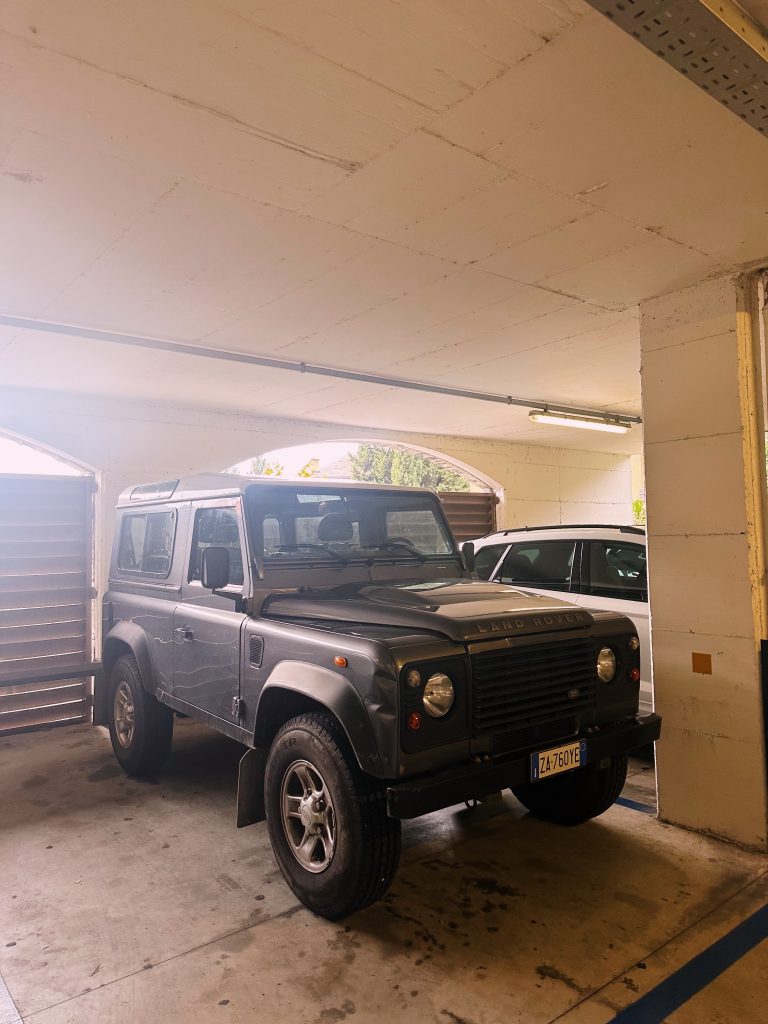
When Land Rover launched the new Defender in 2020, everyone assumed the prices of the old ones would calm down. “Right,” we all thought, “you can buy a brand new one now, so surely the old ones will come back to earth.” We were wrong. So, so wrong.
If anything, the new Defender made things worse. Because the new one, while undeniably brilliant in many ways, is essentially a Range Rover in fancy dress. It’s comfortable. It’s quiet. It’s got a touchscreen the size of a flatscreen telly. But it doesn’t feel like a Defender. It feels like a very expensive SUV that’s borrowed its granddad’s name.
The old Defender faithful took one look at it and said “no, thank you” and went straight back to eBay to bid another three grand on a rusty 110 with a hole in the floor. The new Defender didn’t replace the old one — it just reminded everyone how special the original was.
The Theft Problem
And then there’s the dark side of all this value. Defenders are now one of the most stolen vehicles in Britain. Because when something that can be taken apart with a basic socket set is worth sixty grand, criminals tend to notice. They can strip one down in a matter of hours and ship the parts overseas before you’ve even noticed it’s gone from your driveway.
This has created a whole secondary industry of security products — steering locks, trackers, kill switches, wheel clamps. Some people chain their Defenders to concrete posts. Others sleep with the keys under their pillow. It’s like owning a very large, very slow, very noisy piece of jewellery.
Market Analysis: Why Are Defenders So Expensive Right Now?
The Defender market has shifted dramatically over the past decade. Several factors have converged to create what economists would call a perfect storm of value appreciation. Understanding these market dynamics explains why are land rover defenders so expensive and whether they’ll stay that way.
Key Market Drivers
Production end (2016). When Land Rover stopped making the classic Defender in January 2016, it crystallised the supply forever. No more would roll off the Solihull production line. The 2,016,933 Defenders built between 1948 and 2016 represent all there will ever be — and rust, accidents, and neglect reduce that number every year.
US market opening. The American 25-year import rule has been unlocking classic Defenders year by year. As each model year becomes legal for US import, American buyers — with typically higher budgets — enter the market and push prices up globally. A clean Defender 90 that sells for £25,000 in the UK can fetch $45,000 or more in the United States.
Investment class recognition. Classic Defenders have been formally recognised by several investment indices, including the Hagerty Price Guide and Knight Frank’s Luxury Investment Index. Annual appreciation rates of 15–25% have attracted buyers who see Defenders not just as vehicles, but as alternative investments that you can actually drive to the pub.
Will Defender Prices Ever Come Down?
Probably not. And here’s why. The people who own Defenders tend not to sell them. They pass them down. Father to son, mother to daughter. They’re not just vehicles — they’re heirlooms. And the ones that do come up for sale get snapped up immediately by someone who’s been refreshing AutoTrader every four minutes for the last six months.
The market has also gone international. Americans, who were previously denied access to the iconic Land Rover Defender and the Defender due to import regulations, can now legally bring in anything over 25 years old. So now you’ve got wealthy Texans competing with British enthusiasts for the same pool of vehicles. The prices are only going one way.
As an investment, a good Defender has outperformed most stocks, all savings accounts, and quite a few properties over the last decade. Your financial advisor would probably still tell you to buy index funds. But your financial advisor doesn’t understand the joy of sitting in a vehicle that smells like diesel and wet dog and sounds like a washing machine full of spanners.

So Is a Defender Worth the Money?
Here’s the honest answer: objectively, no. For the price of a decent Defender, you could buy a brand new pickup truck that’s faster, more comfortable, more reliable, and comes with a warranty that doesn’t just say “good luck” in small print.
But nobody buys a Defender objectively. You buy one because something in your soul responds to that shape, that sound, that ridiculous driving position where your right knee is pressed against the door and your left arm is doing something unnatural with the gear stick. You buy one because every journey feels like an adventure, even if you’re just going to Tesco.
Why are Defenders so expensive? Because they’re irreplaceable. Because they represent something that the modern car industry has completely forgotten how to make — a vehicle with genuine character, built to last forever, that makes you feel alive every time you turn the key.
And honestly? That’s worth every penny.
Wondering whether to go classic or new? Our classic vs new Defender comparison breaks down the differences.