Comparisons
Classic Defender vs New Defender: Which One Is Actually Better?
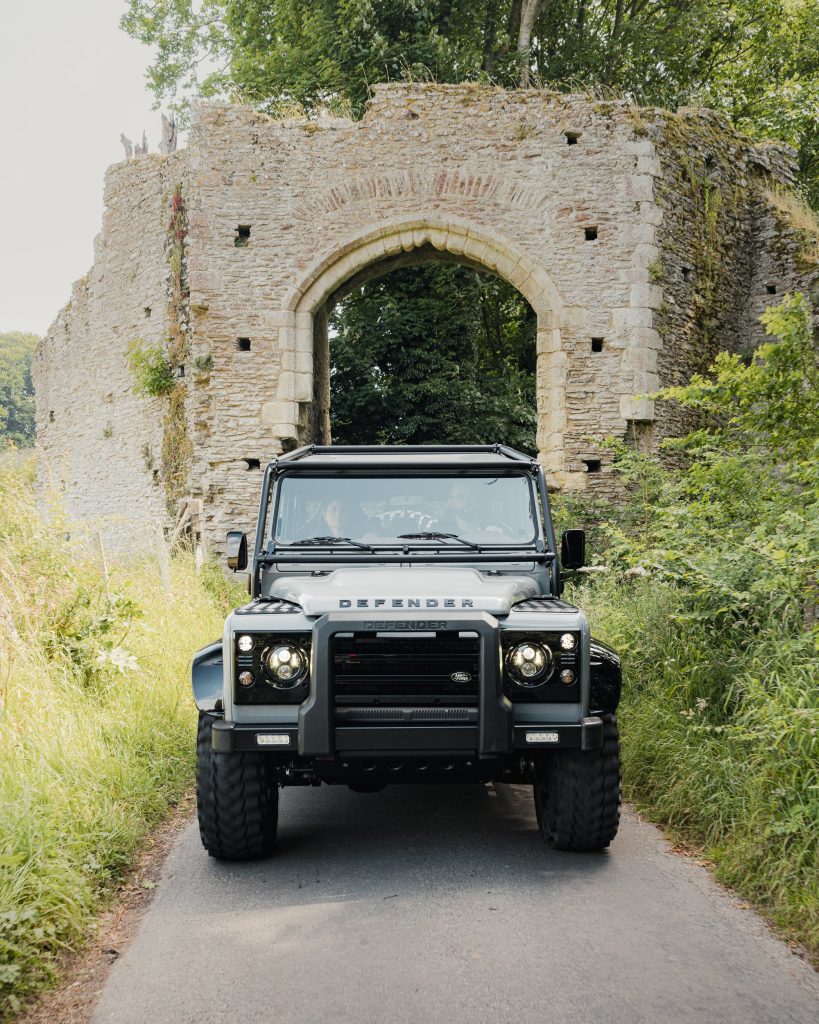
This is the argument that has split the Land Rover community more decisively than anything since the Series versus Defender debate of the 1980s. In one corner, the classic Defender: raw, agricultural, built like a tank, and dripping with character. In the other, the new L663 Defender: sophisticated, capable, comfortable, and powered by technology that would have seemed like witchcraft to the engineers who designed the original.
I’ve driven both extensively. I’ve crawled through mud in a classic 90, crossed deserts in a 110, and taken the new Defender V8 on everything from motorways to mountain tracks. And I’m going to give you my honest, unfiltered comparison, even though it’s going to upset people on both sides.
Because here’s the uncomfortable truth: neither vehicle is objectively “better.” They’re built for different eras, different priorities, and increasingly, different types of buyer. But the differences between them reveal something fascinating about what we actually want from a vehicle, and what we’re willing to sacrifice to get it.
Design Philosophy: Function vs Fusion
The Classic Defender’s Approach
The original Defender was designed with one guiding principle: function above all else. Every element of the vehicle exists because it serves a practical purpose. The flat panels? Easy to repair with basic tools in the middle of nowhere. The aluminium body? Corrosion resistance in tropical and marine environments. The bolt-on wings? Replaceable in minutes after trail damage.
This relentless focus on practicality gave the classic Defender its distinctive look, but that look was never intentional in an aesthetic sense. It’s beautiful because it’s honest, in the same way that a well-used tool is beautiful. There are no styling flourishes, no chrome accents, no attempt to look “cool.” It just looks like what it is: a vehicle designed to go anywhere and do anything.
The New Defender’s Approach
The L663 takes a very different approach. Yes, it’s extremely capable, arguably more capable than the classic in many measurable ways. But it’s also designed to look good on the school run, to compete with Range Rover Sport for lifestyle buyers, and to justify a price tag that starts at over £50,000.
The result is a vehicle that references the classic’s design language without actually committing to its philosophy. The exposed structural bolts on the new Defender are, for the most part, decorative. The “alpine windows” above the windscreen are carried over as a styling cue rather than a functional necessity. The side-mounted spare wheel (on some models) is there because it looks right, not because it was the only logical place to put it.
This isn’t necessarily a criticism. It’s just different. The new Defender is a modern interpretation of a legendary theme, and it does that job very well. But it’s important to understand that you’re buying a different kind of vehicle entirely.
Off-Road Capability: The Great Debate
This is where things get really interesting, and really contentious.
Classic Defender Off-Road
The classic Defender’s off-road ability comes from its mechanical simplicity and physical dimensions. Short overhangs, solid axles, coil springs with excellent articulation, low-range gearing that could pull a house off its foundations, and a relatively light kerb weight (around 1,700-1,900kg depending on variant) all contribute to a vehicle that is phenomenally capable on rough terrain.
But the classic Defender’s greatest off-road advantage is one that rarely gets mentioned: it’s fixable in the field. If you bend a track rod, you can straighten it with a rock. If you flood the engine, you can strip and dry the electrics in an hour. If you break a half shaft, you can fit a spare with basic tools. This repairability is why the classic Defender remains the vehicle of choice for serious expeditions to remote locations where the nearest dealer is a thousand miles away.
The classic Defender’s off-road weaknesses are limited traction control (later models have a basic system, but nothing compared to modern electronics), drum brakes on early models that fade when wet, and the reality that decades of use have worn out the mechanical components on most survivors.
If you’re interested in taking a classic off-road, our Defender off-road guide covers the essentials.
New Defender Off-Road
The new Defender approaches off-roading with technology rather than simplicity. The Terrain Response 2 system automatically adjusts throttle mapping, transmission behaviour, stability control, and differential locking based on the surface you’re driving on. The ClearSight Ground View camera shows you what’s directly beneath the vehicle. Wade sensing tells you how deep the water is. The air suspension can raise the vehicle by 70mm for additional ground clearance.
In controlled off-road environments (the kind with measured approach angles and prepared trails) the new Defender is truly stunning. It will walk up gradients that would have the classic scrabbling for traction, largely because the electronic traction control can apply braking force to individual wheels with a precision that no mechanical differential can match.
But the new Defender has significant off-road disadvantages too. It weighs over 2,200kg (in some configurations, close to 2,500kg). That extra weight means it sinks deeper into soft surfaces, puts more stress on bridges and tracks not designed for heavy vehicles, and makes recovery far more difficult when things go wrong. The complex electronic systems, while brilliant when working, cannot be fixed in the field if they fail. And the running costs after serious off-road damage are eye-watering compared to the classic.
The Verdict on Off-Road
For weekend green laning and moderate off-road adventures, the new Defender is honestly easier and more capable for most drivers. But for serious expeditions, remote travel, and situations where self-recovery and field repair are essential, the classic Defender remains unmatched. It’s not that the new one can’t do it. It’s that when things go wrong (and on serious expeditions, they always do), the classic is infinitely more forgiving.
On-Road Driving: No Contest
Let’s be blunt here: the classic Defender is absolutely terrible to drive on the road. I love them dearly, but pretending otherwise would be dishonest.
The classic Defender wanders at motorway speeds, requiring constant steering corrections. The noise level at 70mph makes conversation impossible without shouting. The heater is either off or volcanic. There is no middle ground. The seats, unless replaced with aftermarket items, are truly painful on journeys over an hour. There’s no power steering on early models (and the power steering on later models is barely adequate). The fuel consumption is dire. And the brakes, while adequate for the vehicle’s performance, inspire nothing resembling confidence.
The new Defender, by contrast, is a really good road car. It’s comfortable over long distances, reasonably quiet, well-heated and ventilated, and drives with a refinement that would have been unimaginable in a vehicle wearing the Defender badge even 15 years ago. The P400 engine, in particular, delivers performance that is seriously exciting: 0-60 in about 6 seconds, which is faster than most sports cars from the era when the classic Defender was being built.
If you’re planning to use your Defender as a daily driver that occasionally goes off-road, rather than an off-road tool that occasionally goes on-road, the new Defender is the only sensible choice.
Reliability and Running Costs
Classic Defender
The classic Defender’s reliability is a paradox. The individual components are relatively unreliable. Things break, leak, and wear out with depressing regularity. But the vehicle as a whole is almost impossible to kill, because everything that breaks is simple, cheap, and easy to fix. A classic Defender might strand you on the side of the road, but you’ll almost certainly be able to get it going again with basic tools and a bit of determination.
Running costs for a classic Defender are moderate for a vehicle of its age and type. Insurance is relatively cheap (especially for agreed-value policies on older models), road tax is low for pre-2001 vehicles, and most servicing can be done at home or by a general mechanic. Parts are widely available and reasonably priced. The main ongoing cost is rust prevention and repair, which can be significant if neglected. We’ve covered the common problems in detail if you want to know exactly what to budget for.
New Defender
The new Defender is more reliable in the conventional sense. It breaks down less often and requires less frequent attention. But when things do go wrong, they tend to be expensive. A set of air springs costs more than a complete axle rebuild on a classic. An infotainment module replacement costs more than an engine overhaul on a Tdi. Insurance is significantly more expensive, road tax is higher (especially for the V8), and servicing must be done by a Land Rover dealer or specialist with the correct diagnostic equipment.
Depreciation is also a factor. A new Defender V8 loses tens of thousands in its first three years. A classic Defender in good condition actually appreciates. For a detailed look at the financial side, our article on why Defenders are so expensive explains the market dynamics.
Character and Soul
This is where the argument gets emotional, and where the classic Defender wins by a margin that no amount of technology can close.
Driving a classic Defender is an experience. You feel the road through the steering wheel. You hear the engine working. You smell diesel and hot oil. Every journey feels like a small adventure, even if you’re just going to the shops. You wave at other Defender drivers, and they wave back. You get stopped in car parks by people who want to tell you about the Defender they once owned, or rode in, or dreamed about.
The classic Defender connects you to something. To the landscape, to the mechanical process of driving, to a community of enthusiasts who share your slightly irrational passion. It’s not just a vehicle; it’s a lifestyle statement, a commitment to a certain way of engaging with the world.
The new Defender is a very competent vehicle. It’s comfortable, capable, and well-equipped. But it doesn’t have that indefinable quality that makes people fall in love. It’s admired rather than adored. It’s respected rather than cherished. It will get you there in greater comfort, with more features, and more safely. But it won’t make your heart beat faster when you see it parked on the drive.
Value and Investment
Classic Defender Values
Classic Defenders have appreciated dramatically over the past decade. A well-maintained Td5 110 that sold for £8,000 in 2014 is now worth £25,000-£35,000. Early 90s Tdi models in good condition regularly fetch £30,000-£50,000. The very best restored examples command £60,000-£100,000 or more. This appreciation shows no sign of slowing. If anything, values have increased as the pool of good survivors shrinks.
New Defender Values
The new Defender depreciates like any modern vehicle, although Land Rover’s restricted supply has slowed depreciation somewhat. A three-year-old Defender X typically retains about 55-65% of its new value, which is decent for the class but nothing compared to the appreciation seen on classics.
Which Is the Better Investment?
If you’re looking at pure financial return, the classic is the better bet, assuming you buy a good one and maintain it properly. But the new Defender is the better choice if you want a vehicle that works reliably every day without demanding constant attention.
The Practical Choice vs The Passionate Choice
Here’s how I summarise it to anyone who asks. If you need a vehicle that starts every morning, handles motorway commutes comfortably, keeps your family safe and warm, and occasionally tackles a muddy field or tows a horse box, buy the new Defender. It does all of those things brilliantly, and your partner and children will thank you for it.
But if you want a vehicle that gives you something back, something intangible, something that can’t be quantified on a spec sheet or measured in a comparison test, buy the classic. Accept its limitations, learn its quirks, keep a toolkit in the back, and prepare to fall deeply, irrationally, permanently in love.
The Defender 90 versus 110 decision is the same for both generations, by the way. It comes down to how much space you need versus how much agility you want.
Towing and Load Carrying
Classic Defender Towing
The classic Defender 110 can tow up to 3,500kg braked, which is a substantial amount for a vehicle of its era. The simple, robust drivetrain and low-range gearbox make it an excellent tow vehicle, with the engine providing strong low-down torque at low speeds. The main limitations are the relatively weak brakes (especially on earlier models with drums) and the fact that motorway towing at 60mph in a classic Defender is an exercise in noise, concentration, and fuel consumption.
The 300Tdi and Td5 are the best towing engines in the classic range: the 300Tdi for its simplicity and torque, the Td5 for its additional power on hills. For detailed towing specifications across all models, our towing capacity guide has the complete figures.
New Defender Towing
The new Defender 110 matches the classic’s 3,500kg towing capacity, but does it with vastly more refinement. The Terrain Response system includes a towing mode, the automatic gearbox manages ratios intelligently, and the optional Advanced Tow Assist system allows you to steer a trailer using the rotary controller, which is brilliant for reversing.
The new Defender is simply a better tow vehicle in every measurable way. It’s more stable, more powerful, more comfortable, and dramatically easier to reverse with a trailer. If towing is a significant part of your vehicle use, the new Defender wins this category convincingly.
Community and Lifestyle
Classic Defender Community
There’s something about classic Defenders that creates an instant bond between owners. You wave at other Defenders on the road. You stop to help when you see one broken down. You attend shows, meets, and green lane runs where the vehicles are the stars and the people are the supporting cast.
The classic Defender community is vast, welcoming, and deeply knowledgeable. Forums like DefenderForum.com, Facebook groups with tens of thousands of members, local clubs, and international events like the LRO Show and Billing Off-Road Show provide a social network that extends far beyond the vehicle itself.
This community is also an incredible resource for ownership. Need to diagnose a problem? Someone’s had it before and can walk you through the fix. Looking for a rare part? Someone probably has one in their garage. Want to learn basic maintenance? There’s a YouTube channel and a forum thread for every job you could possibly need to do.
New Defender Community
The new Defender community is growing rapidly but has a different character. It’s more social-media-driven, more lifestyle-oriented, and less mechanically focused. New Defender owners are more likely to share adventure photos on Instagram than discuss gearbox ratios on a forum, and there’s nothing wrong with that. It’s simply a different expression of the same enthusiasm for the vehicle and the experiences it enables.
The two communities don’t always see eye to eye. Some classic owners view new Defender buyers as lifestyle tourists who don’t understand “real” Defenders. Some new Defender owners view classic enthusiasts as stuck in the past. Both perspectives are unfair and unhelpful. The Defender family is big enough for everyone.
Can You Have Both?
Some people do. The ideal combination, if you can afford it, is a new Defender as the daily driver and a classic as the weekend toy and project vehicle. That way you get the best of both worlds: modern comfort and reliability during the week, mechanical character and community belonging at the weekends.
But if I could only have one? You probably already know my answer. I’d take the classic, with all its faults, leaks, rattles, and imperfections. Because a vehicle that makes you smile every single time you turn the key is worth more than any amount of heated seats, touchscreen navigation, and adaptive cruise control.
And if that makes me irrational, well, show me a Defender enthusiast who isn’t.