Facts
Land Rover Defender Off Road: Why Nothing Else Comes Close
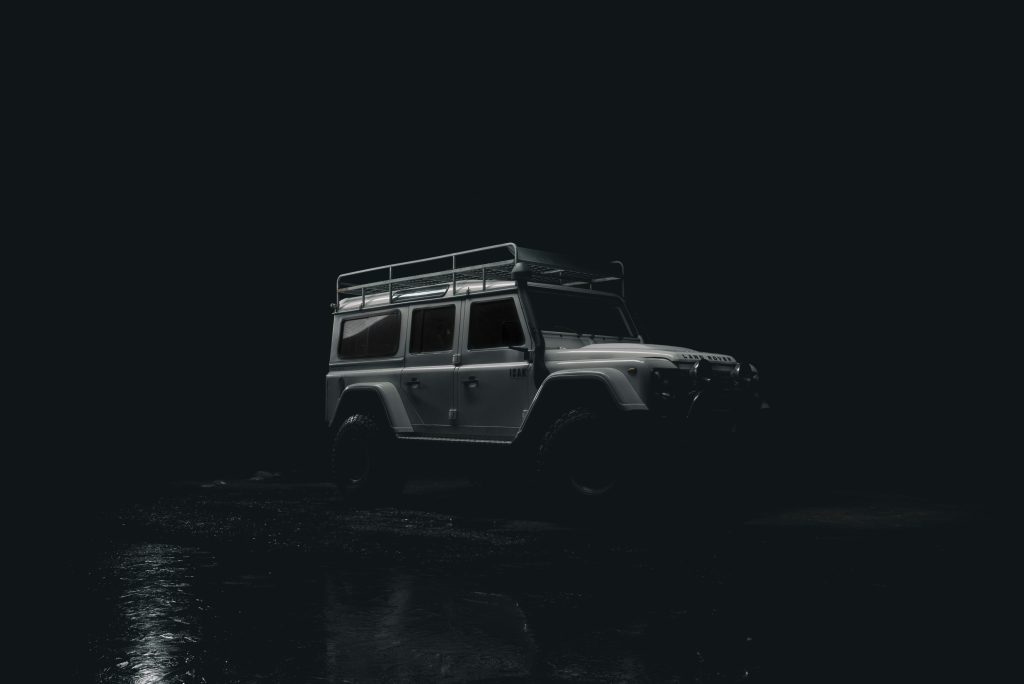
Born in Mud, Built for Mud, Probably Full of Mud
There is a moment — and every Defender owner knows it — when you turn off the tarmac onto an unpaved track, engage low range, and feel the vehicle come alive beneath you. The engine note drops. The tyres start finding their grip. And something ancient and deeply satisfying stirs in your chest. This is what this machine was built for. This is where it belongs.
The land rover defender off road experience is unlike anything else in motoring. Modern SUVs will do it with cameras, sensors, and seventeen electronic systems managing everything for you. The Defender does it with solid axles, a transfer box, and your own judgement. One of these approaches builds character. The other builds dependency on a touchscreen.
Land Rover Defender Off Road Hardware: Beautifully Agricultural
Let’s talk about what makes a Defender so absurdly capable off-road. Because on paper, the technology is ancient. Solid beam axles front and rear. A ladder-frame chassis. A permanent four-wheel-drive system with a lockable centre differential. Coil springs on anything from the mid-eighties onwards, leaf springs on the older stuff.
None of this is clever. None of this is sophisticated. And that is exactly the point.
Solid Axles and Approach Angles
Solid axles mean that when one wheel goes over a rock, the other wheel stays planted on the ground. Independent suspension — the kind fitted to every modern SUV — lifts a wheel the moment things get uneven. The Defender keeps all four tyres in contact with the earth like it’s hanging on for dear life. Which, in fairness, it usually is.
The approach angle on a Defender 90 is roughly 49 degrees. The departure angle is about 35 degrees. If you don’t know what that means, it basically means you can drive up and down things that would make a normal car burst into tears.
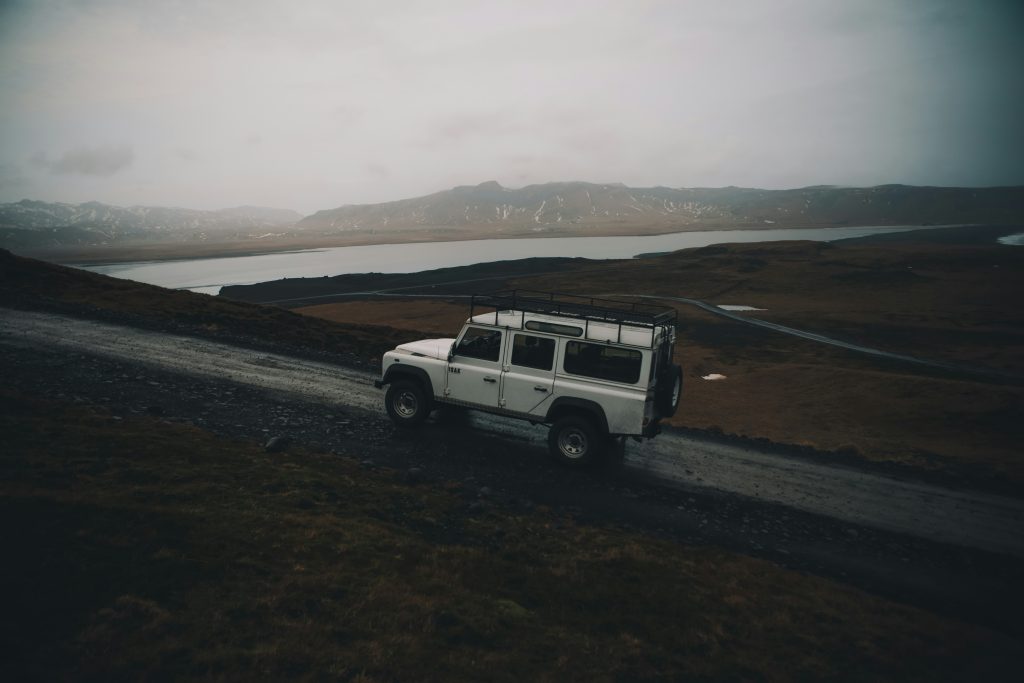
The Art of Reading the Ground: Land Rover Defender Off Road Instinct
Modern off-road vehicles have terrain response systems. You press a button that says “mud” or “sand” or “rocks” and the car figures everything out for you. It’s like ordering food through an app — efficient, but completely lacking in skill or satisfaction.
You Are the Terrain Response System
In a Defender, you are the terrain response system. You read the ground. You choose the line. You decide when to use low range, when to lock the diff, when to give it more throttle, and when to back off and try a different approach. Getting it right feels like solving a puzzle with a two-tonne piece of aluminium. Getting it wrong feels like writing a cheque to a recovery company.
This is the fundamental difference between driving a Defender off-road and driving a modern SUV off-road. The modern SUV removes you from the experience. The Defender puts you right in the middle of it, covered in mud, slightly worried, and having the absolute time of your life.
Green Laning: Britain’s Best-Kept Secret
For the uninitiated, green lanes are unpaved roads — legally accessible to vehicles — that criss-cross the British countryside like wrinkles on a farmer’s face. They range from gentle gravel tracks through rolling hills to genuinely challenging mud baths that will test both your vehicle and your vocabulary.
Green laning in a Defender is one of the purest driving pleasures available in Britain. No traffic. No speed cameras. No road rage. Just you, the landscape, and whatever the weather decides to throw at you. Which, being Britain, is usually rain.
The Best Green Lanes in Britain
The best green lanes are in the Yorkshire Dales, the Lake District, Wiltshire, and mid-Wales. Some are gentle enough for a standard Defender. Others will have you questioning every decision you’ve made since buying the thing. All of them are magnificent.
A word of caution, though: always check the legal status of a lane before driving it. The countryside is not a free-for-all, and there are responsible ways to enjoy it. Use proper OS maps, check with the local council, and don’t tear up the surface like a hooligan. We want these lanes to exist for future generations of Defender owners to enjoy.
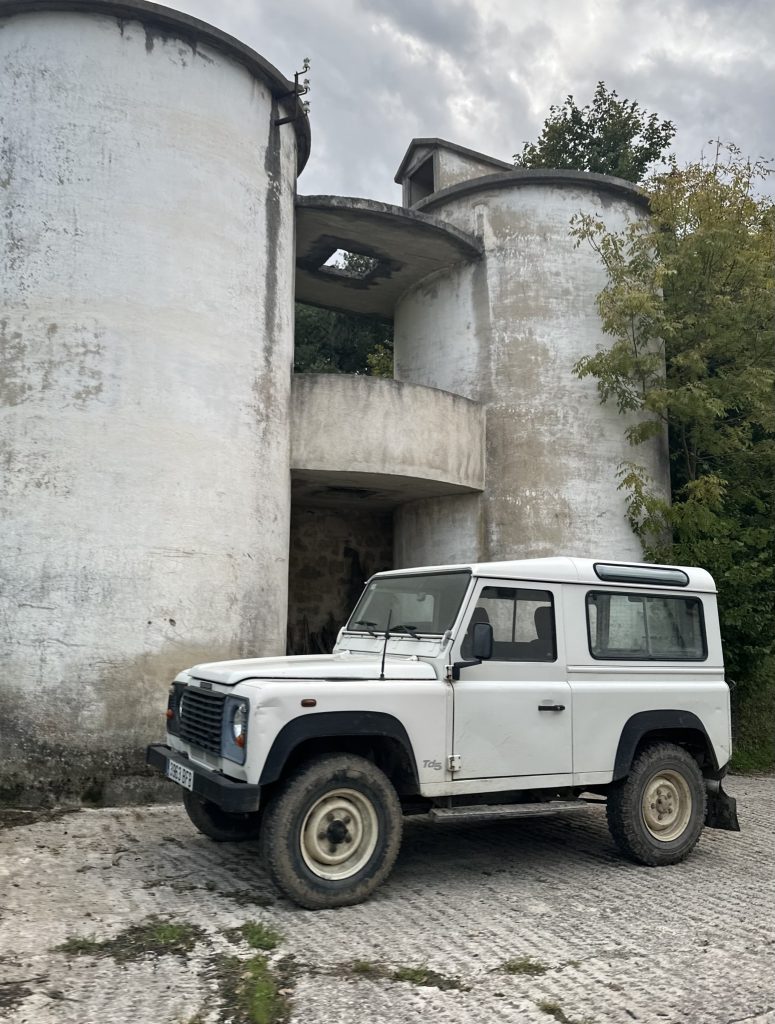
Mud: Where Land Rover Defender Off Road Capability Shines
Mud is where the Defender truly comes into its own. Not the thin, watery mud you get on a building site. Proper mud. The thick, brown, wheel-sucking, boot-stealing, soul-destroying mud that the British countryside produces between October and April. Which, in a bad year, is also May through September.
The Defender ploughs through it with a determination that borders on stubbornness. The key is momentum. Keep moving. Don’t stop. The moment you hesitate, the mud grabs hold and you’re done. It’s like negotiating with a toddler — commitment is everything.
Tyre choice matters enormously here. Road tyres in mud are about as useful as ice skates on grass. A good set of all-terrains — or proper mud tyres if you’re feeling brave — transforms the Defender from “probably fine” to “absolutely unstoppable.” Lower your tyre pressures a bit for extra grip and suddenly you’re dancing through the muck like it’s not even there.
Water Crossings: Where Bravery Meets Stupidity
The Defender’s wading depth is around 500mm as standard. With a snorkel and some basic waterproofing, you can push that significantly higher. But here’s the thing about water crossings: the water is always deeper than it looks. Always. This is a universal law of physics that applies specifically to Defenders and farmers’ fords.
The correct approach to a water crossing is: stop, get out, walk through it with wellies on, check the bottom for depth and obstacles, and then drive through slowly and steadily. The Defender approach to a water crossing is: send it and pray. One of these methods leads to better outcomes than the other. I’ll let you guess which.
If you do get water in places it shouldn’t be — the air intake, the cabin, your lunchbox — don’t panic. The Defender was designed to get wet. The drain plugs in the footwells exist for a reason. Just pull them out, let everything drain, and carry on. It’s a feature, not a fault.

Sand, Snow, and Other Surfaces
Mud might be the Defender’s natural habitat, but it’s remarkably capable on other surfaces too.
Sand requires low tyre pressures, high gear, and steady throttle. The Defender’s weight actually helps here — it pushes through soft sand where lighter vehicles float on top and dig in. Just don’t stop on a dune unless you fancy spending three hours digging yourself out with a camping spoon.
Snow is where the Defender becomes a genuine public service vehicle. While everyone else is stuck at the bottom of the hill looking miserable, you’ll be cruising past with a casual wave. The weight, the four-wheel drive, and the low-range gearbox make the Defender one of the best snow vehicles you can buy. This is why farmers never miss a day of work, no matter what the weather does.
Rocks require care, patience, and a reasonable set of tyres. The Defender’s solid axles and long-travel suspension handle rocky terrain beautifully. Pick your line, crawl over slowly, and listen to the satisfying crunch of rocks pinging off the underside. That’s not damage — that’s the sound of adventure.
Why Modern SUVs Can’t Compete With Land Rover Defender Off Road
Here’s the uncomfortable truth for the makers of modern “off-road” vehicles. Most of them are designed primarily for roads. The off-road capability is a marketing exercise — a box-ticking feature that looks good in the brochure but falls apart the moment you leave the car park.
A Range Rover Sport might have air suspension and terrain response and hill descent control and every other electronic gizmo known to man. But take it somewhere properly challenging and you’ll scratch every panel, fill the interior with mud, and then get a repair bill that makes your eyes water.
The Defender doesn’t have these problems because the Defender doesn’t care about scratches. It doesn’t care about mud. It was built to be used, abused, and hosed down afterwards. You can take it through a hedge sideways and it’ll just add character.
This is the fundamental genius of the Defender’s design. It wasn’t built to be precious. It was built to work. And after seven decades, it still works better off-road than almost anything else you can buy.

The Feeling You Can’t Buy Elsewhere
At the end of a proper day off-road — when the Defender is caked in mud, the cabin smells like a swamp, there’s a new dent you don’t remember getting, and you’re physically exhausted from wrestling the steering wheel — there is a feeling of satisfaction that nothing else in motoring can match.
You’ve been somewhere. You’ve done something. You and this ridiculous, beautiful, infuriating machine have conquered something together. And tomorrow, you’ll wash it off, check nothing’s fallen off underneath, and do it all over again.
That’s the land rover defender off road experience. It’s not comfortable. It’s not easy. It’s not even sensible. But it’s real. And in a world that’s increasingly virtual, increasingly sanitised, and increasingly bubble-wrapped, real is worth more than you can possibly imagine.
Ready to take your off-road adventures further? Our Defender overlanding and camping setup guide has everything you need.