Comparisons
Land Rover Defender vs Jeep Wrangler: The Ultimate Off-Road Showdown
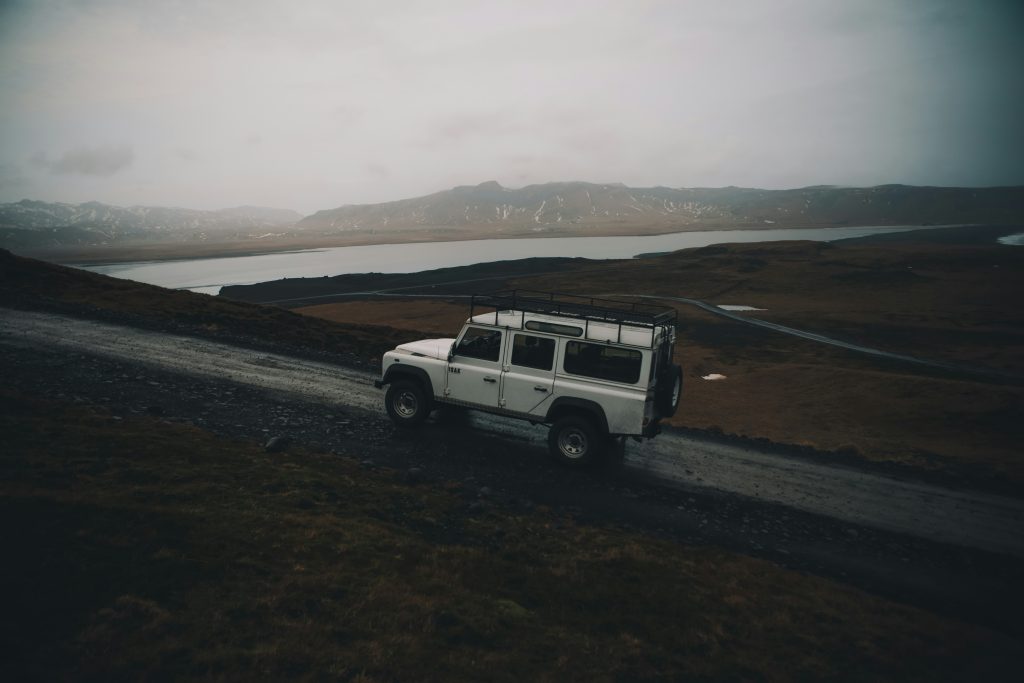
Defender vs Wrangler — two icons, two philosophies, one question that has started more arguments around campfires and in pub car parks than almost anything else in the automotive world. Which one deserves a spot on your driveway?
Both vehicles have earned their legendary status through decades of proving themselves in the harshest conditions on Earth. The Defender carved its reputation across African savannas, through Amazonian river crossings, and up Himalayan passes. The Wrangler did the same across the Rubicon Trail, through Moab’s red rock canyons, and wherever American adventure seekers pointed their wheels.
But these two legends approach the same mission — going anywhere, doing anything — from fundamentally different angles. And that difference matters enormously when you’re deciding which one deserves a spot on your driveway.

Heritage: Decades of Dirt
The Land Rover Defender’s lineage stretches back to 1948, when Maurice Wilks sketched the original Land Rover design on a Welsh beach. For over seven decades, the Defender and its predecessors have been the vehicle of choice for farmers, military forces, expedition leaders, and anyone who needed a machine that simply would not quit. When the United Nations needs to reach a remote village, they send a Land Rover. When the British Army needs to cross a desert, they take Defenders.
The Jeep Wrangler traces its DNA to the Willys MB of World War II — arguably the vehicle that helped win the war. From those military origins, the Jeep evolved through the CJ series and into the Wrangler we know today. It became the definitive American off-roader, a symbol of freedom and weekend adventure that is as recognisable as apple pie and baseball.
Both pedigrees are impeccable. Both vehicles have genuinely earned their place in automotive history through performance rather than marketing.
Price: The Elephant in the Room
Let’s address this straight away because it matters. The Jeep Wrangler starts at roughly $37,590 for a 2026 model. The Land Rover Defender starts at approximately $65,350. That is nearly double the price before you start ticking option boxes.
This price gap is significant and it’s worth understanding what you’re paying for. The Defender’s premium gets you a more refined interior, more advanced technology, a more powerful base engine, and a vehicle that is genuinely comfortable on motorways. The Wrangler’s lower price gets you a more stripped-back, mechanical experience that many enthusiasts actually prefer.
There is another financial consideration worth mentioning: depreciation. The Wrangler holds its value remarkably well, losing roughly 36% over five years. The Defender loses about 51% in the same period. So while you pay more upfront for the Defender, the Wrangler claws back some of that difference over time.
Off-Road Capability: Where It Actually Matters
This is where the conversation gets properly interesting.
The Wrangler’s Approach
The Jeep Wrangler is an off-road purist’s dream. It uses solid front and rear axles — a setup that many serious off-roaders consider superior for rock crawling because both wheels on each axle stay at the same height regardless of articulation. Add in available locking differentials, a disconnecting front sway bar, short overhangs, and excellent approach and departure angles, and you have a vehicle that is genuinely difficult to beat on a technical rock trail.
The Wrangler also offers something the Defender cannot: removable doors, a fold-down windscreen, and a removable roof. This open-air experience is not just a party trick. It gives you unobstructed visibility on tight trails and creates a connection with the outdoors that is genuinely special.
The Rubicon trim is particularly impressive, with features like electronic locking front and rear differentials, a 4:1 low-range transfer case ratio, and rock rails as standard. This is a vehicle engineered specifically to climb over things that should probably stop most vehicles.
The Defender’s Approach
The modern Land Rover Defender takes a different philosophy. Rather than relying solely on mechanical hardware, it combines serious mechanical capability with sophisticated electronic systems. The Terrain Response 2 system automatically reads the surface beneath the wheels and adjusts throttle response, traction control, gearbox behaviour, and differential settings accordingly.
The Defender rides on independent suspension rather than solid axles. Purists might scoff, but Land Rover has engineered the system to deliver impressive wheel articulation — up to 500mm with the optional air suspension. The electronic active differential and all-wheel-drive system distribute torque with a precision that solid axles simply cannot match.
Where the Defender genuinely excels is water fording. It can wade through up to 900mm of water, significantly deeper than the Wrangler’s capability. For anyone who regularly encounters flooded tracks, river crossings, or tidal roads, this is not a small advantage.
The Defender also offers a more powerful range of engines. The base turbocharged four-cylinder produces around 296 horsepower, and the range extends up to the V8-powered Defender Octa with over 500 horsepower. The Wrangler’s range typically spans from 270 to 470 horsepower depending on configuration.
The Verdict on Off-Road
Here is the honest Defender vs Wrangler assessment: the Wrangler is better at slow, technical rock crawling. The solid axles, locking diffs, and minimalist approach make it the tool of choice for serious trail enthusiasts who want to pick their way through boulder fields.
The Defender is better at everything else off-road. Fast gravel roads, deep mud, water crossings, sand dunes, varied terrain where you need the vehicle to think and adapt — the Defender handles all of this with more composure and capability. It is also significantly more capable in the hands of a less experienced off-road driver, because the electronics do much of the thinking for you.

On-Road Comfort: No Contest
This is where the Defender absolutely demolishes the Wrangler, and it is worth discussing because most owners spend 90% or more of their time on tarmac.
The Wrangler’s solid axles, upright windscreen, and boxy shape make it noisy, wobbly, and tiring on motorways. Wind noise above 60 mph is considerable. The steering can feel vague at speed. The ride quality, while adequate, never lets you forget that you’re driving a vehicle designed primarily for off-road use.
The Defender, by contrast, is a genuinely comfortable motorway cruiser. The independent suspension soaks up bumps with composure. Road noise is well-managed. The steering feels precise and confidence-inspiring. You can drive a Defender for six hours on a motorway and arrive feeling fresh. Try the same in a Wrangler and you’ll need a cup of tea and a lie down.
The Defender’s interior is also in a completely different league. High-quality materials, a large touchscreen infotainment system, excellent climate control, available massaging seats, and a sense of craftsmanship throughout the cabin. The Wrangler’s interior has improved dramatically in recent years, but it still feels more utilitarian — which, to be fair, is part of its charm.
Towing Capacity
If you need to tow a trailer, caravan, boat, or horse box, the Defender wins convincingly. It can tow up to 7,716 pounds (3,500 kg) when properly equipped. The Wrangler manages a maximum of around 3,500 pounds (1,588 kg).
This is a substantial difference. If towing is part of your lifestyle — and for many Defender buyers, it absolutely is — this alone might settle the argument.
Practicality and Space
The Defender is available in three body styles: the short-wheelbase 90, the standard 110, and the long 130. The 110 and 130 can be configured with a third row of seats, accommodating up to seven or eight passengers.
The Wrangler comes in two-door and four-door (Unlimited) variants. Maximum seating is five passengers. The four-door Unlimited offers reasonable cargo space, but it cannot match the Defender 110 or 130 for sheer carrying capacity.
For families, dog owners, or anyone who regularly needs to haul significant amounts of kit, the Defender offers considerably more flexibility.
Reliability and Ownership
This is where we need to be honest about the Defender’s weaknesses. Land Rover’s reliability reputation is, to put it diplomatically, not its strongest selling point. While the modern Defender has improved significantly over earlier Land Rover products, it still suffers from more reported issues than the Wrangler, particularly around electronics and infotainment.
The Wrangler, being a simpler vehicle with less complicated technology, tends to be more reliable in the traditional sense. Its parts are also generally cheaper, and the enormous aftermarket support means you will never struggle to find components or qualified mechanics.
Servicing costs for the Defender are higher, as you would expect for a premium vehicle. Annual maintenance, tyres, and insurance all cost more than the equivalent Wrangler expenses.
Customisation and Community
The Wrangler wins this category decisively. The Jeep aftermarket is absolutely massive — arguably the largest of any vehicle on the planet. Every conceivable modification, from lift kits to bumpers to lighting to interior accessories, is available from dozens of manufacturers at various price points.
The Defender aftermarket is growing but cannot match the Wrangler’s ecosystem. There are excellent Defender specialists, particularly in the UK, but the range of options and the price points are narrower.
Both vehicles enjoy passionate owner communities. Jeep owners have their wave (if you know, you know), their rallies, and their trails. Defender owners have a quieter but equally dedicated community, particularly in the UK and across the Commonwealth, with events, expeditions, and a shared understanding that they’ve chosen something special.
Which One Should You Buy?
Choose the Jeep Wrangler if:
You want a dedicated off-road machine at a more accessible price point. You love the open-air driving experience. You want to customise your vehicle extensively without breaking the bank. You prefer mechanical simplicity over electronic sophistication. You don’t mind trading on-road comfort for off-road purity. And you want a vehicle that holds its value exceptionally well.
Choose the Land Rover Defender if:
You want a vehicle that does everything well — off-road capability, on-road comfort, towing, family transport. You value a premium interior and advanced technology. You need serious towing capacity. You want a vehicle that can cross a continent in comfort rather than just conquer a trail on a weekend. And you appreciate British engineering heritage.
Both are brilliant vehicles. The Wrangler is the better pure off-roader for the money. The Defender is the better all-round vehicle for daily life that also happens to be properly capable when the tarmac ends.
For us at Defender Sightings, the choice is obvious — but we’re biased, and we’re not afraid to admit it. The Defender’s combination of capability, comfort, and sheer presence is something no other vehicle quite matches. But we have nothing but respect for the Wrangler. It is a genuinely great machine, and the world would be poorer without it.
The real question in the Defender vs Wrangler debate isn’t which one is better. It’s which one is better for you.
For another head-to-head comparison, see how the Defender compares to the Mercedes G-Wagon.