Comparisons
Defender vs Mercedes G-Wagon: Which Luxury 4×4 Actually Wins?
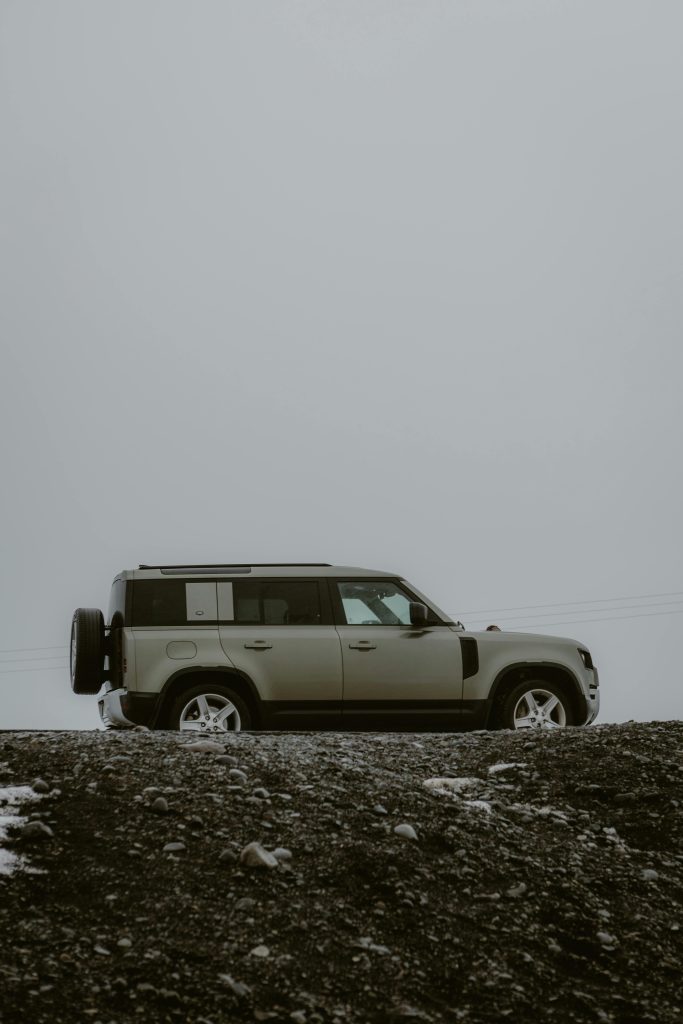
Two vehicles. Two legends. In 2026, these two icons are closer in capability than ever, but their philosophies remain poles apart. Two completely different philosophies about what a luxury off-roader should be, wrapped in two boxy, upright, unapologetically old-school silhouettes that refuse to follow the sleek, aerodynamic trends of modern automotive design.
The Land Rover Defender and the Mercedes-Benz G-Class (or G-Wagon, as everyone actually calls it) are the two most iconic off-road vehicles still in production. They occupy similar price brackets, attract similar buyers, and provoke similar levels of devotion from their respective fan bases. But beneath the surface, they’re very different vehicles with very different strengths.
I’ve spent significant time with both. I’ve driven the Defender V8 and the G63 AMG on the same roads, taken the Defender D300 and the G400d through the same trails, and lived with both as daily drivers. This isn’t a spec-sheet comparison that you can get anywhere. This is a real-world, opinionated, occasionally unfair assessment of which vehicle is actually better in the ways that actually matter.
And before we start, let me acknowledge the elephant in the room: for many buyers, this isn’t really a rational decision at all. It’s an emotional one. You’re either a Defender person or a G-Wagon person, and nothing I write here is going to change that. But for those of you who are truly undecided, or who want ammunition for arguments at dinner parties, read on.
The Short Answer
Which is more expensive, a G-Wagon or a Defender? The G-Wagon, by a wide margin. A 2026 G 550 starts at $147,900 in the US against $57,100 for a Defender 110 S. In the UK it is about £115,000 for a G 400d against roughly £52,000 for a Defender. You can buy two well-specified Defenders for the price of one base G-Class and still have money left for tyres.
Which is better off road? The Defender, for most people in most situations. The G-Class wins on sheer mechanical hardware — three locking differentials as standard — but the Defender’s electronic Terrain Response, better approach angles in standard trim and lower kerb weight (around 2,200 kg in D300 spec) make it more capable in the conditions ordinary owners actually meet. The G-Class is the better tool for a specialist; the Defender is the better tool for a weekend.
Which should you buy? If you want the badge, the status and the presence, buy the G-Wagon. If you want capability per euro, buy the Defender — it holds its value better, and expect it to cost roughly £3,000 to £5,000 less to run over three years and 30,000 miles, on top of the purchase price gap.
Defender vs G-Wagon: The Numbers Side by Side
| Land Rover Defender | Mercedes G-Class | |
|---|---|---|
| US price from (2026) | $57,100 (110 S, P300) | $147,900 (G 550) |
| US price, top model | $115,500 (OCTA, 626 hp) | $195,000 (G 63 AMG) |
| UK price from | around £52,000 | around £115,000 (G 400d) |
| UK price, top model | £115,000+ (V8) | around £175,000 (G 63 AMG) |
| Range-topping V8 | 525 hp supercharged 5.0 | 585 hp twin-turbo (G 63) |
| Kerb weight | around 2,200 kg (D300) | around 2,500 kg |
| Boot space | 786–1,875 litres (110) | 667–1,941 litres |
| Servicing, per visit | £400–£800 | £500–£1,000 |
| Set of four tyres | £800–£1,400 | £1,000–£1,600 |
| Value kept after 3 years | 80–85% | 65–75% (G 63 can exceed list) |
Heritage and History
The Defender’s Story
The Land Rover was born in 1948 on a Welsh beach, where Maurice Wilks sketched the outline of a utilitarian farm vehicle in the sand. It was designed as a tool, a tractor that could also go on the road, intended for farmers, the military, and anyone who needed to get somewhere that conventional vehicles couldn’t reach.
Over 67 years of continuous production (1948-2016 for the classic, with the new model launching in 2020), the Defender evolved from a basic agricultural workhorse into the world’s most versatile off-road vehicle. It served in every military conflict from Korea to Afghanistan, crossed every continent, and became a symbol of British engineering pragmatism. Our history of the Defender covers this evolution in detail.
The G-Wagon’s Story
The G-Class has a similarly utilitarian origin. Developed in the late 1970s as a military vehicle for the Austrian army (with input from the Shah of Iran, who was a Mercedes shareholder), the Geländewagen was designed to combine Mercedes-Benz engineering quality with real military-grade off-road capability.
What happened next was unexpected. Civilian buyers, particularly wealthy ones, discovered that the G-Class was immensely desirable as a status symbol. Mercedes-Benz leaned into this, gradually adding luxury features, more powerful engines, and AMG performance variants while keeping the basic body structure largely unchanged for over 40 years.
The current G-Class (W463A, introduced in 2018) is the most extensively redesigned version in the model’s history, with an entirely new chassis, independent front suspension, and significantly improved on-road dynamics, while retaining the three differential locks that define its off-road credentials.
Heritage Verdict
Both vehicles have real heritage, but it’s heritage of a different character. The Defender’s history is one of utility, exploration, and service. The G-Wagon’s history is one of engineering excellence that accidentally became a luxury icon. The Defender has deeper cultural resonance. It’s more than a vehicle, it’s a symbol of adventure. The G-Wagon has more prestige. It’s a status symbol that happens to be capable.
Off-Road Capability
This is supposed to be the core competency of both vehicles, so let’s examine it properly.
Defender Off-Road
The new Defender uses a monocoque construction with independent suspension all round (air suspension on higher-spec models, coil springs on the base). It has a two-speed transfer case with an electronically locking centre differential and an optional electronically locking rear differential. Terrain Response 2 adjusts the vehicle’s behaviour for different surfaces automatically.
Key off-road specs for the Defender 110: approach angle of 38 degrees (with air suspension at max height), departure angle of 40 degrees, breakover angle of 28 degrees, ground clearance of 291mm, and wading depth of 900mm.
The Defender’s party trick off-road is its electronic traction control system, which can brake individual wheels with extraordinary precision to redirect torque to wheels with grip. Combined with the optional rear diff lock and the relatively low kerb weight (for this class, around 2,200kg in D300 spec), the Defender is phenomenally capable on technical terrain.
G-Wagon Off-Road
The G-Class uses a ladder-frame chassis (one of the last luxury SUVs to do so) with a live rear axle and independent front suspension. It has a two-speed transfer case with three differential locks (front, centre, and rear) that can be engaged individually or in any combination.
Key off-road specs for the G 400d: approach angle of 31 degrees, departure angle of 30 degrees, ground clearance of 241mm, and wading depth of 700mm.
On paper, the G-Wagon’s angles and clearance are significantly worse than the Defender’s. But the three mechanical differential locks give the G-Wagon a massive advantage in situations where you need every wheel to drive regardless of traction. When all three diff locks are engaged, the G-Class distributes power to all four wheels equally. No electronic trickery, no software interpretation, just pure mechanical lock.
The G-Wagon’s ladder-frame chassis also gives it greater resistance to twisting forces on rough terrain, and the live rear axle provides better articulation than the Defender’s independent rear suspension.
Off-Road Verdict
The Defender has better approach and departure angles, more ground clearance, deeper wading ability, and a more sophisticated electronic traction system. The G-Wagon has three mechanical diff locks and a more robust chassis construction. In most real-world off-road situations, the Defender is easier to drive and more capable for the average driver. But in extreme situations (deep mud, rock crawling, severe articulation) the G-Wagon’s mechanical diff locks give it an edge that electronics can’t quite replicate. For a deeper look at the Defender’s off-road credentials, check our dedicated off-road capability guide.
I’d call this one a narrow win for the Defender overall, but with the caveat that the G-Wagon’s diff locks make it the better choice for truly extreme off-roading.
On-Road Performance
Defender On-Road
The Defender drives like a large, slightly elevated SUV. The steering is well-weighted, body roll is well-controlled (especially with the air suspension), and the ride quality is comfortable on most surfaces. It’s not sporty (no vehicle this tall and heavy can be) but it’s composed and confidence-inspiring.
The Defender V8 (525hp supercharged 5.0-litre) transforms the character completely, adding real performance car acceleration to the off-roader package. But for most buyers, the D300 diesel or P400 petrol provide more than adequate performance with better fuel economy and lower running costs.
Road noise is one of the Defender’s weaknesses. The boxy shape generates significant wind noise above 60mph, and the large off-road tyres add tyre roar. It’s not unpleasant, but it’s noticeable compared to more aerodynamic rivals.
G-Wagon On-Road
The G-Class drives like nothing else. The high seating position, the vertical windscreen, and the narrow body give you extraordinary visibility but also a constant awareness that you’re driving something unusual. The steering is precise but heavy, and the tall body leans noticeably in corners.
Where the G-Class excels is in refinement. Mercedes-Benz has spent decades insulating the cabin from road and wind noise, and the result is a vehicle that feels remarkably quiet and composed at motorway speeds, significantly quieter than the Defender. The interior quality is also a cut above, with materials, fit, and finish that justify the higher price tag.
The G63 AMG (585hp twin-turbo V8) is a ludicrous vehicle: a two-and-a-half-tonne off-roader that does 0-60 in 4.4 seconds with a noise that sets off car alarms. It’s completely unnecessary and entirely magnificent.
On-Road Verdict
The G-Wagon is the better road car. It’s quieter, more refined, and has a more luxurious interior. The Defender is the better driver’s car. It feels more agile, more connected, and more fun to drive on twisty roads. If your driving is predominantly motorway miles and city streets, the G-Wagon is more comfortable. If you enjoy driving as an activity, the Defender is more rewarding.
Interior and Technology
Defender Interior
The Defender’s interior is distinctive: exposed structural elements, rubberised surfaces, and a design language that references the classic Defender’s utilitarian character while delivering real modern functionality. The Pivi Pro infotainment system (upgraded to 13.1-inch touchscreen for 2026, covered in detail in my owner reviews roundup) is responsive and well-designed, with good smartphone integration.
Material quality varies by specification. The base models feel somewhat spartan, which is appropriate for a Defender but less so for a £60,000+ vehicle. The higher-spec X and V8 models feel suitably premium, with leather, Alcantara, and metal accents lifting the ambiance considerably.
Practicality is where the Defender excels. The boot is vast (786-1,875 litres depending on seat configuration in the 110), the cabin has numerous storage cubbies and USB ports, and the optional front jump seat (unique to the Defender, and one of the best features to spec) adds a sixth seat in the front row.
G-Wagon Interior
The G-Class interior is pure Mercedes-Benz luxury: wide digital screens, turbine-style air vents, ambient lighting, and the kind of leather and wood (see my accessories guide for Defender interior upgrades) that makes you feel like you’re sitting in a gentleman’s club on wheels. It’s beautiful, and it’s the area where the G-Class most clearly justifies its price premium over the Defender.
The MBUX infotainment system is excellent, arguably the best in the business, with natural language voice control (“Hey Mercedes”), augmented reality navigation, and seamless smartphone integration.
Where the G-Class falls behind is practicality. The boot is significantly smaller than the Defender’s (667-1,941 litres in the wagon, but the shape is less usable), and the rear doors open conventionally rather than the wide, barn-door arrangement of the old G-Wagon, which limits the opening width in tight parking spaces.
Interior Verdict
The G-Wagon has the better interior in terms of material quality and luxury ambiance. The Defender has the better interior in terms of practicality, versatility, and character. If you want to feel special every time you get in, choose the G-Wagon. If you want a vehicle that works as hard as you do, choose the Defender.
Pricing and Value
This is where things get interesting.
Defender Pricing (2026)
In the US, the 2026 Defender 110 starts at $57,100 for the S trim with the P300 engine, rising to $79,900 for the V8 (90 body only) and $115,500 for the Defender OCTA with its 626 hp twin-turbo V8. The popular X-Dynamic SE and X trims with the P400 inline-six sit in the $65,000-$80,000 range. In the UK, prices start around £52,000 and go up to £115,000+ for the V8. For a full breakdown of every trim and option, see my Defender price guide.
G-Wagon Pricing (2026)
In the US, the 2026 G 550 starts at $147,900 and the G 63 AMG at $195,000. In the UK, the G 400d starts at around £115,000 and the G63 AMG at about £175,000. Even the “entry-level” G-Class costs more than the most expensive standard Defender (excluding the OCTA).
Value Assessment
The G-Wagon costs roughly twice as much as an equivalently equipped Defender. Is it twice as good? In terms of interior quality and prestige, possibly. In terms of capability, practicality, and versatility, absolutely not. The Defender represents significantly better value for money. You get a more capable, more practical vehicle for substantially less money.
But “value” and “prestige” are different currencies, and for G-Wagon buyers, prestige is often the primary purchase motivator. The G-Class turns heads in a way that the Defender, despite its own considerable visual appeal, simply doesn’t match, particularly in urban environments.
Depreciation
The Defender holds its value better than the G-Class, which surprises people. It retains roughly 80-85% of its value after three years by 2026 industry standards, against 65-75% for the G-Class over the same period. The exception is the G63 AMG, which is a case of its own and sometimes exceeds its original list price on the used market because of the waiting lists. Both depreciate less than the average luxury SUV, but on a straight three-year comparison the Defender loses less money.
Classic Defenders, of course, appreciate rather than depreciate. A well-maintained classic is a solid investment, as we discussed in our article on why Defenders are so expensive.
Reliability
Defender Reliability
The new Defender has had a mixed reliability record. Early models (2020-2021) suffered from various teething issues: infotainment glitches, water leaks, sensor errors, and some electrical gremlins. Later production years have been significantly better, and Land Rover has been proactive about issuing fixes and recalls. Our reliability guide covers the details.
The fundamental mechanical components (the Ingenium engines, the ZF gearbox, the Terrain Response system) have proven robust. Most issues are software and electronics related rather than mechanical, which is encouraging for long-term durability.
G-Wagon Reliability
The G-Class has a better reliability reputation, partly justified and partly the result of lower annual mileages (many G-Wagons are weekend and lifestyle vehicles rather than daily drivers). The Mercedes-Benz powertrain is well-proven, and the ladder-frame chassis is almost indestructible.
That said, the G-Class is a complex vehicle with a lot of electronics, and when things go wrong, they’re expensive to fix. The three diff locks, while mechanically brilliant, require specialist maintenance, and Mercedes-Benz dealer labour rates are eye-watering.
Reliability Verdict
For 2026, J.D. Power gives the Defender a predicted reliability score of 82/100 (“Great”), a solid improvement over earlier years. The G-Wagon has a slight edge on overall reliability, but neither vehicle is going to trouble a Toyota Land Cruiser in the dependability stakes. Both are complex, expensive luxury vehicles with complex, expensive electronics, and both will require more maintenance attention (and budget) than a simpler vehicle. Our Defender vs Land Cruiser comparison covers the reliability differential if you’re also considering the Toyota.
Running Costs
Insurance
Both vehicles fall into high insurance groups. The Defender typically sits in groups 35-50 depending on engine and specification, while the G-Class occupies groups 45-50. Expect to pay £800-£2,000+ annually for either vehicle, depending on your circumstances.
Servicing
Defender servicing costs approximately £400-£800 per service at a Land Rover dealer. G-Class servicing costs approximately £500-£1,000 at a Mercedes-Benz dealer. Both can be serviced more cheaply at independent specialists.
Fuel Economy
The Defender is generally more fuel-efficient than the G-Class, thanks to its lighter weight and more aerodynamic (relatively speaking) body shape. The Defender D300 achieves 26-31 MPG in mixed driving; the G 400d manages 22-27 MPG. The G63 AMG is predictably thirsty at 16-20 MPG. For comprehensive fuel figures across all Defender engines, see our fuel economy guide.
Tyres
Both vehicles use large, expensive tyres. Budget £200-£350 per tyre for the Defender and £250-£400 per tyre for the G-Class (which uses wider tyres in most specifications). A set of four will therefore cost £800-£1,400 for the Defender and £1,000-£1,600 for the G-Class.
Running Cost Verdict
The Defender is cheaper to run in every measurable category. Insurance, servicing, fuel, and tyres all cost less than the G-Class equivalents. Over three years and 30,000 miles, the Defender will cost roughly £3,000-£5,000 less in running costs, on top of the significant purchase price difference.
Who Should Buy Which?
Buy the Defender if:
You want serious off-road capability as a regular part of your driving life. You value practicality and versatility over prestige. You plan to tow, carry, and actually use your vehicle as a tool. You want the best balance of capability and value. You prefer character and community over status. You’re interested in the overlanding and adventure lifestyle. You want a vehicle that feels connected to a heritage of exploration and utility.
Buy the G-Wagon if:
You prioritise interior luxury and build quality above all else. You want a vehicle that turns heads and makes a statement. You drive predominantly on-road and want maximum motorway refinement. Price is not a primary concern. You want the exclusivity and prestige that the G-Class badge carries. You want the AMG V8 sound (honestly, it’s worth the admission price alone). You intend to keep the vehicle long-term and want the best possible residual value.
The Verdict
I’ll be straightforward: for most people reading this on a Land Rover Defender enthusiast blog, the Defender is the better vehicle. It’s more capable, more practical, more versatile, and significantly better value. It has deeper heritage, a more passionate community, and a more authentic connection to the outdoors and adventure.
The G-Wagon is the better luxury vehicle. It has a more refined interior, a quieter cabin, a more prestigious badge, and better build quality in the details that matter to luxury buyers. If you want to be seen arriving, the G-Wagon is the vehicle to arrive in.
But if you want to actually go somewhere, somewhere off the beaten track, somewhere challenging, somewhere that demands capability over comfort, the Defender is the vehicle that will get you there. Check my buying guide for shopping advice on either vehicle. It’s the vehicle that was built for purpose rather than prestige, for adventure rather than admiration.
And in my experience, the adventures are always worth more than the admiration.
The Defender wins. But then, you probably already knew I was going to say that.