Facts
Defender Engine Swap Guide: Best Engine Conversions
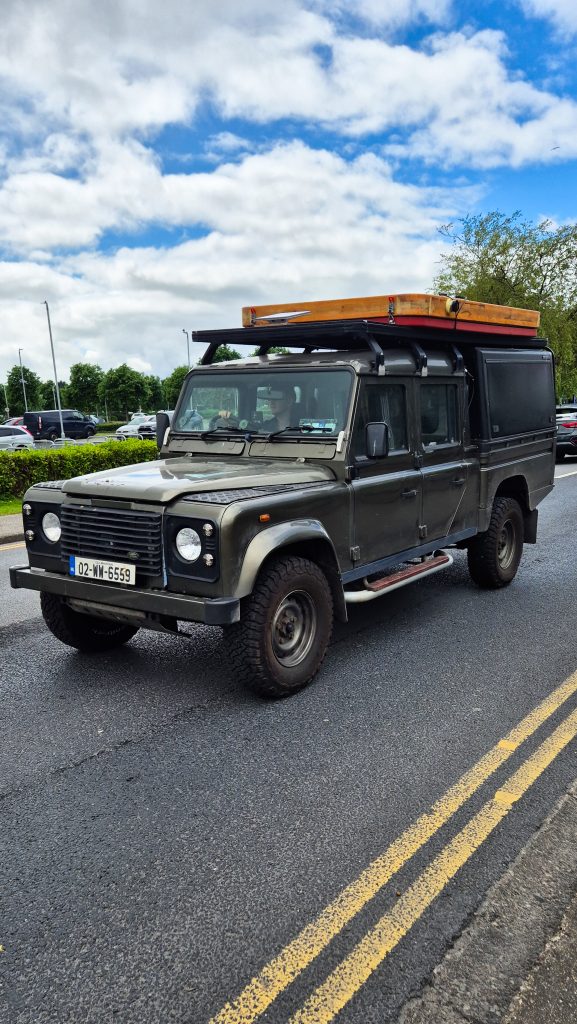
There comes a moment in every Defender owner’s life when they look at their engine and think: I could do better. Maybe the 200Tdi has finally given up the ghost after 300,000 miles of loyal service. Maybe the Td5 has developed that expensive rattle you have been pretending not to hear. Or maybe, just maybe, you are tired of being overtaken by caravans on the A303 and you want something with a bit more shove. Whatever the reason, a Defender engine swap is one of the most transformative modifications you can make to these vehicles, and one of the most complicated.
I have seen some brilliant engine swaps in Defenders. I have also seen some absolute horrors that would make a mechanic weep. The difference between the two usually comes down to planning, budget, and knowing which engine actually suits the vehicle rather than just picking the most powerful one you can find.
So here is the complete guide to swapping an engine into your Defender. Every popular conversion, the costs involved, the legal requirements, and whether the whole exercise is worth the considerable pain it involves.
Why Swap Your Defender’s Engine?
Before we get into specifics, let us establish why you might want to do this. The most common reasons are:
Power. The standard Defender engines are, to put it diplomatically, adequate. The 200Tdi makes 107 bhp. The 300Tdi makes 111 bhp. The Td5 stretches to 122 bhp. When your vehicle weighs over two tonnes and has the aerodynamic profile of a brick wall, these numbers mean 0-60 times that are measured with a calendar rather than a stopwatch. Some of the common problems with Defenders relate to their engines being worked too hard for the performance they deliver.
Reliability. If your original engine is terminally ill, a swap can sometimes be more cost-effective than a rebuild, especially if you are upgrading to something more reliable in the process.
Fuel economy. Surprisingly, some engine swaps can improve fuel economy. A modern turbodiesel making 200+ bhp does not have to work as hard as a tired old Tdi making 107 bhp, which can translate to lower consumption at cruising speeds.
Character. Some people just want a V8 rumble from their Defender. This is a perfectly valid reason. Life is short.
Which Defender engine swap is best?
There is no single best engine swap for a Land Rover Defender, but there are three clear winners depending on what you actually want from the vehicle. The detailed sections below explain each one; here is the short answer.
- Best all-round swap: BMW M57. Modern diesel torque, 200 bhp and upwards, cruises at motorway speed without shouting, and the parts are everywhere. A DIY build lands around 8,000 to 15,000 pounds, which makes it the swap that most owners finish rather than abandon.
- Best for power: Chevrolet LS3. 430 bhp from a compact, cheap, endlessly supported V8. Budget 15,000 to 25,000 pounds doing it yourself and 30,000 to 60,000 through a specialist, and accept that the gearbox, axles, propshafts and brakes all need attention afterwards.
- Best on a budget: Rover 4.6 V8 or the Ford Puma TDCi. Both start around 4,000 to 10,000 pounds as a DIY build. The Rover V8 gives you the noise for the least money; the Puma is the sensible choice if you want a Defender that still behaves like a Defender.
What rules the decision is rarely the engine itself. It is whether the rest of the vehicle can take the power, and whether your insurer and the MOT tester will accept the result — both covered further down.
What an LS3 conversion kit includes, and what it really costs
Searching for an LS3 conversion kit price gives a misleading number, because the kit is only one line on the invoice. An off-the-shelf kit typically covers engine and gearbox mounts, a sump that clears the front axle, headers that fit inside the chassis rails, a radiator and cooling package, and a standalone wiring loom with the ECU.
What the kit does not cover is most of the money. Using the cost table further down: an LS3 costs 5,000 to 8,000 pounds on its own, while a DIY build totals 15,000 to 25,000. That gap — roughly 10,000 to 17,000 pounds — is the kit plus the gearbox and transfer case, the strengthened propshafts and axles, the brake upgrade, the fuel system and the hours. Anyone quoting you a kit price alone is quoting a fraction of the job.
The Popular Defender Engine Swaps
LS V8 Swap (Chevrolet LS3/LS7)
Let us start with the big one. The Chevrolet LS V8 is the most popular performance engine swap for Defenders worldwide, and for good reason. These engines are compact for their displacement, incredibly well supported by the aftermarket, and produce absurd amounts of power relative to their size and weight.
The Engine: Most LS swaps into Defenders use either the LS3 (6.2L, 430 bhp) or the slightly less common LS7 (7.0L, 505 bhp). Some builders use the truck-spec variants like the L76 or L96, which are slightly lower in output but cheaper and more readily available.
Power Output: 400-500+ bhp depending on specification and tune. This is, to be clear, approximately four times the power of a standard 300Tdi Defender. The acceleration is transformed from “glacial” to “terrifying.” The gearbox, axles, propshafts, and brakes all need to be addressed, because asking standard Defender running gear to handle 500 bhp is like asking a donkey to pull a freight train.
Cost: A quality LS swap into a Defender costs between 15,000 and 30,000 pounds for the engine, gearbox, and installation. A complete build by a specialist can run 40,000 to 80,000 pounds depending on how much ancillary work is done. Builders like Arkonik and Himalaya offer LS-swapped Defenders as complete builds, but these are six-figure vehicles.
Pros:
- Massive power increase
- Compact packaging (the LS fits surprisingly well)
- Excellent aftermarket support
- Reliable when properly installed
- The sound. Oh, the sound.
Cons:
- Expensive
- Fuel consumption is substantial (12-18 mpg depending on driving style)
- Requires gearbox, axle, and brake upgrades
- MOT and registration implications (see legal section below)
- Some Defender purists will refuse to speak to you
Best For: People who want the ultimate performance Defender, regardless of cost. Also popular in the US market where V8 fuel costs are less of a concern and LS engines are cheap and plentiful.
BMW M57 / M57N2 Diesel Swap
If the LS V8 is the headline act, the BMW M57 diesel is the smart choice. This 3.0-litre straight-six turbodiesel is widely considered the best diesel engine swap for a Defender, and I tend to agree.
The Engine: The M57 (and its successor, the M57N2) was used in various BMW models from 1998 to 2013, including the E46 330d, E60 530d, E90 330d, and various X3/X5 models. Depending on the variant, it produces between 184 and 286 bhp, with torque figures that make the standard Defender engines look like they are not even trying.
Power Output: 200-286 bhp and 390-580 Nm of torque, depending on the version and tune. The most popular variant for Defender swaps is the M57N2 from the E90 330d, which produces 231 bhp and 500 Nm in standard form and responds extremely well to a remap.
Cost: The engine itself can be sourced second-hand for 1,500 to 3,000 pounds. A complete swap, including gearbox adaptor, custom exhaust, cooling system, wiring, and installation, typically costs 8,000 to 15,000 pounds for a competent home mechanic, or 12,000 to 25,000 pounds through a specialist.
Pros:
- Enormous torque increase (more than double a 300Tdi)
- Excellent fuel economy for the power (25-30 mpg is achievable)
- Smooth, refined, and relatively quiet
- Diesel, so compatible with Defender gearing
- Well-documented swap with good community support
- The engine is relatively compact and fits without major modifications
Cons:
- Requires custom wiring harness or standalone ECU
- Cooling system needs upgrading
- The BMW electronics can be temperamental
- Heavier than the standard Tdi engines
- Finding a good, low-mileage donor engine requires patience
Best For: Anyone who wants significantly more power and torque while maintaining the diesel character of their Defender. The M57 is the thinking person’s engine swap. It is my personal favourite conversion for a Defender that needs to remain usable, economical, and capable.
Several UK-based specialists offer M57 conversion kits and installation services. The swap has become popular enough that dedicated adaptor plates and mounting kits are available off the shelf.
Toyota 1HD-FTE Diesel Swap
The Toyota 1HD-FTE is a 4.2-litre straight-six turbodiesel that powered the 100-series Land Cruiser. If you have ever read the Defender vs Land Cruiser comparison, you will know that Toyota’s reputation for reliability is legendary. Putting a Toyota engine in a Land Rover feels like a betrayal, but it also feels like common sense.
The Engine: The 1HD-FTE produces 201 bhp and 430 Nm of torque in standard form. It is a cast-iron, 24-valve, mechanically injected (later versions are electronic) unit that was designed to last forever. And by forever, I mean there are examples with over 1,000,000 kilometres on the original engine.
Power Output: 201 bhp standard, with potential for 240+ bhp with tuning. The torque delivery is linear and predictable, which suits the Defender’s character perfectly.
Cost: Donor engines cost 3,000 to 6,000 pounds depending on mileage and source. A complete swap costs 12,000 to 20,000 pounds, largely because the physical size of the engine requires more fabrication work than the BMW M57.
Pros:
- Toyota reliability (this alone is worth the price of admission)
- Excellent torque for off-roading and towing
- Mechanically simpler than the BMW option
- Massive engine life expectancy
- Parts availability is excellent globally
Cons:
- The engine is physically large and heavy
- More fabrication required for installation
- Fuel economy is not as good as the BMW M57
- Donor engines are getting harder to find as Land Cruiser values increase
- It is a Toyota engine in a Land Rover. Your Land Rover club membership may be revoked.
Best For: Overland and expedition vehicles where reliability is paramount. If you are planning to drive your Defender across Africa and back, the 1HD-FTE gives you the peace of mind that comes with Toyota engineering. If you are building an overlanding setup, this engine deserves serious consideration.
Cummins 4BT Diesel Swap
The Cummins 4BT is a 3.9-litre four-cylinder turbodiesel that was originally designed for commercial vehicles, vans, and small trucks. It is the engine equivalent of a sledgehammer: unsophisticated, heavy, loud, and absolutely indestructible.
The Engine: The 4BT produces a modest 105 bhp in standard form, which is actually less than a Td5. But it produces 265 lb-ft of torque at low RPM, and it does this with a mechanical fuel injection system that has the complexity of a butter knife. There is nothing to go wrong because there is nothing there.
Power Output: 105 bhp standard, but easily tunable to 150-180 bhp with an upgraded turbo and fuel system. The real appeal is not peak power but the relentless, low-RPM torque delivery that makes the 4BT feel more powerful than its numbers suggest.
Cost: The 4BT is one of the most affordable engine swap options. Donor engines cost 1,000 to 2,500 pounds (they are plentiful in the US), and a complete swap costs 6,000 to 12,000 pounds.
Pros:
- Nearly indestructible (these engines routinely exceed 500,000 miles)
- Mechanical simplicity (no ECU, no electronics to fail)
- Cheap to buy and swap
- Massive low-end torque
- Parts are available globally and cheaply
- Burns anything vaguely resembling diesel fuel
Cons:
- Heavy (around 350 kg for the engine alone)
- Loud. Very loud. Unpleasantly loud if you value your hearing.
- Not particularly fuel efficient
- Low power output means motorway cruising is still not the Defender’s forte
- The weight can affect handling and require suspension upgrades
- Vibration is significant (four-cylinder commercial diesel is not a formula for smoothness)
Best For: Off-road builds, expedition vehicles where simplicity and reliability matter more than refinement, and anyone operating in remote areas where the ability to repair the engine with basic tools is essential. The Cummins 4BT is the survivalist’s engine swap.
Ford Puma 2.2/2.4 TDCi Swap (Into Older Defenders)
This is the swap that makes the most practical sense for many owners. Taking the Ford-sourced 2.2 or 2.4 TDCi engine from a Puma-era Defender (2007-2016) and installing it in an older 90 or 110 gives you a modern, efficient diesel engine in a simpler, lighter vehicle.
The Engine: The 2.2 TDCi (from 2012+ Defenders) produces 122 bhp and 360 Nm of torque. The 2.4 TDCi (2007-2012) produces the same power but is slightly less refined.
Power Output: 122 bhp standard, with potential for 170+ bhp with a quality remap. The torque improvement over a 200Tdi or 300Tdi is substantial.
Cost: This is one of the most cost-effective swaps available. Donor engines (often from written-off Puma Defenders or Ford Transit vans) cost 1,500 to 3,000 pounds. Complete swap kits are available from several suppliers, and the total cost is typically 5,000 to 10,000 pounds including installation.
Pros:
- Uses a purpose-built Land Rover engine (sort of; it is a Ford engine in Land Rover clothing)
- Swap kits and adaptor plates are readily available
- Modern common-rail diesel efficiency
- Reasonable power increase over Tdi engines
- Six-speed gearbox option
- Maintains the diesel character
- Relatively straightforward installation with the right kit
Cons:
- DPF and EGR considerations (see the common problems article for details on these systems)
- Requires ECU, wiring, and instrument cluster integration
- Not a dramatic power upgrade compared to other options
- The Puma engine is competent but uninspiring
Best For: Owners of 200Tdi or 300Tdi Defenders who want a reliable, modern diesel without the complexity and cost of a BMW or Toyota swap. This is the sensible choice, and sometimes sensible is exactly what you need.
Other Notable Engine Swaps
Land Rover 3.9/4.0/4.6 V8
Before the LS swap became popular, many Defender owners fitted the Rover V8 (in 3.9, 4.0, or 4.6 litre form) from Range Rover Classic or P38 donors. This is a bolt-in swap that requires minimal fabrication, since the Defender was originally designed to accommodate this engine family. It produces 180-225 bhp depending on the variant, sounds wonderful, and drinks fuel at a rate that would embarrass a small aircraft. Still popular as a relatively affordable V8 option with genuine Land Rover heritage.
GM/Isuzu 4JB1T
Popular in export markets, particularly Australia and Africa, the Isuzu 4JB1T is a 2.8-litre four-cylinder turbodiesel producing around 100 bhp. It is not exciting, but it is exceptionally reliable and parts are available worldwide. For expedition vehicles operating in developing countries, the Isuzu swap is worth considering.
Mercedes OM606
The Mercedes 3.0-litre straight-six diesel is another excellent option that bridges the gap between the BMW M57 and the Toyota 1HD. It is mechanically injected (in most variants), produces around 175 bhp with basic tuning, and has a well-deserved reputation for longevity. Less common than the BMW swap in the UK but popular in Europe.
Legal Considerations and MOT Requirements
This is the section that nobody wants to read but everybody needs to. An engine swap is not just a mechanical project; it is a legal one. Get it wrong and your Defender could fail its MOT, be seized by the police, or be uninsurable. And if you think your insurance is expensive now, read about Defender insurance costs and imagine what happens when you do not declare an engine swap.
MOT Requirements for Engine Swaps
In the UK, an engine swap must comply with the following MOT requirements:
Exhaust emissions: The vehicle must meet the emissions standards for its year of first registration, not the year of the engine. This is important. If your 1995 300Tdi Defender was registered to meet Euro 2 emissions, the new engine must also meet Euro 2 or better. In practice, any modern diesel or petrol engine will meet older emissions standards easily, but you must ensure the emissions equipment (catalytic converter, DPF if applicable) is functioning correctly.
Engine mounting: The engine must be securely mounted with no risk of the mountings failing. Custom mounts must be properly engineered and fabricated, not bodged from angle iron and hope.
Exhaust system: The exhaust must be secure, not leaking, and properly routed. Custom exhausts are fine as long as they meet noise regulations.
Fuel system: All fuel lines must be secure and not leaking. The fuel tank and fuel system must be compatible with the new engine.
Cooling system: The cooling system must be adequate for the new engine. Overheating because you kept the original Tdi radiator with a 400 bhp LS V8 is your problem, not the MOT tester’s, but they will note if the engine appears to be running hot.
DVLA Notification
You must notify the DVLA of an engine change. This involves sending your V5C (logbook) to the DVLA with details of the new engine, including the engine number and capacity. They will update the logbook and return it. This is a legal requirement, not an optional step.
If the engine change significantly alters the vehicle’s character (for example, going from a 2.5 diesel to a 6.2 V8), the DVLA may reclassify the vehicle, which can affect tax band and insurance.
Insurance Implications
You must, repeat must, declare an engine swap to your insurer. Failure to declare a modification this significant will void your policy. Most mainstream insurers will not cover an engine-swapped Defender at all. You will need to go to a specialist modifier insurance provider.
Expect your premium to increase by 20 to 100 percent depending on the engine fitted. An LS V8 swap will attract the highest premium increase, while a like-for-like diesel swap (Puma into an older Defender) will have a more modest impact.
IVA Test
If you are importing a Defender with a non-standard engine (common for US-spec LS swaps), the vehicle may need to pass an Individual Vehicle Approval (IVA) test. This is an extensive inspection covering safety, emissions, and construction. It is expensive and time-consuming, so factor this into your budget if importing.
Specialist Engine Swap Builders
If you do not have the skills, tools, or time to do an engine swap yourself, several specialist builders offer turnkey conversion services. Here are some of the most respected:
Nene Overland (Peterborough, UK): Known for quality BMW M57 and LS conversions. Thorough engineering and excellent finish.
JE Motorworks (Warwickshire, UK): Specialists in Defender V8 conversions, including LS and Rover V8 swaps. They have been doing this for years and their work is exceptional.
D44 (Suffolk, UK): Offer a range of Defender upgrades including engine swaps. Known for well-engineered solutions.
Turner Engineering (various UK locations): One of the larger Defender modification companies, offering everything from mild tuning to complete engine conversions.
If you are looking at this as part of a wider modification project, the guide to the best Defender modifications covers all the other upgrades you should consider alongside an engine swap.
Cost Summary: What Each Swap Actually Costs
Let me lay out the realistic costs for each swap, including everything you will actually need to spend:
| Engine Swap | Engine Cost | Total Swap Cost (DIY) | Total Swap Cost (Specialist) |
|---|---|---|---|
| LS V8 (LS3) | 5,000-8,000 | 15,000-25,000 | 30,000-60,000+ |
| BMW M57 | 1,500-3,000 | 8,000-15,000 | 12,000-25,000 |
| Toyota 1HD-FTE | 3,000-6,000 | 12,000-20,000 | 18,000-30,000 |
| Cummins 4BT | 1,000-2,500 | 6,000-12,000 | 10,000-18,000 |
| Ford Puma 2.2 TDCi | 1,500-3,000 | 5,000-10,000 | 8,000-15,000 |
| Rover V8 4.6 | 1,000-2,500 | 4,000-8,000 | 8,000-15,000 |
These figures include the engine, gearbox adaptor or replacement gearbox, mounting hardware, cooling system modifications, exhaust fabrication, wiring, and labour. They do not include additional upgrades (brakes, axles, suspension) that may be necessary, particularly with the more powerful options.
The Factory Alternative: Defender V8 and Octa
Before committing to an engine swap, it is worth considering whether the factory 110 Defender V8 might be a better path to the performance you want. Land Rover currently offers two factory V8 options that deliver serious power without the headaches of a custom conversion.
Defender V8 (5.0 Supercharged)
The 110 Defender V8 uses a 5.0-litre supercharged V8 producing 518bhp and 625Nm of torque. It does 0-60mph in 5.0 seconds and has a top speed of 149mph. This is a factory-supported vehicle with a full warranty, proper emissions compliance, and no MOT concerns about engine swaps. The downside is the price: expect to pay north of £110,000 new, though used examples from 2022-2023 have started appearing around £85,000-£95,000.
Defender Octa (Twin-Turbo V8)
The newest and most powerful factory option is the Defender Octa, which uses a BMW-sourced 4.4-litre twin-turbocharged V8 producing 626bhp. This is the most powerful production Defender ever made. With prices starting around £145,000, it targets a different market entirely, but for those who want a V8 Defender without any compromise on warranty or reliability, it represents the ultimate factory solution.
For most enthusiasts, a Defender V8 engine swap still makes more sense financially. An LS3 swap into a classic Defender costs roughly £15,000-£25,000 all-in, giving you similar or better performance than the factory V8 at a fraction of the price. But if you value warranty coverage, resale value, and the peace of mind that comes with factory engineering, the 110 Defender V8 is worth serious consideration.
Should You Even Do an Engine Swap?
Let me be honest with you. An engine swap is a massive project. Even the “simple” ones take weeks or months, cost thousands of pounds more than you initially budgeted, and involve moments of such intense frustration that you will question every decision you have ever made.
But when it is done right, the result is transformative. A 300Tdi Defender with a BMW M57 engine is one of the best vehicles on the road. An LS-swapped 90 is one of the most exciting. A Cummins-powered 110 is one of the most indestructible.
The key questions to ask yourself are:
Is the rest of the vehicle worth it? Do not put a 15,000 pound engine into a vehicle with a rotten chassis and shot axles. Address the foundation first.
Can you afford the whole project? An engine swap is not just the engine. Budget for everything, then add 30 percent for the things you did not think of.
Are you prepared for the complexity? If you are doing it yourself, do you have the skills, tools, and space? If you are using a specialist, have you researched them thoroughly?
Have you considered the alternatives? Sometimes a rebuilt standard engine, a remap (on Td5 and Puma engines), or a turbo upgrade is enough to address your performance complaints without the complexity of a full swap. The reliability improvements you can make to a standard engine might be all you need.
If the answers to all four questions are positive, then an engine swap can take a good Defender and make it great. Just be prepared for the journey. It is a long one. And the engine will probably leak oil no matter what you put in there. It is a Defender. That is what they do.