Buying Guide
Best Year Land Rover Defender to Buy
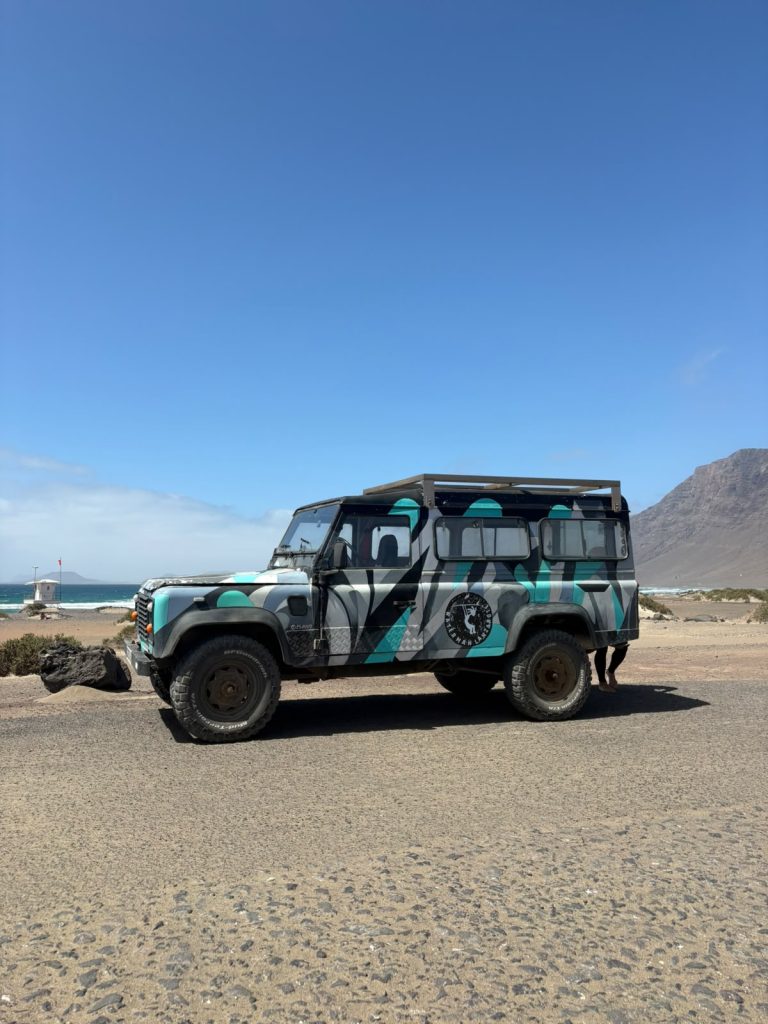
There are few questions in the Land Rover world more likely to start an argument than asking someone which is the best year Land Rover Defender to buy. Mention the Td5 in a room full of 300Tdi owners and you might need to leave through a window. Suggest that the new Defender is better than any classic and you will be escorted out entirely. Everyone has an opinion, everyone is absolutely certain they are right, and everyone else is an idiot.
I have owned Defenders from three different eras. I have driven examples from nearly every year of production. And I am going to tell you, with as much objectivity as I can manage (which is not much, because I am deeply biased), exactly which year of Defender you should buy depending on what you want to do with it.
This is not a simple answer. The Defender was produced from 1983 to 2016 in classic form, and the new one has been rolling off the line since 2020. That is over 40 years of production, multiple engine changes, countless special editions, and a fundamental redesign that split the fanbase clean in half. If you want the full story, the Defender history article covers the entire timeline, but today we are focusing specifically on which years to buy and which to run away from.
Understanding the Defender Eras
Before we get into specific years, you need to understand how the Defender’s production breaks down. Each era has its own character, its own strengths, and its own infuriating weaknesses.
Pre-Defender: Series III (1971-1985)
Technically these are not Defenders. The Defender name was not applied until 1990, when Land Rover needed to distinguish its utility vehicle from the new Discovery. But Series III Land Rovers are the direct predecessors of the Defender, and many people shopping for a classic Defender end up looking at late Series IIIs as well.
The Series III is the most basic, most agricultural Land Rover you can buy. It has leaf springs, a four-cylinder petrol or diesel engine producing somewhere in the region of not very much power at all, and an interior that makes a garden shed look luxurious. They are wonderful. They are also terrible as daily transport.
Best years: 1982-1985 (the “Stage 1” V8 models are particularly desirable, and the later Series IIIs benefited from incremental improvements)
Avoid: Very early Series IIIs can have parts compatibility issues with later vehicles. The petrol models drink fuel like a sailor on shore leave.
The Birth: Early Ninety/One Ten (1983-1990)
In 1983 Land Rover introduced the 110 (and the 90 in 1984) with coil spring suspension, replacing the leaf springs of the Series models. This was a transformative change. The ride quality improved enormously, the axle articulation for off-roading got significantly better, and the vehicles gained a more refined (relatively speaking) character.
These early models used the 2.5 naturally aspirated diesel or the 2.5 petrol engine, neither of which will set your pulse racing. They also used the 3.5 V8 petrol engine, which is thirsty but charismatic.
Best years: 1986-1990 (the later examples benefited from production improvements and are more refined)
Avoid: The 2.5 naturally aspirated diesel is painfully slow. Unless you enjoy being overtaken by cyclists on slight inclines, look for a V8 or wait for the turbodiesel era.
The 200Tdi Era (1990-1994)
This is where things get interesting. In 1990, two important things happened. The vehicle was officially renamed “Defender,” and it received the 200Tdi engine. This 2.5 litre turbodiesel was a revelation. It produced a respectable 107 bhp and, more importantly, 188 lb-ft of torque. Suddenly the Defender could keep up with traffic without the driver having a nervous breakdown.
The 200Tdi is widely regarded as one of the greatest engines Land Rover ever produced. It is mechanically simple, robust, and relatively easy to work on. It does not have an electronic management system, which means there are fewer things to go wrong and a competent home mechanic can diagnose and fix most issues with basic tools.
Best years: 1992-1994. The earliest 200Tdi models (1990-1991) had some teething issues, including problems with head gaskets and timing belt tensioners. By 1992, most of these had been addressed.
Strengths: Mechanical simplicity, strong torque, good fuel economy for the era, massive aftermarket support, and the engines are known for being incredibly durable.
Weaknesses: No power steering as standard on early models (your arms will get enormous), basic interior, and the injector pump can be expensive to rebuild.
The 300Tdi Era (1994-1998)
The 300Tdi replaced the 200Tdi in 1994, and the debate about which is better has been raging ever since. The 300Tdi addressed some of the 200Tdi’s shortcomings. It was quieter, smoother, came with power steering as standard, and had an improved cylinder head design. It also gained a serpentine belt system instead of the 200Tdi’s multiple V-belts, which simplified maintenance.
Many purists consider the 300Tdi era to be the golden age of Defender production. The vehicle had matured enough to be reasonably comfortable but remained mechanically simple and endlessly repairable. The 300Tdi Defender is what most people picture when they think “classic Defender.”
Best years: 1996-1998. The later 300Tdi models are the most refined of the lot. They benefited from all the running improvements made during the production run, and the later examples tend to have better build quality.
Strengths: Excellent engine, power steering standard, relatively comfortable for a Defender, huge parts availability through suppliers like Paddocks, Britpart, and Bearmach.
Weaknesses: The 300Tdi is known for cracking cylinder liners in high-mileage examples. The modified flywheel can develop cracks. And like all Defenders of this era, rust is your constant enemy.
If you are considering a 300Tdi, the buying guide walks you through what to check in detail.
The Td5 Era (1998-2006)
In 1998, everything changed. The Td5 engine was Land Rover’s first electronically managed diesel, and it divided opinion like nothing before. Gone was the mechanical simplicity of the Tdi engines. In came ECUs, electronic fuel injection, and a reputation for electrical gremlins that would haunt the Td5 for its entire production run.
But here is the thing that Td5 detractors do not want to admit: it is actually a very good engine. The 2.5 five-cylinder unit produces 122 bhp and 221 lb-ft of torque, making it the most powerful standard Defender engine up to that point. It is smoother than the Tdi engines, quieter, and more refined. And despite the electronic fuel system, the Td5 is fundamentally a tough engine that can rack up enormous mileages.
The problems are real, though. The “sump plug of death” (a badly designed fuel pressure regulator that can fill the sump with diesel) is the most infamous. The wiring harness is vulnerable to chafing and water ingress. And the electronic fuel system means you cannot diagnose problems with a spanner and some swearing; you need diagnostic equipment. The common problems article covers these issues in detail.
Best years: 2002-2006. The early Td5 models (1998-2001) suffered from the worst of the teething problems. By 2002, most of the serious issues had been addressed. The later Td5 models also benefited from improved wiring and better build quality.
Avoid: 1998-1999 models had the highest rate of fuel regulator and wiring issues. Some early Td5s also had problems with the cylinder head cracking, though this was relatively rare.
Strengths: More power and torque than the Tdi, smoother and quieter, improved interior (slightly), still relatively simple by modern standards.
Weaknesses: Electronic fuel system complexity, wiring issues, the sump plug problem (easily preventable with a simple modification), and parts are slightly more expensive than Tdi equivalents.
The Puma/TDCi Era (2007-2016)
In 2007, Land Rover fitted the Ford-sourced 2.4 TDCi engine (later upgraded to 2.2 in 2012), and the Defender received its most significant update since the coil spring conversion. The dashboard was redesigned, the seats improved, and the vehicle gained a six-speed gearbox. It was, by Defender standards, positively modern.
The 2.4 Puma engine is a strong unit, producing 122 bhp and plenty of torque. But it brought Ford’s DPF (diesel particulate filter) and EGR (exhaust gas recirculation) systems, which are the bane of many owners’ lives. Blocked DPFs are common, especially in vehicles that do a lot of short journeys, and the EGR valve can cause running issues and increased fuel consumption.
The 2012 upgrade to the 2.2 engine improved things somewhat. The 2.2 is slightly more refined, has better emissions equipment, and is generally considered the more reliable of the two Puma variants.
Best years: 2012-2016. The 2.2 engine is the better of the two Puma options, and the later models benefited from continuous improvement. The final edition Defenders from 2015-2016 (Heritage, Adventure, Autobiography) are the most desirable and have become instant collectibles, but they command serious premiums.
Avoid: Early 2.4 models (2007-2009) had the most DPF and EGR issues. The transition year of 2007 also saw some build quality inconsistencies as the production line adapted to the new powertrain.
Strengths: Most comfortable and refined classic Defender, six-speed gearbox is a huge improvement, modern diesel engine with good performance.
Weaknesses: DPF and EGR issues, more complex and expensive to repair than earlier models, the Ford engine feels slightly characterless compared to the Tdi engines, and these are the most expensive classic Defenders to buy.
The New Defender (2020-Present)
The new Defender arrived in 2020 and it is a completely different vehicle. It shares nothing with the classic beyond the name and the general shape. It is built on Land Rover’s D7x aluminium monocoque platform, uses modern Ingenium engines (and a BMW-sourced straight six in some markets), and is packed with technology that would make a 200Tdi owner faint.
Is it a real Defender? That depends entirely on your definition. If a Defender must be a simple, repairable, utilitarian workhorse, then no. If a Defender must be an incredibly capable off-road vehicle with genuine go-anywhere ability, then absolutely yes. The classic vs new Defender article explores this debate in full.
Best years: 2022-2024. The 2020 launch models had numerous quality issues, software bugs, and recall campaigns. By 2022, most of these had been ironed out, and the vehicle had received several over-the-air software updates that improved reliability and added features.
Avoid: 2020 models had the most issues. Early production new Defenders suffered from water leaks, software glitches, squeaks and rattles, and various electrical problems. The reliability record of the new Defender has improved dramatically but those early cars bear the scars.
Strengths: Genuinely incredible off-road capability, comfortable enough to daily drive, powerful engine options, modern safety features, the V8 is hilarious.
Weaknesses: Expensive to buy and run, complex electronics mean expensive repairs, depreciation is significant on non-V8 models, and it lacks the character and simplicity of the classic.
Best Year Land Rover Defender by Use Case
Now let me answer the question that actually matters. Which year should you buy based on what you want to do with it?
Best Year for a Daily Driver
Winner: 2014-2016 Puma 2.2 TDCi or 2022+ New Defender
If you are going to drive a Defender every day, you want the most refined, most comfortable, most reliable option. For a classic, that means a late Puma 2.2. It has the best seats, the six-speed gearbox makes motorway driving bearable, and the engine (DPF issues aside) is strong and efficient enough for commuting.
For an unlimited budget, the 2022+ new Defender D250 or D300 110 is the obvious choice. It drives like a modern car because it is one. Air conditioning that works, a proper infotainment system, and enough power to merge onto motorways without praying.
Best Year for Off-Road Use
Winner: 1996-1998 300Tdi
For serious off-roading, you want mechanical simplicity, easy repairability in the field, and a vehicle you are not afraid to scratch. The 300Tdi ticks all these boxes. It has enough power for any terrain, the mechanical systems are easy to diagnose and repair with basic tools, and replacement parts are cheap and available everywhere. If something breaks on a remote track, you can usually fix it with a hammer and some cable ties.
The off-road capability of the 300Tdi is legendary, and its lighter weight compared to later models gives it an advantage in soft terrain.
Yes, the new Defender is more capable off-road in absolute terms, thanks to its sophisticated traction control systems and air suspension. But would you take a 70,000 pound vehicle down a rocky trail and not care about the paintwork? Exactly.
Best Year for Investment
Winner: 2015-2016 Heritage/Adventure/Autobiography Special Editions
If you are buying a Defender as an investment (and given how values have moved, this is not unreasonable), the final edition special models are the ones to target. The Heritage Edition, with its Grasmere Green paint and white roof, has already appreciated significantly. Low-mileage examples are fetching well over their original purchase price.
The 200Tdi models from 1992-1994 are also strong investment candidates. As the earliest “proper” Defenders with a desirable engine, they occupy a sweet spot for collectors. Clean, original examples are becoming increasingly rare and values reflect this.
If you want to understand the economics behind Defender pricing, the piece on why Defenders are so expensive explains the market forces at play.
Best Year for Restoration
Winner: 1984-1990 (Pre-Defender 90/110)
If you want a restoration project, the early coil-sprung models offer the best combination of availability, affordability, and simplicity. These vehicles are old enough that pristine examples are rare (making a good restoration valuable), but young enough that parts are readily available. The mechanicals are simple, the body panels are bolt-on, and the chassis can be replaced entirely if needed.
Avoid restoring a Td5 or Puma Defender unless you specifically want one. The electronics add complexity and cost to a restoration, and the market premium for a restored later model is not proportionally higher than for a restored early model.
Best Year for Overlanding
Winner: 2002-2006 Td5 110 or 2022+ New Defender 110
For overlanding and camping, the Td5 110 hits a sweet spot. It has enough power for loaded travelling, the electronic engine management (while more complex than the Tdi) is still manageable, and the 110 wheelbase gives you the interior space you need for sleeping platforms and gear storage.
The Td5 also has a good global parts network. If something goes wrong in Morocco or Mongolia, there is likely a Td5 owner or mechanic nearby who can help.
The new Defender 110 is the alternative for those who want modern creature comforts on their overland journey. Air conditioning that works properly, a smooth ride, and enough power to tow a trailer full of camping gear without breaking a sweat. The towing capacity of the new Defender is impressive and relevant for overlanders pulling trailers.
Best Year for Choosing Between 90 and 110
This is a topic big enough for its own article, and fortunately we have one. The Defender 90 vs 110 comparison covers the differences in detail. In summary: the 90 is better for tight off-road trails and looks cooler. The 110 is better for everything else.
Years to Avoid
Let me be specific about the years that cause the most problems. These are not necessarily bad vehicles, but they require more caution and potentially more budget for repairs.
1998-1999 Td5
The first year of any new engine is risky, and the Td5 was no exception. Fuel pressure regulator failures, wiring harness issues, and head gasket problems were most prevalent in these early examples.
2007-2008 Puma 2.4 TDCi
The early Puma models had the most DPF problems, and the 2.4 engine is generally less refined than the later 2.2. Some owners report clutch failures at relatively low mileages, and the six-speed gearbox can develop a whine.
2020 New Defender (First Year)
The first model year of the new Defender was plagued by quality issues. Water leaks through door seals, software bugs that caused warning lights to illuminate for no reason, and various fit and finish problems. If you want a new Defender, buy a 2022 or later.
Any Defender With Unknown History
This is not year-specific, but it is the most important piece of advice I can give. A well-maintained 1990 200Tdi will be more reliable than a neglected 2015 Puma. Service history matters more than year of manufacture. The reliability guide emphasises this point repeatedly, and it cannot be stated strongly enough.
The Verdict
If I had to pick one single year of Defender to recommend, gun to my head, it would be a 1997 300Tdi 90 County Station Wagon. It combines the best engine of the classic era, a well-sorted chassis that had benefited from years of development, power steering, a reasonable interior, and enough parts availability to keep it running for decades. It is old enough to be characterful and simple, and young enough to be usable.
But that is my choice, based on my priorities. Your best year depends on what you need it for, how much you want to spend buying it and running it, and how much mechanical sympathy you have. Read the buying guide, check the common problems, and go drive as many different years as you can. The best year Land Rover Defender is the one that puts the biggest grin on your face when you turn the key. Or push the button. Or connect the battery terminals and hope for the best. Depending on which year you chose.
You can also find plenty of year-by-year details in the 50 facts about the Land Rover Defender article, which covers production milestones and changes that might influence your decision.