Ownership
How to Stop Your Land Rover Defender Being Stolen
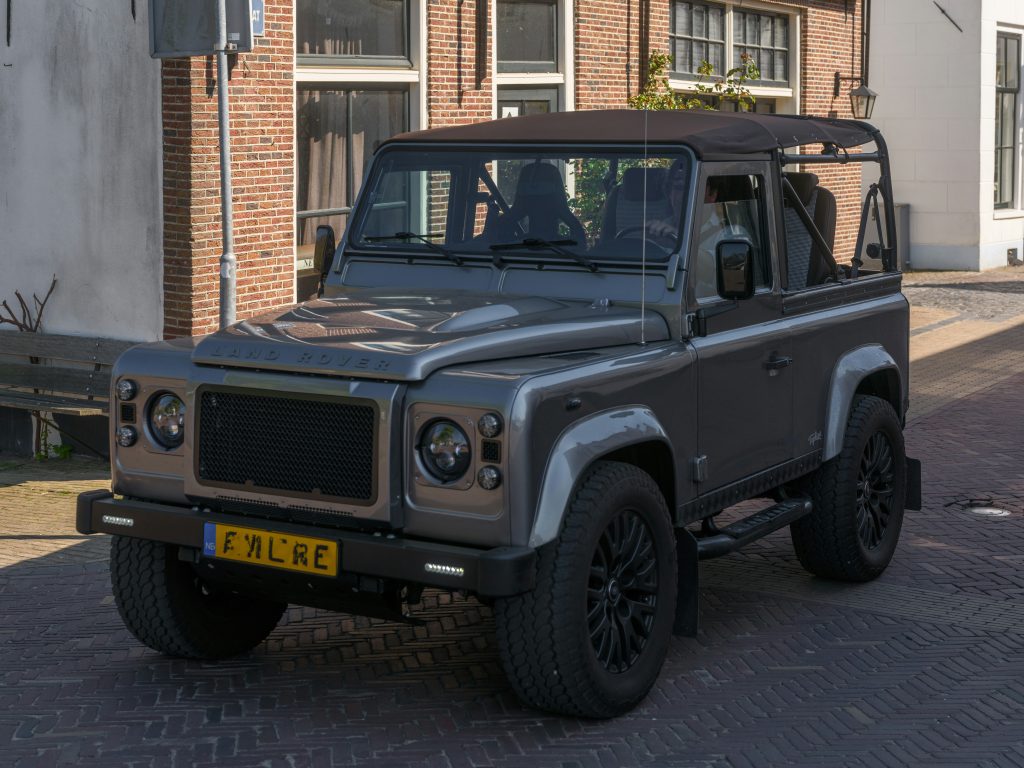
Some of the links on this page go to Amazon. If you buy through one, we get a small cut and you pay exactly the same. It costs you nothing, it pays for the hosting, and we only link to things we would actually use ourselves.
There is a particular sound a Defender owner makes when they walk out in the morning and the driveway is empty. It is not a word. It is somewhere between a cough and a swear, and once you have made it you never forget it.
Defenders are stolen more than almost anything else on British roads, and they are stolen for a deeply unromantic reason. Nobody wants your Defender. They want its doors, its bulkhead, its engine and its chassis number, because thousands of other Defenders need those parts and there is no longer a factory making them.
A stolen Defender is usually in pieces within a day. Which means the goal is not recovery. The goal is for the thief to pick the one down the road instead.
The short version
| Do this | Why | Effort |
|---|---|---|
| A big visible steering wheel lock | Takes time and makes noise. Thieves hate both | Ten seconds a day |
| OBD port lock or relocation | Stops the two minute key cloning job | One afternoon |
| Thatcham approved tracker | Insurance likes it. Recovery sometimes works | Fitting plus a subscription |
| Faraday pouch (new Defender) | Kills the relay attack completely | Nothing |
| Park it in | Free, and the single most effective thing here | Nothing |
| Photograph everything | Does not prevent theft. Transforms what happens after | One evening |
They are not stealing your car, they are stealing your parts
This is the thing people get wrong, and getting it right changes what you do about it.
A classic Defender is worth more broken than whole. Bulkheads, doors, galvanised chassis, good engines and straight panels are all in permanent demand from people restoring other Defenders, and none of them carry anything that identifies them once they are off the vehicle.
So the thief has no interest in driving it for long, selling it on, or keeping it. They need it to go a few miles and then disappear. That makes trackers less useful than they sound and makes delay, noise and inconvenience far more useful than they sound.
New Defenders are stolen for a different reason: they are expensive, they are in demand abroad, and for several years they were trivially easy to steal electronically. Different problem, different answers. Both below.
The classic Defender: make it tedious
Everything that works on a classic works for the same reason. It adds minutes, and minutes are the only currency a thief actually cares about.
- A full face steering wheel lock. The big round ones that cover the whole wheel. They can be defeated, eventually, with noise and effort, and that is the entire point. It is also visible from outside, which does the work before anybody touches the vehicle.
- A pedal box or a clutch claw. Awkward, physical, and takes real time to get past.
- A hidden battery or ignition cut off switch. Cheap, effective and invisible. A thief in a hurry does not stand in your vehicle diagnosing an electrical fault.
- A ground anchor and a chain, if it lives on a drive or in a yard. Unglamorous. Works.
- Immobiliser with its own fob. Not the factory one. Something fitted properly and separately.
- Do not leave it pointing out. Reverse it in, tight, against a wall or a hedge, or park a dull car behind it. A Defender that has to be shunted three times before it can move is a Defender somebody else gets.

But a Defender with a sticker on the back is a Defender somebody remembers seeing. Eighty millimetres, weatherproof.
The new Defender: it is the key, not the vehicle
Keyless entry is wonderful until you understand how it works. Your key is constantly announcing itself. Two people with a relay amplifier, one near your front door and one near the vehicle, can stretch that conversation from two metres to twenty, and the vehicle opens and starts believing the key is in somebody’s hand.
It takes under a minute, needs no force, and leaves no damage, which also makes the insurance conversation afterwards considerably less pleasant.
- Keep the keys in a Faraday pouch or box, or a metal tin. Both of them, including the spare in the kitchen drawer. This costs almost nothing and ends the relay attack outright.
- Turn off keyless entry if your vehicle allows it. Many recent Land Rovers let you disable the passive function in the settings, or the key itself goes to sleep when still. Check the manual and actually do it.
- Keep the software up to date. Manufacturers have shipped real security fixes for this, and a great many vehicles are driving around without them because nobody booked the update.
- Lock the OBD port. The other common method is plugging in under the dash and programming a fresh key in a couple of minutes. A lock over the port, or moving it, makes that a job rather than a formality.
- Add a steering wheel lock anyway. Yes, on a seventy thousand pound car. It looks ridiculous and it works for exactly the same reason it works on a 1994 one.
Trackers, honestly
A Thatcham approved tracker is worth having, and it is worth understanding what it actually does.
It will often reduce your insurance premium, which may pay for itself. It gives the police something to follow, and recoveries do happen, particularly with new Defenders being moved whole towards a port.
What it will not reliably do is get back a classic Defender, because that one is in a unit being cut up while the tracker is still reporting from the floor where somebody threw it. Fit one, by all means. Just do not let it replace the dull physical measures, because the dull physical measures are the ones that stop the theft happening at all.
The evening that changes everything afterwards
This is the part nobody does and everybody wishes they had.
- Photograph it properly. All four corners, the interior, the engine bay, the chassis plate, the VIN. Dated, and stored somewhere that is not the vehicle.
- Photograph what makes it yours. The dent in the rear door, the non standard bolt, the mismatched panel, the repair somebody did in 2011. Identifiable damage is how parts get connected back to a vehicle.
- Write down every number. VIN, chassis number, engine number, registration, and the serial numbers on anything bolted on that has one.
- Mark the parts. Forensic marking kits, or simply etching the registration somewhere discreet on the panels and glass. A marked door is worth less to the people buying stolen doors.
- Keep the paperwork out of the vehicle. A V5 in the glovebox is a gift.
None of this prevents a theft. All of it decides whether the insurer settles quickly, whether the police can act, and whether your bulkhead can ever be proved to be yours.
What does not work
- A cover. It hides the vehicle from you, not from them, and it tells anybody walking past that something worth covering is underneath.
- The factory alarm on its own. On a classic, it is thirty years old. On a new one, it was never the weak point.
- A sticker saying the vehicle is tracked, if it is not. They have seen more of those than you have.
- Hoping it is too old to be worth stealing. Age is the reason it is worth stealing.
- Assuming a rural driveway is safer. It is quieter, further from anybody who might look up, and the vehicles are better. Rural theft of Land Rovers is not a minor category.
Defender theft: common questions
Why are Land Rover Defenders stolen so often?
Because they are worth more in pieces than whole. Production ended, demand for parts did not, and bulkheads, doors, chassis and engines carry nothing that identifies them once removed. Classic Defenders are usually stolen to be broken, not driven.
What is the best anti theft device for a Defender?
A large visible full face steering wheel lock, because it is obvious from outside and takes real time and noise to defeat. Combine it with a hidden ignition or battery cut off switch and you have stopped being the easy option, which is all any of this really achieves.
How do thieves steal the new Defender?
Usually a relay attack on the keyless entry, where the signal from your key indoors is amplified out to the vehicle, or by plugging into the OBD port and programming a new key. Both are quick, quiet and leave no damage. A Faraday pouch and an OBD lock address both.
Do trackers get stolen Defenders back?
Sometimes, more often with new vehicles being moved whole. A classic being taken to be dismantled is frequently stripped faster than anybody can respond. Fit one for the insurance saving and the chance of recovery, but do not let it replace a physical lock.
Does a steering wheel lock really help on a modern car?
Yes, and for the same reason as on an old one. Electronic theft methods do nothing about a lump of steel across the wheel, so it turns a silent one minute job into a loud and lengthy one.
What should I do the day it is stolen?
Report it to the police and get a crime reference, tell your insurer, and send both of them the photographs and numbers you took in advance. Then post the details in the owners groups, because stolen Defenders and their parts are very often spotted by other owners before anybody else.
While you are here
- Defender insurance, and what security actually changes about it.
- Accessories worth fitting, security included.
- The buying guide, which has a section on checking a vehicle is what it claims to be.
- Why they are so expensive, which is the same reason they are stolen.
And if you see one you do not recognise in a place it should not be, it belongs on the map. Sixty sightings so far, from fifteen countries.
Read more
Land Rover Defender Fuel Economy: Real MPG, Not Brochure MPG
Let me be clear about something right from the start: if fuel economy is your primary concern when...
Jun 1, 2026What It Really Costs to Restore a Land Rover Defender
Some of the links on this page go to Amazon. If you buy through one, we get a...
Nov 2, 2026What Fails a Land Rover Defender MOT (And How to Catch It First)
Some of the links on this page go to Amazon. If you buy through one, we get a...
Nov 2, 2026Shop
Wear the sighting.
Small things for people who slow down when a Defender comes the other way. Printed in Estonia, posted anywhere in the world.