Comparisons
Ineos Grenadier vs Defender: Built Because Land Rover Said No
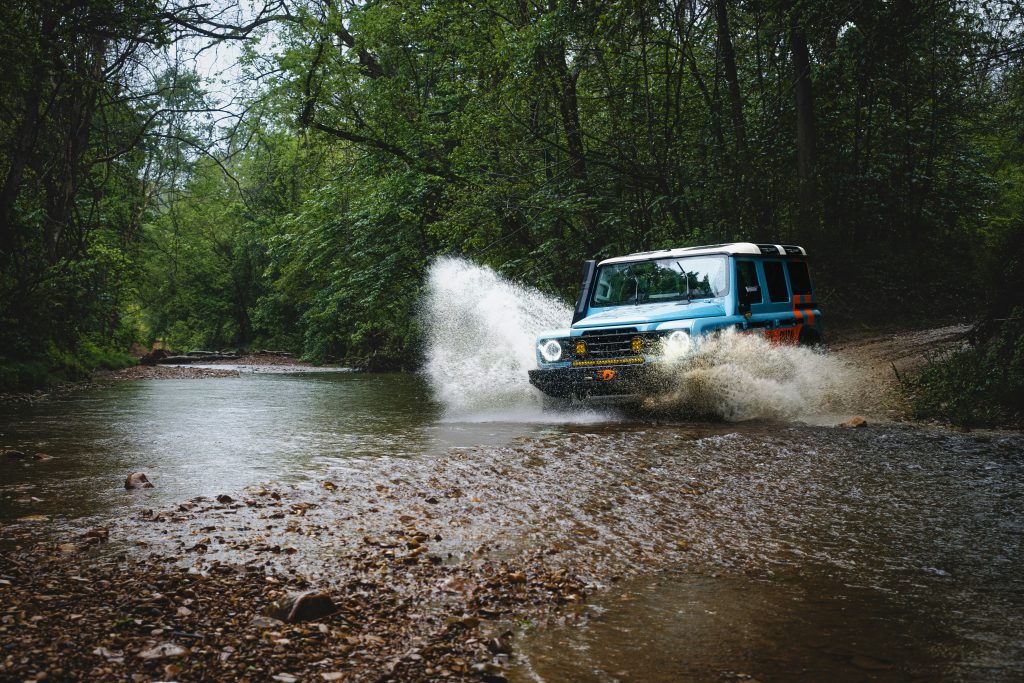
Every Ineos Grenadier on the road exists because Land Rover said no. That is not a marketing line somebody invented over lunch. That is genuinely what happened.
When the classic Defender went out of production in January 2016, Sir Jim Ratcliffe went to Jaguar Land Rover and offered to buy the tooling so that somebody, anybody, could carry on building it. They said no. So he built his own one instead, which is the single most expensive sulk in automotive history and also, somehow, completely magnificent.
Which is why anyone is comparing the Ineos Grenadier vs Land Rover Defender at all. One of these vehicles is the Defender’s replacement. The other is the Defender’s revenge.
The short version
| Ineos Grenadier | Land Rover Defender (L663) | |
|---|---|---|
| Structure | Box-section steel ladder chassis | Aluminium monocoque (D7x) |
| Suspension | Carraro beam axles front and rear, coil springs | Independent, air springs on most models |
| Petrol engine | BMW B58 3.0 straight-six, 282 hp | Ingenium four and six up to 395 bhp, BMW 4.4 V8 in the OCTA |
| Diesel engine | BMW B57 3.0 straight-six, 245 hp | Ingenium 2.0 and 3.0 |
| Wading depth | 800 mm | 900 mm |
| Ground clearance | 264 mm | 291 mm |
| Approach angle | 36.2° | 38° |
| Towing | 3,500 kg | 3,500 kg |
| Built in | Hambach, France | Nitra, Slovakia |
| Best at | Being fixed, loaded and thoroughly abused | Being driven every single day |
If you only read the table you will conclude the Defender wins. Keep reading, because the table is missing the entire point.
Why the Grenadier exists at all
The story is worth knowing, because it explains every single decision in the vehicle.
Ratcliffe is a chemicals billionaire who liked the old Defender and noticed, correctly, that when Land Rover killed it nobody replaced it. He approached JLR about buying the tooling. JLR declined. The project was reportedly christened over a drink in The Grenadier, a pub in Belgravia, which is the most British origin story available outside of an actual Bond film.
Land Rover’s response to the finished vehicle was to take Ineos to court over the design. They lost. The court found the similarity insufficient to amount to infringement. It is genuinely difficult to think of a better endorsement of what Ineos set out to do than being sued by the company that stopped doing it.
Production started in October 2022 in Hambach, France, in the factory that used to build the Smart. The Defender, meanwhile, is not built in Britain either, because it comes out of Nitra in Slovakia. Two British icons, neither of them British-built. Make of that what you will.

Ladder chassis versus monocoque, which is the whole argument
Everything else is detail.
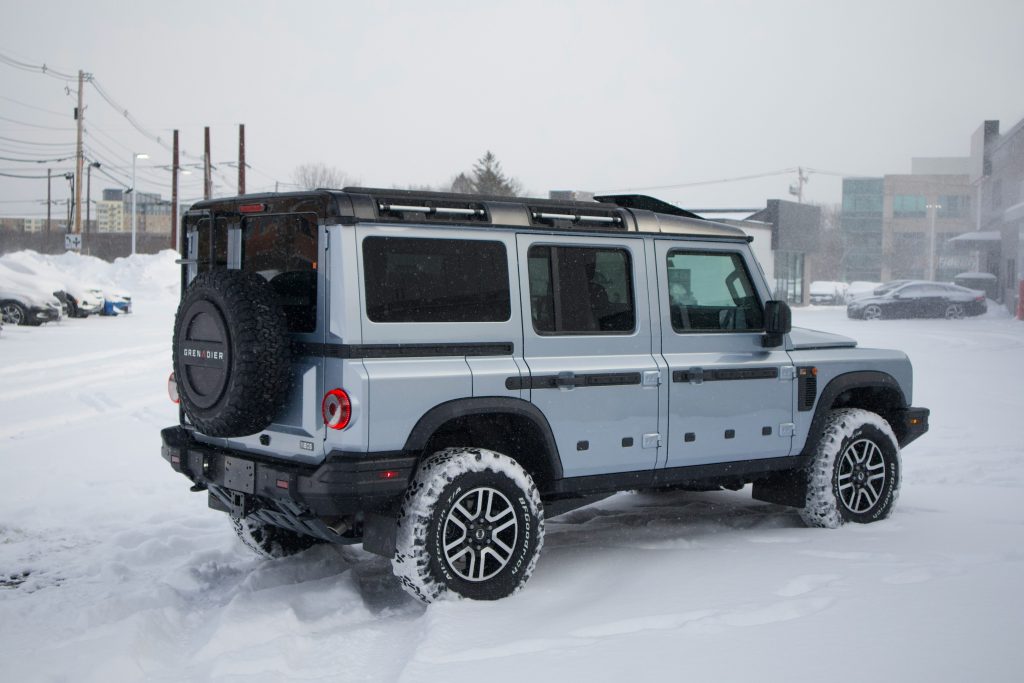
The Grenadier is built the old way: box-section steel ladder chassis, Carraro beam axles front and rear, heavy-duty coil springs, five-link location. It is the layout the classic Defender used, the layout the Land Cruiser 70 still uses, and crucially the layout a welder in a shed can understand without a laptop.
The new Defender is an aluminium monocoque with independent suspension and, on most trims, air springs. It is a far more modern piece of engineering, and it is precisely why the Defender rides and handles like a vehicle from this century rather than one that has been dropped from a helicopter.
Now here is the part everybody gets wrong, usually loudly. Independent suspension is not cheating and it is not worse. The Defender’s wheel articulation is genuinely good, its traction electronics are superb, and on a rough track at speed it is calmer, quieter and considerably faster. Beam axles are not magic. They are just beams.
What beam axles are is simple. There is no compressor to fail, no height sensor to have a quiet crisis, no suspension that drops the car onto its bump stops at the least convenient moment in your year. If your ownership plan involves being a very long way from a dealer with a trailer full of something heavy, that simplicity is not a feature. It is the entire product.
Both of them are secretly BMW-powered
The Grenadier makes no attempt whatsoever to hide it. Petrol is BMW’s B58 3.0-litre straight-six with 282 hp and 332 lb-ft. Diesel is the B57 3.0-litre straight-six with 245 hp and 406 lb-ft. Both run through an eight-speed automatic with permanent four-wheel drive. These are properly good engines with a long service record in other people’s cars, which for a small manufacturer is an extremely sensible thing to buy in rather than spend a decade developing badly.
The Defender’s regular engines are Land Rover’s own Ingenium fours and sixes, from 296 to 395 bhp depending on how many boxes you tick. But the flagship is not, because the Defender OCTA uses BMW’s S68 4.4-litre twin-turbo V8, and 626 hp of it.
So the most powerful Land Rover Defender ever built has a German engine, and so does its British-conceived, French-built rival. The 4×4 world is a great deal smaller than the badges would have you believe.
Off-road: the numbers, and what they actually mean
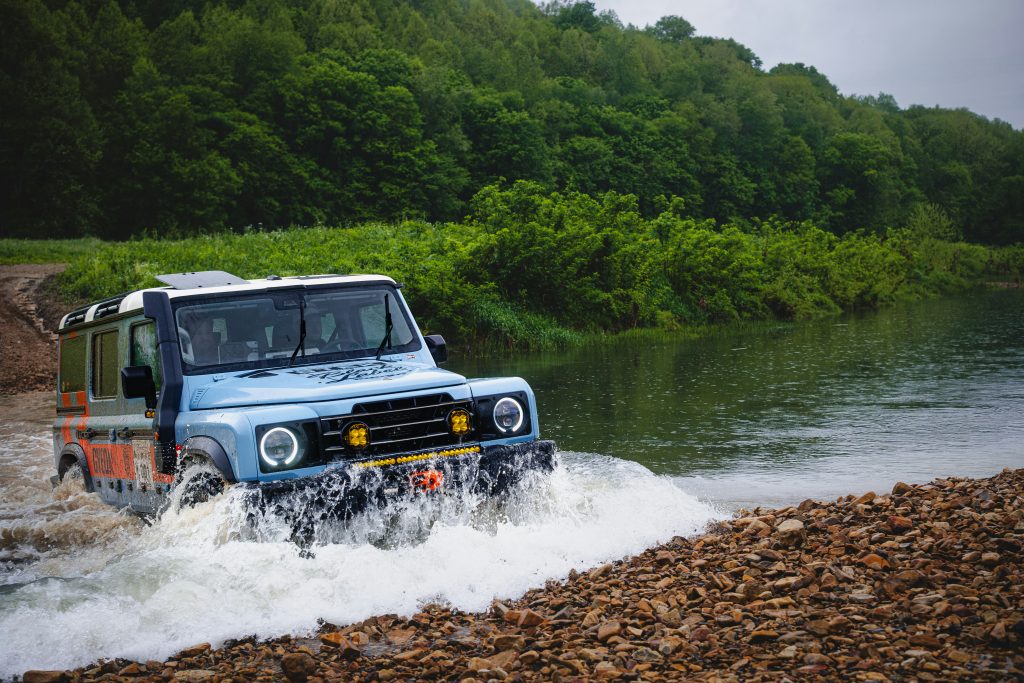
On paper the Defender wins and it is not especially close. It wades 900 mm to the Grenadier’s 800, it has 291 mm of ground clearance to 264, and its approach angle is 38 degrees against 36.2. Add Terrain Response 2 and a twin-speed transfer case and you have a vehicle that will comfortably embarrass drivers far more experienced than the person who bought it.
But a good deal of the Defender’s advantage comes from air suspension, which is to say it comes from the vehicle raising itself up when asked. That is a real capability and I am not going to pretend otherwise, but it is a capability with a failure mode, and the failure mode has a four-figure invoice attached.
The Grenadier’s numbers are lower and permanent. Nothing has to work for you to have 264 mm of clearance. It has a proper low range, locking differentials are available front, centre and rear, and the whole thing is designed to be recovered, winched and repaired rather than recalled.
The honest summary: the Defender is more capable, and the Grenadier is more dependable about being capable. If you want to know how far the Defender will actually go, I have written about that separately.
Towing and payload
Both tow 3,500 kg, which is the legal ceiling for most people in Europe, so the choice will not be decided here. The Defender’s towing behaviour is very good indeed: air suspension self-levels, the electronics are firmly on your side, and a long motorway tow is a genuinely relaxing way to spend an afternoon.
The Grenadier is the better vehicle for the part before and after the towing. The roof carries 150 kg on the move and 420 kg standing still. The interior is designed to be hosed out. The switches live on an overhead panel like an aircraft, which is glorious and entirely unnecessary and I love it. And there are drain plugs in the floor. Nobody put drain plugs in the Defender’s floor, because Land Rover correctly assumed you would be carrying children rather than sheep.
Living with them
This is where most comparisons go soft and polite, so let me not.
The Grenadier is not a nice car to drive on a motorway. The steering is recirculating-ball, which means it is vague around the straight-ahead in a way no modern driver expects, and you steer it rather than point it. It is thirsty. The interior is honest and wipe-clean rather than pleasant, in the way a good pair of wellingtons is honest rather than pleasant.
The Defender is genuinely comfortable, quiet and well seated, and after 500 km you climb out of it unbroken. It is also the one with the electronics, and electronics are where the new Defender bites people. I have written the unvarnished version of Defender reliability elsewhere and I would read it before signing anything.
One is a tool that has been made liveable. The other is a car that has been made capable. You will know within ten minutes which of those descriptions is aimed squarely at you.
What they cost
The Grenadier Station Wagon starts at 62,495 pounds in the UK, with the Trialmaster and Fieldmaster trims at 69,995. In the US it starts around 80,900 dollars.
The Defender’s range is far wider, and that is the real difference. A basic 90 undercuts the Grenadier comfortably, a loaded 110 lands neatly on top of it, and the OCTA is 158,300 dollars, which is Grenadier money twice over with enough left for a very good holiday. There is no cheap Grenadier and no expensive one, whereas the Defender will meet almost any budget, which cuts both ways.
So which one should you buy?
Buy the Grenadier if the vehicle has a job. Farm, estate, expedition, a trailer every week, or a postcode where the nearest Land Rover dealer is a day’s driving away. It is built for the person who will be repairing it themselves and is entirely at peace with that.
Buy the Defender if it is also the family car. If it does the school run, the motorway and the occasional green lane, the Defender is better at all three and it is not close. Most people who think they want a Grenadier want a Defender and a story.
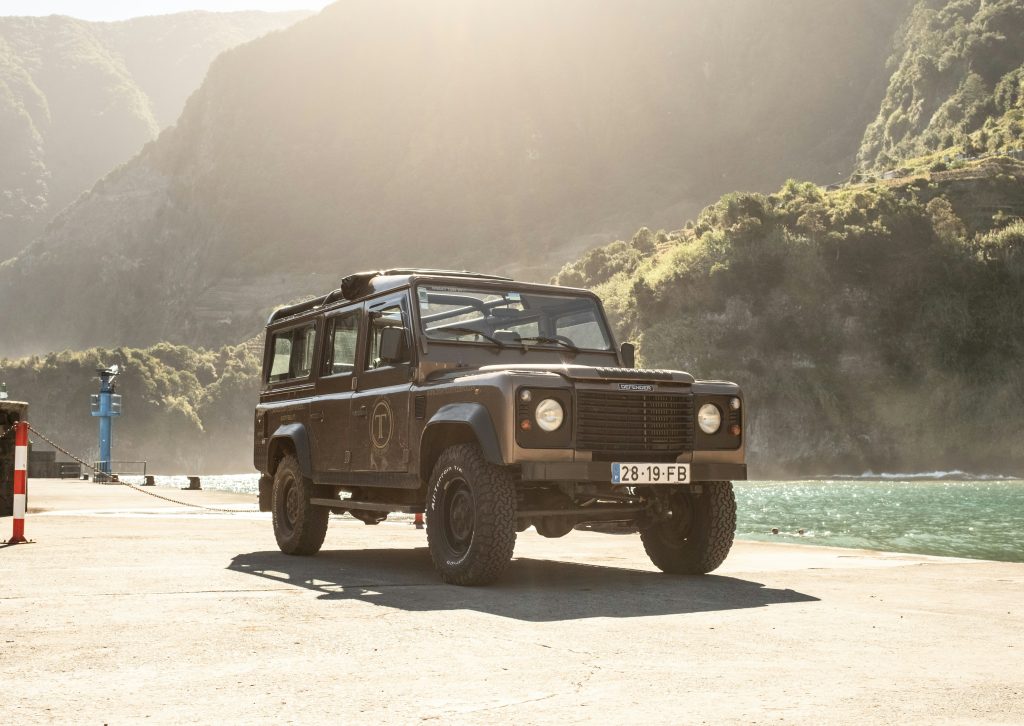
Buy neither if what you actually want is a classic Defender. This happens far more than you would think. The Grenadier is not a classic Defender. It is what a classic Defender would be if it had been engineered properly and expensively, which, for a certain kind of owner, ruins the entire thing. If that is you, read the classic versus new comparison and then the years to avoid, and go and buy a 300Tdi.
Frequently asked questions
Is the Ineos Grenadier a Land Rover?
No. It is built by Ineos Automotive, founded by Sir Jim Ratcliffe, and has no connection to Jaguar Land Rover whatsoever. JLR took Ineos to court over the Grenadier’s design and lost, the court finding the similarity insufficient to be an infringement.
Is the Grenadier better off-road than the Defender?
Not on paper. The Defender wades deeper at 900 mm against 800, has more ground clearance at 291 mm against 264 and a better approach angle. The Grenadier’s advantage is that its capability comes from beam axles and a ladder chassis rather than air suspension and software, so there is a great deal less to go wrong a long way from help.
Who makes the Ineos Grenadier engine?
BMW. The petrol is the 3.0-litre B58 straight-six with 282 hp, the diesel is the 3.0-litre B57 straight-six with 245 hp, and both use an eight-speed automatic. The Defender’s flagship OCTA also uses a BMW engine, the 4.4-litre S68 V8.
Where is the Ineos Grenadier built?
In Hambach, France, in the plant that previously built the Smart. Ineos bought the factory in 2020 and production began in October 2022. The Defender is built in Nitra, Slovakia.
Can the Grenadier tow as much as a Defender?
Yes. Both are rated at 3,500 kg, so towing capacity will not decide this for you. The Defender is the more comfortable long-distance tow car. The Grenadier is the better load-carrier once the trailer is unhitched.
Is the Grenadier a replacement for the classic Defender?
It is the closest thing anyone has built, and it exists precisely because Land Rover would not sell Ratcliffe the tooling to keep building the original. Whether it replaces the classic depends entirely on whether what you loved was the engineering or the imperfection. The Grenadier fixed the imperfection, and some people will never forgive it for that.
Read more
Classic Defender vs New Defender: Which One Is Actually Better?
This is the argument that has split the Land Rover community more decisively than anything since the Series...
Jun 1, 2026Defender V8 vs OCTA: 518 hp or 626 hp, and Which to Buy
The Defender V8 and Defender OCTA both wear the same boxy silhouette and carry a V8 under the...
Jun 27, 2026Defender vs Ford Bronco: $23,000 and a Set of Doors Apart
The Ford Bronco costs roughly two thirds of a Land Rover Defender and, on two of the three...
Sep 28, 2026Shop
Wear the sighting.
Small things for people who slow down when a Defender comes the other way. Printed in Estonia, posted anywhere in the world.