Ownership
Running a Defender Through Winter: Salt, Cold Starts and Tyres
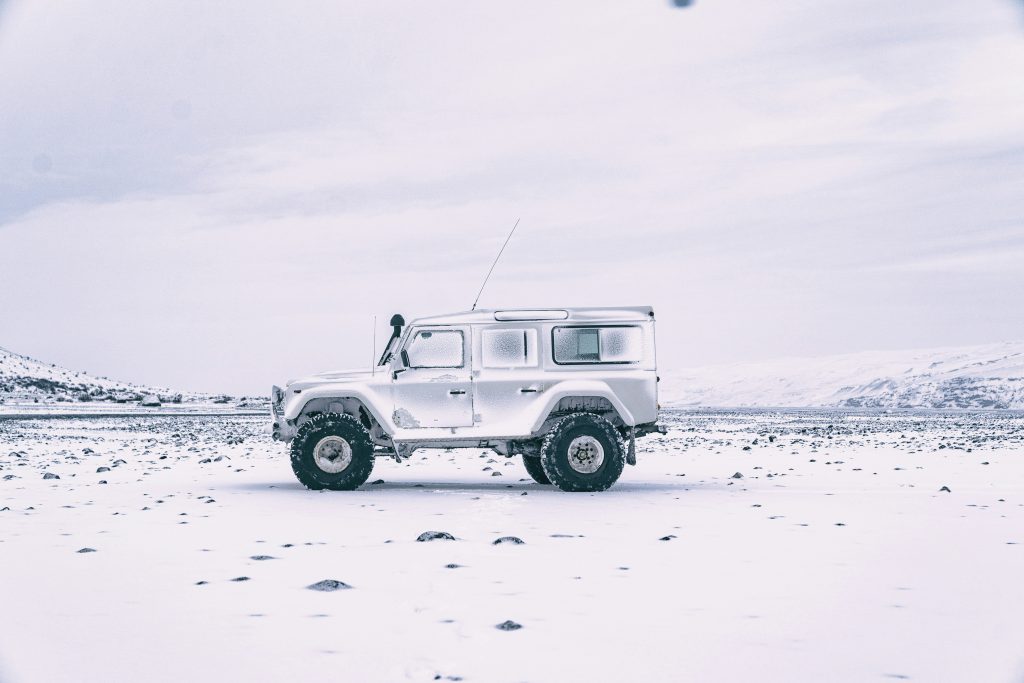
Winter does not kill Defenders. Salt does. Winter is merely the delivery mechanism, in the way that the postman is not technically the one who sent you the tax bill.
Every list of Defender faults begins in the same place, and it is never the engine. Chassis corrosion is what sends these things to the scrapyard, and it happens almost entirely in the five months between the first gritter and the last. While you are reading this sentence, brine is quietly eating your chassis from the inside, like a very slow, very expensive moth.
So here is what actually matters between November and March, in order of how much it will cost you to ignore.
Salt is the whole problem
The classic Defender chassis is mild steel, and Land Rover’s factory rust protection was applied with roughly the enthusiasm of a teenager asked to tidy his room. The box sections trap moisture, mud and road salt on the inside, where you cannot see them, and the metal then rots outwards. By the time you notice, you are not looking at rust. You are looking at lace.
The aluminium body panels do not rust, which everyone knows and everyone quotes at you smugly. What they do instead is meet steel at every mounting point, hinge and bracket, and start a chemical argument called galvanic corrosion, which is faster and angrier than ordinary rust and eats the steel side of the argument first.
Winter fills every one of those traps with brine. Twice a week. For free.
The fix is embarrassingly cheap. Wash the underside through the salt season rather than once in April when the damage is already done, and re-inject cavity wax into the box sections every year. For surface rust, wire-brush it, hit it with a rust converter such as Jenolite, then seal it with Waxoyl or Dinitrol. Cutting out rot and welding in new steel later costs 500 to 2,000 pounds, and a replacement chassis with fitting is 3,500 to 7,000. A tin of cavity wax costs less than a tank of diesel. I appreciate that maths is not exciting. Neither is a new chassis.
Watch the rear crossmember above all, because that is where they die. Then the outriggers, the spring hangers and the area round the rear fuel tank mounting.
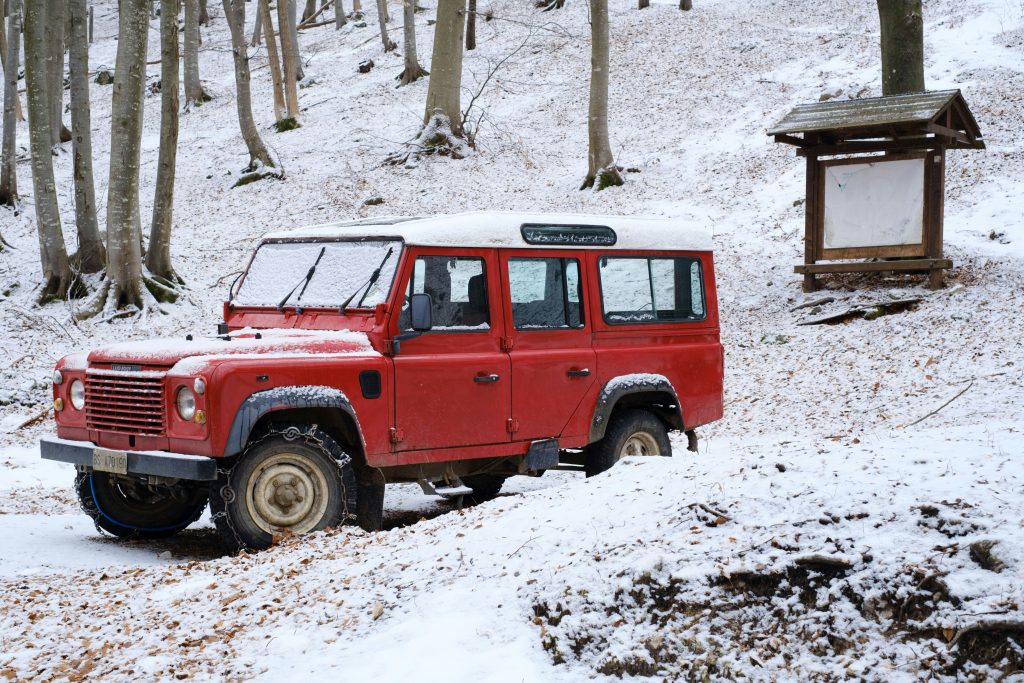
Tyres matter more than four-wheel drive. Considerably more.
Here is the thing everybody gets backwards, usually while overtaking me on a slip road in January. Four-wheel drive helps you set off. That is all it does. It contributes precisely nothing to stopping, and stopping is the part of winter driving that goes wrong.
A two-tonne Defender on tired road tyres has agricultural brakes and no grip, which is a combination best described as optimistic. Put it on tyres carrying the three-peak mountain snowflake marking and it becomes genuinely, properly capable. That marking is the one that means something. The words “all terrain” on a sidewall mean only that somebody in marketing owns a thesaurus. Plenty of good all-terrains do carry it, including the BFGoodrich All-Terrain T/A KO3, the General Grabber AT3 and the Falken Wildpeak A/T3W, and the full tyre guide covers what fits what.
Drop the pressures a little in deep snow to lengthen the contact patch, and put them back up before you rejoin tarmac. And know that aggressive mud tread, which clears sludge beautifully, packs solid with wet snow and turns into four slicks. Different problem, different rubber.

Why it will not start, in three boring parts
Old diesels are hopeless in the cold for three reasons, all of which can be sorted in an afternoon, and all of which you will ignore until the morning it matters.
Glow plugs. On a Tdi they die quietly, one at a time, and the engine carries on starting anyway, which is the cruellest possible failure mode. It keeps the secret until the first hard frost, at which point it tells everybody. Test them in October, not in December at half past six in the dark.
The battery. Cold reduces the current a battery can deliver at exactly the moment a cold engine demands more of it, which feels personal. A battery that has been a bit marginal since September will not see out December. Clean the terminals while you are there and check the earth strap, because corroded earth points cause more Defender electrical faults than everything else combined.
Fuel. Diesel waxes in hard frost, turning into something with the consistency of cold gravy. Buy winter grade, and keep the tank fuller than you would in summer, which also cuts the condensation quietly filling your fuel system with water.
On a new Defender none of this applies. It will start every time, in any weather, without drama. What will fail instead is the air suspension compressor, which is harder to diagnose, impossible to fix at the roadside and roughly forty times more expensive. Progress.
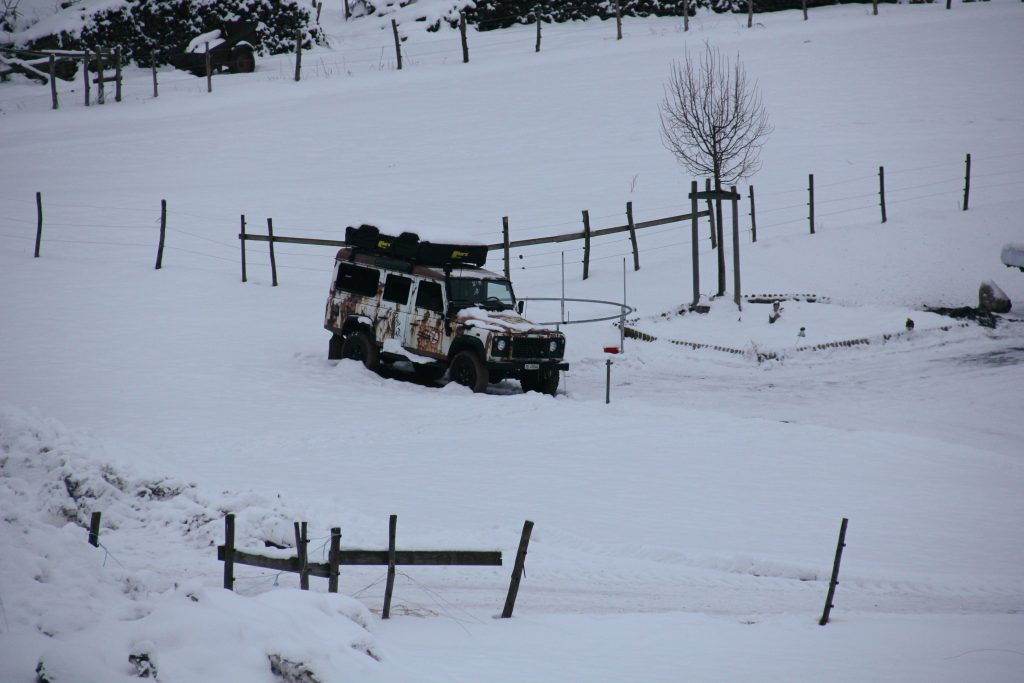
Water, slush and misplaced confidence
The new Defender wades 900 mm and displays the depth on the touchscreen, which is clever and also encourages a sort of bravery nobody has earned. The classic manages about 500 mm as standard, and rather more with a raised air intake, breather extensions for the axles and gearbox, and door seals that are not made of biscuit.
Winter water is an entirely different animal from summer water. A ford that was a pleasant 300 mm in August is now moving fast, carrying ice, and sitting on a bed that has rearranged itself since you last looked. The rule has not changed since 1948 and it will not change for you: if you cannot see the bottom, do not drive into it.
Afterwards, wash the salt water off. Wading through brine and then parking in a warm garage to dry is about the most destructive thing you can do to a classic chassis short of setting fire to it.
The heater is a rumour
Let us be honest about the classic Defender heater. It is not a heating system. It is a gesture. Given twenty minutes and a following wind it will warm the driver’s left knee and the passenger’s right one, and the windscreen will clear from the outside in, slowly, like a Polaroid.
Check the matrix, the blower and the recirculation flap before winter, because none of them will improve on their own, and keep a cloth in the door bin. Then do the job nobody does: replace the door seals. Perished seals let water in, water gets into the loom, and the mysterious intermittent electrical faults that eventually drive owners to sell the vehicle all start exactly there.
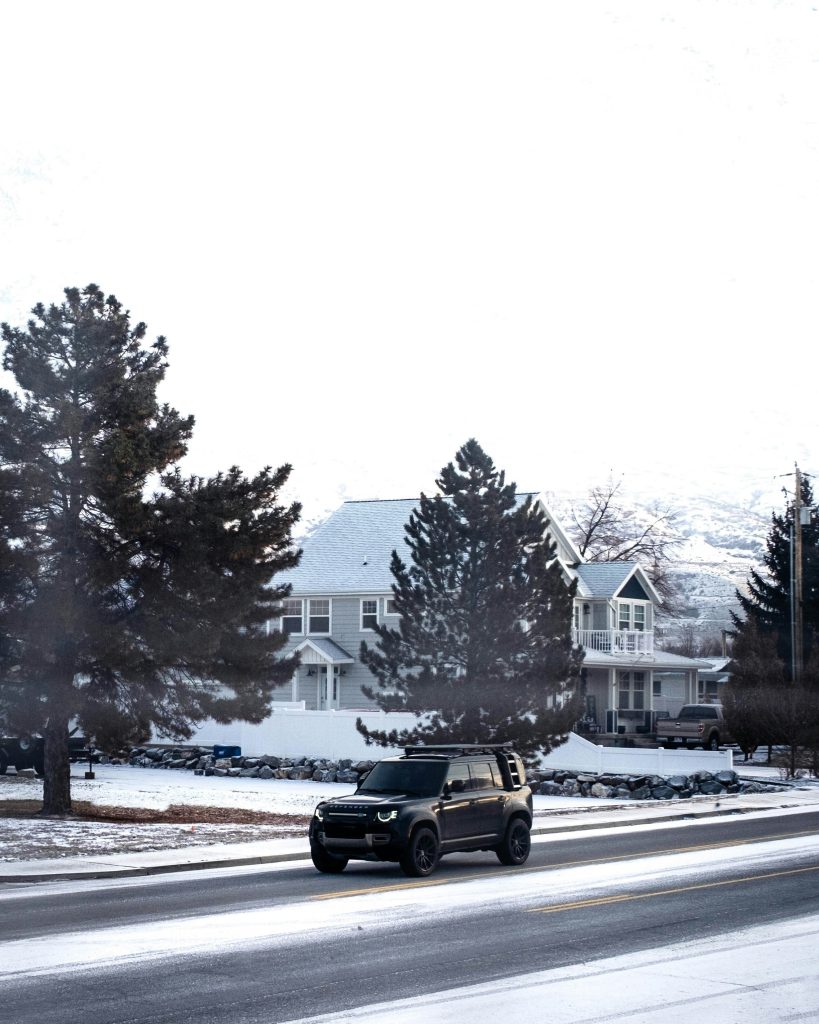
Putting one away for the winter
If the Defender is not your daily and you are laying it up, do it properly rather than shutting the garage door and hoping.
Wash the salt off and wax the chassis before it goes away, not after, because six months of damp brine sitting undisturbed is how a good chassis becomes a bad one. Declare it SORN, and ask your insurer about laid up cover, which specialist classic insurers handle routinely and which costs a fraction of full cover for something that is not moving.
Put it on a trickle charger rather than disconnecting the battery. Leave the handbrake off with the wheels chocked so the shoes do not weld themselves to the drum. And once a month, drive it properly. Idling it on the driveway for ten minutes is worse than leaving it alone entirely, because all you achieve is filling the exhaust and the oil with condensation without ever getting hot enough to boil it off again.
Winter Defender driving: frequently asked questions
Are Land Rover Defenders good in snow?
On the right tyres, yes, and rather brilliantly. Low range, weight and four-wheel drive make a Defender one of the finest things on earth for setting off in. None of that helps you stop, which is why the tyres matter more than the drivetrain does.
How do I protect my Defender from road salt?
Wash the underside through the salt season rather than once at the end of it, and re-inject cavity wax into the box sections every year. Treat surface rust with a converter such as Jenolite and seal it with Waxoyl or Dinitrol. Watch the rear crossmember, the outriggers, the spring hangers and the rear fuel tank mounting.
Why will my Defender not start in cold weather?
Glow plugs, the battery, or waxed fuel, and usually in that order. Glow plugs fail one at a time and the engine keeps starting until the first hard frost. Cold cuts battery output exactly when a cold engine wants more. And diesel waxes, so buy winter grade and keep the tank fuller than usual.
What tyres are best for a Defender in winter?
Anything carrying the three-peak mountain snowflake marking, which certifies real cold weather performance. The words “all terrain” on their own certify nothing. The BFGoodrich All-Terrain T/A KO3, the General Grabber AT3 and the Falken Wildpeak A/T3W all carry it. Very aggressive mud tread is the wrong answer, because it packs solid with wet snow.
Should I lay my classic Defender up for the winter?
If it is not your daily, yes. Wash the salt off and wax the chassis before it goes away, declare it SORN and ask about laid up cover. Trickle charger on, handbrake off, wheels chocked, and drive it properly once a month rather than idling it on the drive.
Does the new Defender have winter problems too?
Different ones, and more expensive ones. It starts every time and the heater works, which is lovely, but the air suspension compressor is a known cold weather casualty, and tailgate water ingress and sensor faults do not improve in the wet. The consolation is that you will not be welding its chassis in fifteen years.
Read more
Land Rover Defender Reviews: What Owners Really Think
The Land Rover Defender looks incredible in photos and marketing videos. But what’s it actually like to live...
Jun 23, 2026How to Stop Your Land Rover Defender Being Stolen
Some of the links on this page go to Amazon. If you buy through one, we get a...
Nov 2, 2026Land Rover Defender Towing Capacity: Everything You Need to Know
Toggle Why Land Rover Defender Towing Capacity MattersClassic Defender Towing CapacityThe NumbersThe Reality of Towing with a Classic...
May 27, 2026Shop
Wear the sighting.
Small things for people who slow down when a Defender comes the other way. Printed in Estonia, posted anywhere in the world.