Comparisons
Defender V8 vs OCTA: Which V8 Defender Should You Buy?
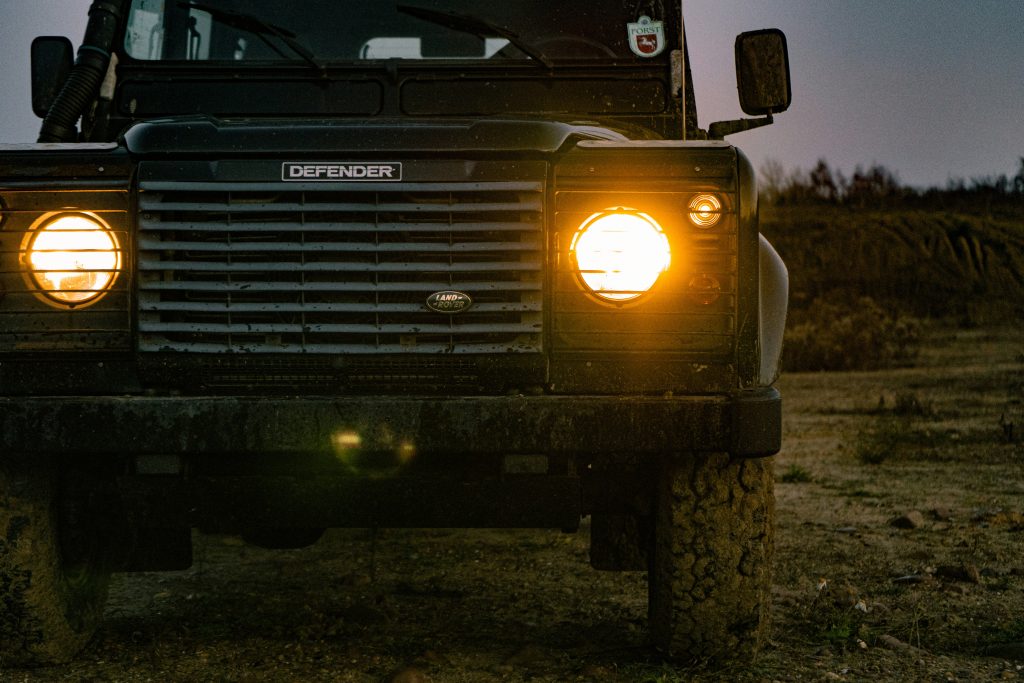
The Defender V8 and Defender OCTA both wear the same boxy silhouette and carry a V8 under the hood, but they are very different machines built for different buyers. One is a supercharged bruiser that has been part of the lineup since 2021. The other is a ground-up engineering project with a BMW engine, trick hydraulic suspension, and a price tag that makes you pause. This comparison breaks down exactly what you get for the extra money, and whether the OCTA is worth it over the standard V8.
Engine and Performance: V8 vs OCTA
Defender V8: The Supercharged 5.0L
The standard Defender V8 uses the AJ-V8, a 5.0-liter supercharged engine that Land Rover has used across its lineup for years. It produces 518 hp and 461 lb-ft of torque, paired with an eight-speed ZF automatic transmission and permanent all-wheel drive.
In real-world driving, the V8 hits 60 mph in about 4.9 seconds. That number sounds fast for a vehicle this size, and it feels even faster because the supercharger delivers power immediately with no turbo lag. The exhaust note is deep and theatrical, especially on cold starts and when you push it through sport mode. It sounds like the Defender equivalent of rolling thunder.
The V8 is available across 90, 110, and 130 body styles for 2026, which gives buyers more flexibility in choosing the right size.
Defender OCTA: The BMW Twin-Turbo
The OCTA uses a completely different engine: BMW’s S68, a 4.4-liter twin-turbocharged V8 with a 48-volt mild hybrid system. This is the same engine family that powers the BMW M5, X5 M, and X6 M. In the Defender, it puts out 626 hp and 553 lb-ft of torque, with an overboost function that briefly bumps torque to 590 lb-ft (800 Nm).
The result is a 0-60 time of 3.8 seconds. In a vehicle that weighs over 5,700 pounds. That is absurd by any measure. Top speed is electronically limited to 150 mph with the optional 22-inch wheels and all-season tires.
The OCTA is only available as a 110 for 2026. No 90, no 130. If you want the OCTA, you get the four-door body.
Performance Comparison Table
| Spec | Defender V8 | Defender OCTA |
|---|---|---|
| Engine | 5.0L Supercharged V8 | 4.4L Twin-Turbo V8 (BMW S68) |
| Power | 518 hp / 461 lb-ft | 626 hp / 553 lb-ft |
| 0-60 mph | 4.9 seconds | 3.8 seconds |
| Top Speed | 130 mph | 150 mph |
| Hybrid System | None | 48V Mild Hybrid (27 hp boost) |
| Transmission | 8-speed ZF auto | 8-speed ZF auto |
| Body Styles | 90, 110, 130 | 110 only |
Suspension and Off-Road Capability
V8 Suspension
The Defender V8 uses the same air suspension setup as other Defender models (standard on V8 trim). It is a capable system with height adjustment and Terrain Response 2, giving you the full suite of off-road modes. The V8 adds stiffer anti-roll bars and unique spring rates to handle the extra power, but the fundamental suspension architecture is shared with the rest of the Defender range.
Off-road, the V8 is every bit as capable as any other Defender. It has the same approach angle (38 degrees), departure angle (40 degrees), and wading depth (35.4 inches / 900mm) as the standard models. The only real off-road penalty is the extra weight and the V8’s thirst for fuel, which limits how far you can go between fill-ups.
OCTA Suspension: 6D Dynamics
This is where the OCTA justifies a significant chunk of its price premium. The OCTA uses a bespoke suspension system developed with 6D Dynamics, featuring hydraulically interconnected dampers combined with dual-chamber air springs. This is not a minor upgrade. It is a fundamentally different approach to suspension design.
The hydraulic interconnection links all four corners through fluid channels, allowing the system to control roll, pitch, and warp independently. In practice, this means the OCTA can be stiff in corners (reducing body roll) while simultaneously being supple over rough terrain (absorbing impacts without jarring the cabin). Traditional suspension systems force you to compromise between those two things. The OCTA does not.
The OCTA also gets a wider track (by 28mm), a shorter rear axle ratio (3.73:1 vs 3.21:1 on the V8) for better crawling torque, and a class-leading wading depth of 1,000mm (39.4 inches), which is 100mm deeper than the standard Defender.
Pricing and Value
Here is where the conversation gets uncomfortable for the OCTA.
2026 US Pricing
| Model | Starting Price (US) |
|---|---|
| Defender V8 90 | $114,400 |
| Defender V8 110 | $118,300 |
| Defender V8 130 | $123,900 |
| Defender OCTA | $158,300 |
| Defender OCTA Black | $168,700 |
The OCTA costs roughly $40,000 more than the V8 110 it is based on. For that money, you get 108 more horsepower, the 6D Dynamics suspension, wider bodywork, the mild hybrid system, unique interior trim, and bragging rights. Whether those upgrades justify the premium depends entirely on what you plan to do with the vehicle.
For a full breakdown of every Defender trim and pricing tier, see my Defender price guide.
Daily Driving: Which Is Better to Live With?
V8 as a Daily Driver
The V8 Defender is a fantastic daily driver if you can stomach the fuel economy (expect 12-15 mpg in real-world mixed driving). The supercharged engine is smooth and responsive at low speeds, the cabin is quiet on highways, and the air suspension soaks up rough roads without complaint. It feels special every time you start it, which is exactly what a performance vehicle should do.
The V8’s towing capacity matches the standard lineup at 8,201 lbs, so it loses nothing in practicality. Insurance and maintenance costs are higher than the inline-six models, but not dramatically so.
OCTA as a Daily Driver
The OCTA takes the daily driving experience up a notch. The 6D Dynamics suspension delivers a ride quality that borders on magical: it is somehow both sportier and more comfortable than the standard air suspension. The BMW engine is more refined than the supercharged V8, with a smoother power delivery at low RPMs and less of the old-school muscle-car character.
Fuel economy is marginally better thanks to the 48V mild hybrid system, but we are still talking about a 626 hp SUV. Expect similar numbers to the V8 in practice. The OCTA’s wider body does make parking slightly trickier in tight spaces, and finding tire replacements for the unique wheel and tire package can take longer than standard Defender sizes.
Which One Should You Buy?
Buy the V8 if:
You want the V8 Defender experience without spending OCTA money. You prefer the raw, supercharged character over the more polished turbo delivery. You want the option of a 90 or 130 body style. You are not planning to push the suspension to its absolute limits on technical terrain. You want a vehicle that sounds like it could fight a thunderstorm and win. For most V8 Defender buyers, the standard model delivers everything they are looking for.
Buy the OCTA if:
You want the absolute fastest, most capable Defender money can buy. You do serious off-road driving where the 6D Dynamics suspension will make a measurable difference. You value the extra refinement and technology the BMW engine brings. Price is secondary to having the best available version. You want a vehicle that will hold exceptional resale value as the flagship model. Check the owner reviews to see what early OCTA buyers are saying.
The Bottom Line
The Defender V8 is an incredible machine. It takes the already brilliant Defender platform and adds a supercharged soundtrack and serious straight-line speed. For the vast majority of buyers, it is more than enough performance.
The OCTA is for the buyer who wants more than enough. The 6D Dynamics suspension is a genuine engineering achievement, the BMW engine is a step up in refinement and power, and the whole package feels like it belongs in a different category than the standard V8. But at $158,300 to start, it had better.
My recommendation: test drive both back to back. The V8 will put a grin on your face. The OCTA might make you restructure your budget. If you are still deciding between Defender trims, my buying guide covers the full range from the P300 up to the OCTA. And if you are considering alternatives to either, see how the Defender stacks up against the Mercedes G-Wagon and Jeep Wrangler.
Frequently Asked Questions
Is the Defender OCTA worth the extra money over the V8?
It depends on your priorities. The OCTA’s 6D Dynamics suspension is a genuine leap in capability and comfort, and the BMW engine delivers significantly more power. If you do serious off-road driving or want the absolute best Defender available, the OCTA justifies its premium. For most buyers who want a fast, characterful Defender, the standard V8 delivers 90% of the experience at 75% of the price.
Which is faster, the Defender V8 or OCTA?
The OCTA is significantly faster. It hits 60 mph in 3.8 seconds compared to the V8’s 4.9 seconds, and has a higher top speed of 150 mph versus the V8’s 130 mph. The OCTA also has 108 more horsepower (626 vs 518).
Can I get the OCTA suspension on a standard Defender V8?
No. The 6D Dynamics hydraulic suspension is exclusive to the OCTA and requires specific chassis modifications, wider bodywork, and unique mounting points. It cannot be retrofitted to a standard Defender. This is the single biggest hardware difference between the two models.
Which Defender V8 engine is more reliable?
The supercharged 5.0L has years of service history across Range Rover and Jaguar models, so its failure points and maintenance patterns are well understood. The BMW S68 twin-turbo is newer to the Defender but has proven itself in BMW’s M car lineup. Both engines are robust, but the older supercharged V8 has a longer track record in Land Rover applications. See my reliability guide for more on Defender dependability, and my common problems page for known issues across all models.